


 English
 Español
 عربى
عربىContent
- 1 What "24 oz" Actually Measures, and What It Leaves Out
- 2 Cup Material Decides Which Lid Will Hold
- 3 The Lid Families Used on 24 oz Cups
- 4 Matching 24 oz Cups to Lids: A Practical Matrix
- 5 How to Check Fit Before You Place a Full Order
- 6 What Else Moves the Price and the Risk
- 7 Common Questions About 24 Ounce Cups and Lids
- 8 Buy the Cup and the Lid as One Line Item
If a shipment of 24 oz cups arrives with lids that spin on the rim instead of snapping down, the cup is usually not the problem. The rim is. "24 oz" describes how much liquid a cup holds, not how wide its mouth is, so two suppliers can both ship a 24 ounce plastic cup with a matching lid and still sit three millimetres apart at the rim. That gap is wider than the entire interference a lid needs in order to seal.
The short answer: buy the cup and the lid as one matched set, confirm the rim diameter in millimetres before you ask for a quote, and keep the cup polymer and the lid polymer in the same family. Price, printing and carton counts only start to matter once those three points are settled.
What "24 oz" Actually Measures, and What It Leaves Out
In US foodservice practice, 24 oz means 24 US fluid ounces, about 710 ml to the brim. Real service fills 10 to 20 mm below the rim to leave room for ice and for the lid, so the drink lands nearer 20 to 22 oz. Cost your recipe against the fill line, not against the number printed on the carton.
What the volume figure does not tell you:
- Rim diameter. Most 24 oz moulds use a 90 mm or 98 mm rim, with 92 mm and 95 mm versions appearing in regional programmes. Height adjusts to reach the volume, usually landing between 135 mm and 150 mm.
- Rim profile. A rolled rim gives the lid a groove to grip; a flat rim relies on friction and a well-fitted skirt. A lid built for a rolled rim feels loose on a flat rim of the same diameter.
- Base diameter. Bases on this size generally run 55 to 60 mm, which is what decides car-holder fit, dispenser fit and tray stability.
- Tolerance. A workable rim spec is plus or minus 0.2 mm. Past roughly 0.3 mm of variation inside a single carton, lids fail on only some cups, which is the hardest defect to trace on a running line.
"24 oz cup" is therefore not a purchasing specification. "24 oz, 90 mm rolled rim, PP, 0.9 mm wall" is. Ask for the drawing rather than the catalogue name.
Cup Material Decides Which Lid Will Hold
PP and PET behave differently under a lid skirt, and this is the most common reason a lid that fits in a sample fails in production.
- PP is heat tolerant and slightly flexible, the standard choice for hot drinks, soups and takeaway containers. It keeps its shape when hot liquid warms the rim, so the lid stays seated.
- PET offers high clarity and low-temperature toughness, and it suits iced drinks, cold brew and desserts. It is stiffer, so it needs a lid designed to flex around it rather than fight it.
Mixing the two is where orders go wrong. A PET lid on a PP cup can crack at the skirt once hot liquid softens the rim underneath it. A PP lid on a PET cup can grip vaguely and work loose in a carrier, because the two parts shrink at different rates after moulding. Keep PP with PP and PET with PET at the same nominal diameter.
For hot applications, an injection-moulded PP body also holds a more consistent rim than a thin thermoformed wall, which is why the same nominal size is often offered in both constructions at different price points.
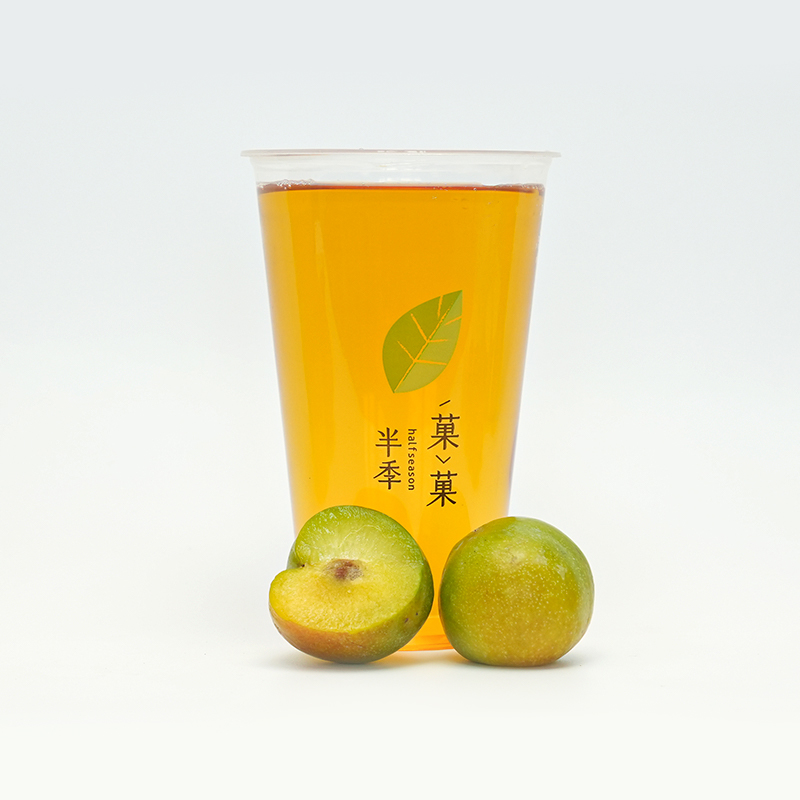 PP Injection Molded Cups for Hot and Cold BeveragesInjection-molded PP cup for hot and cold drinks, with a consistent rim and multiple sizes for coffee or milk tea service.View Product →
The Lid Families Used on 24 oz Cups
Every lid on this cup size belongs to one of a few families. Each solves a different serving problem, and in practice they are rarely interchangeable.
Flat and No-Hole Lids
Flat lids sit low, stack tightly and cost the least. A no-hole version seals the cup completely, which suits soup and sauce that must not spill in transit. A vented flat lid lets steam escape to keep fried food crisp, but it will not hold liquid once tipped.
Dome, Ball and Direct-Drink Lids
Dome and ball lids add headroom for whipped cream, cold foam and boba. Direct-drink lids replace the dome with a raised spout or a flip tab so the customer drinks without a straw; they need slightly deeper rim engagement, because every sip pushes sideways on the same spot.
One-Piece Injection-Moulded Lids
These lids are moulded in one piece with a thicker wall and a reinforced ring rather than a thin skirt. They resist the deformation that pops thin lids off when a cup is squeezed, and they survive repeated opening and closing. They cost more per thousand and are usually the right answer for delivery and catering, where a spill turns into a refund.
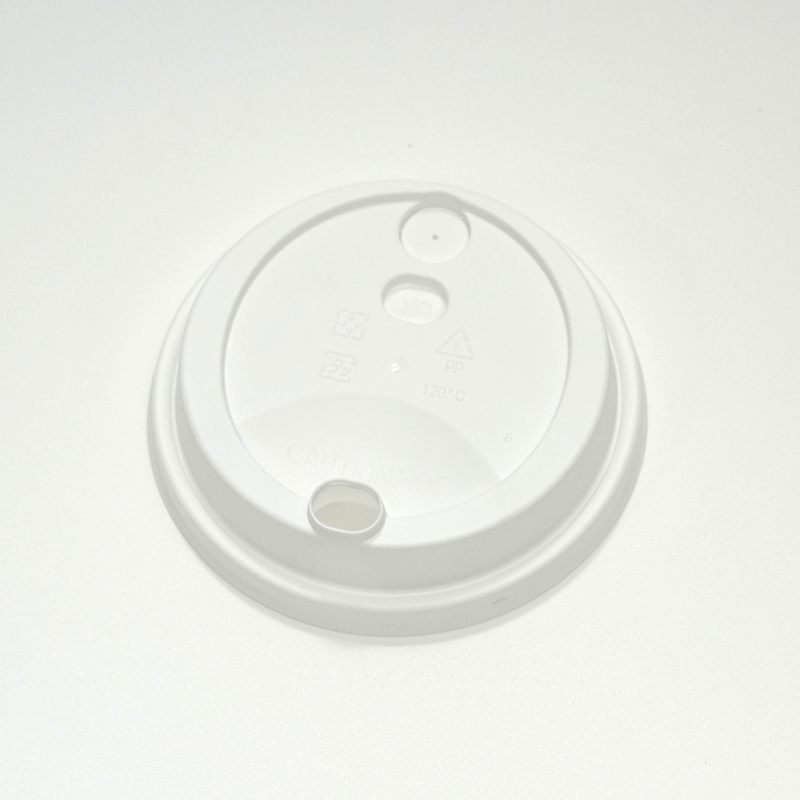 Customizable PP One-Piece Cup Lids for Takeaway DrinksOne-piece food-service lid with a dual-purpose plug hole, customizable sealing, colors, and a 90 mm fit for takeaway beverage cups.View Product →
Leakproof and Patented Leakproof Lids
Leak-resistant lids pair a deeper skirt with an inner sealing ring, sometimes using a patented locking step that grips the rim bead. They are aimed at courier delivery, where a cup spends twenty minutes tilted in an insulated bag. Test them inverted with liquid at serving temperature rather than cold water, because warmth softens the rim and changes how the seal behaves.
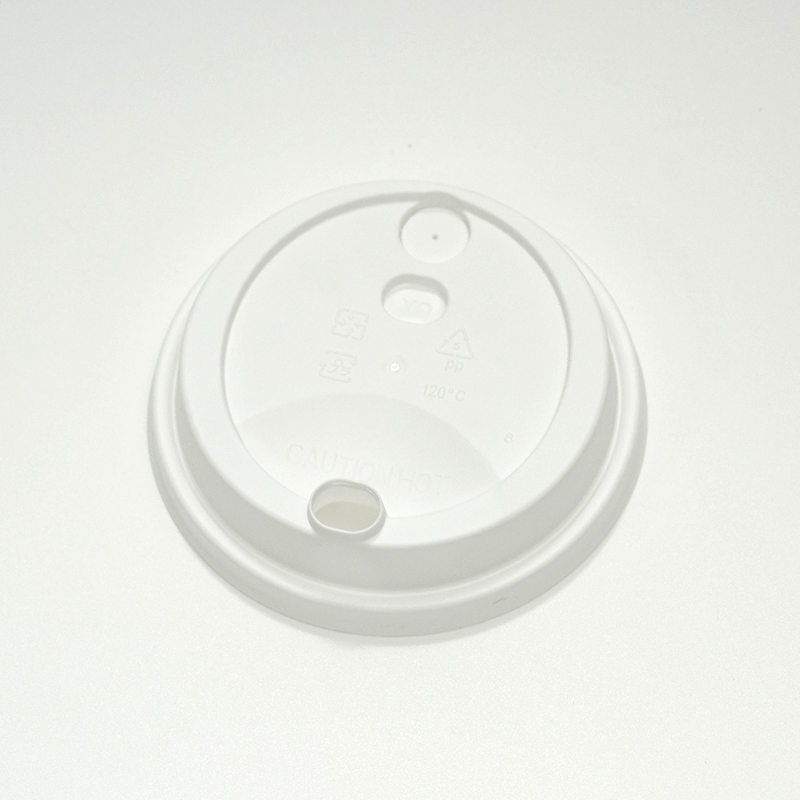 Patented Leak-Proof Thickened Plastic Cup LidsThickened plastic lid with patented leak-proof structure, offered in flip and flat styles and 80/90 mm sizes.View Product →
Matching 24 oz Cups to Lids: A Practical Matrix
| Cup type | Best-fit lid family | Why it holds | Failure when mismatched |
|---|---|---|---|
| PP injection-moulded cup, hot drinks and takeaway | PP injection-moulded one-piece lid or ball lid | Same polymer, flexible skirt, stays seated as the rim warms | Stiff PET lid cracks at the skirt |
| PP blister cup, cold and ambient service | Vented or no-hole flat PP lid | Thin wall deflects easily, and a flat lid spreads the load | Heavy dome lid pulls the rim outward and leaks |
| PET cold cup, iced drinks and desserts | PET flat, ball or direct-drink lid | Matched shrinkage keeps the snap consistent | PP lid grips unevenly and loosens in a carrier |
| Takeaway bowl or four-grid container | PP takeaway lid or liner, vented for fried food | Vent control matches the food's steam load | No-hole lid traps condensation and softens coatings |
Two rows deserve a second look. The cold-cup row is where most volume orders are lost, because buyers assume a lid is a lid. The bowl row is where complaints appear months later, once a menu shifts from a dry dish to a saucy one.
How to Check Fit Before You Place a Full Order
- Measure the rim. Calipers across the outside diameter, three cups per carton, two cartons. Write the numbers down.
- Snap twenty lids by hand. You want one audible click and a skirt fully below the rim bead. Ten seating and ten not means the cups are out of tolerance.
- Run the invert test. Fill to the line, seal, invert over a tray for 30 seconds cold, then for 10 minutes at real serving temperature.
- Drop it. From about 80 cm onto a hard floor, twice, landing on the lid edge.
- Check the stack. Lids should not nest so tightly that staff cannot separate them, and paired cups should not wobble in a carrier.
- Run a shift. Twenty cups proves the mould is capable; two hundred through a busy counter proves the tolerance is stable.
What Else Moves the Price and the Risk
- Carton and pallet count. Cups and lids are normally packed separately, often 500 or 1000 per carton. Bulk-sacked lids are cheaper but slower to handle than sleeved lids.
- Printing. Flexographic printing in one to six colours carries a plate charge and a minimum order per size. Print the cup and the lid together so the colour shade matches across both parts.
- Customisation. Wall thickness, rim diameter, height and lid style can all be specified, but each change resets tooling and sampling. Change one variable at a time.
- Compliance paperwork. Food-contact packaging has to satisfy specific migration, material and hygiene rules in the US and EU, and a supplier who produces the reports without delay is worth more than two cents per thousand. Those requirements are summarised in this overview of food safety standards for plastic cups.
- Storage. PP and PET both deform in a hot container or in direct summer sun. Cups stored beside a loading-dock door will fail a lid test that passed in the warehouse.
Common Questions About 24 Ounce Cups and Lids
Is a 24 oz cup the same as 700 ml?
Close, but not exactly. 24 US fluid ounces is about 710 ml at the brim, and roughly 600 to 650 ml in practical service once ice and headspace are allowed for. European 700 ml cups come from a separate mould and should not be quoted against a 24 oz drawing.
Can one lid size fit both PP and PET 24 oz cups?
Not reliably. The diameters may match on paper, but the two polymers shrink differently after moulding and react differently to heat, so a lid tuned to one will grip inconsistently on the other. Keep separate SKUs.
What order quantity makes custom printing worthwhile?
It depends on plate count, colour count and size. Ask for the plate charge and the per-size minimum in writing before artwork is designed, because a two-colour logo on one size is a very different commitment from a six-colour wrap across three sizes.
Buy the Cup and the Lid as One Line Item
The cheapest way to avoid lid failures on a 24 oz programme is to stop treating the cup and the lid as two separate purchases. Specify rim diameter, rim profile, polymer and wall thickness together, ask for a fitted sample before the bulk order, and hold one supplier accountable for the seal.
TOPCUP has manufactured disposable food packaging in Taizhou, Jiangsu since 2010 and lists QS, ISO 9001, BRC, DIN and EU RoHS certifications, with cup, lid, bowl, straw and bag lines under one roof. Send your rim measurement and your serving temperature through the contact page and the team can confirm which lid family matches before samples are cut.




