


 English
 Español
 عربى
عربىContent
- 1 Material Choice Determines What Custom Plastic Cups with Lids Can Handle
- 2 Lid Style Is the Part Customers Touch Every Time
- 3 Sizes, Print, and Decoration That Fit Your Brand
- 4 Food Safety Standards Decide the Real Cost of Cheap Cups
- 5 What to Clarify with Your Supplier Before Placing an Order
- 6 Frequently Asked Questions About Custom Plastic Cups with Lids
A tea chain in the Southeast was comparing two suppliers for custom plastic cups with lids before a summer menu launch. The first quote was 12 percent cheaper. But when the procurement team ran a simple delivery simulation—filled cups in a sealed box, tilted 30 degrees for 20 minutes—the cheaper lids leaked on 4 out of 30 samples. The leaked cups were photographed and forwarded to the operations director, and the cheaper quote was rejected the same afternoon. In service packaging, a few millimeters of rim tolerance and one lid latch design change how customers remember a brand.
Material Choice Determines What Custom Plastic Cups with Lids Can Handle
Before print colors, logo positions, or lid colors are discussed, a buyer must settle the polymer. Material selection decides temperature range, clarity, drop resistance, and even the recycling code printed on the cup bottom. Three materials dominate custom plastic cups with lids: PET, PP, and PLA. Each has a specific job.
PET (polyethylene terephthalate) is the clarity leader. A PET cup has a glass-like shine that makes cold drinks look vivid, which is why bubble tea shops, juice bars, and iced coffee chains choose it. PET also keeps its shape at low temperatures, so iced beverages and slushies will not soften the sidewall.
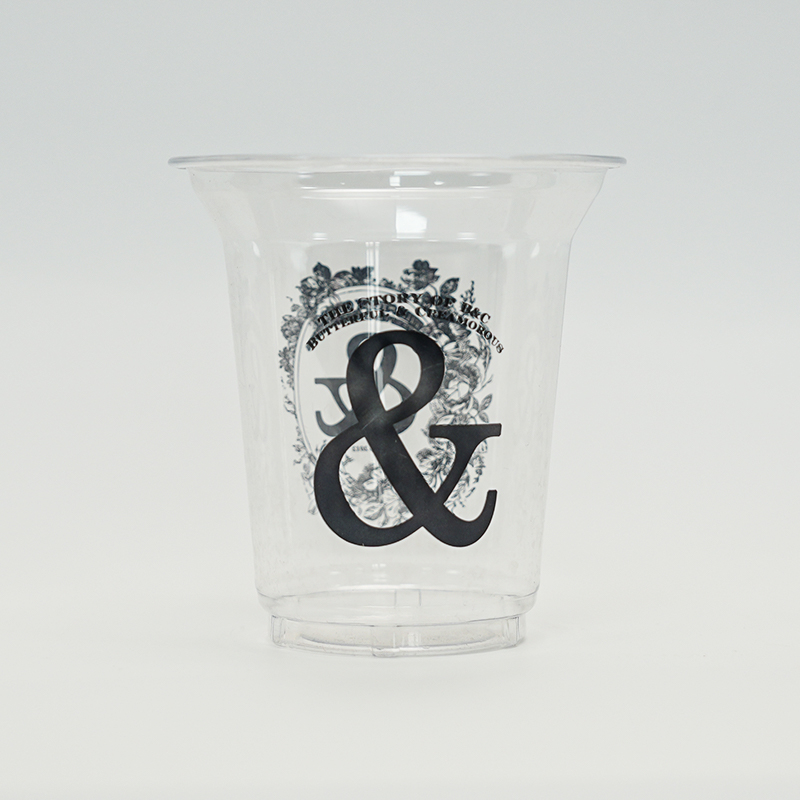 Low-Temperature Resistant PET Plastic Cup for Cold DrinksThis food-grade PET cup maintains clarity and toughness from -20 to 55°C, making it a reliable choice for iced beverages, slushies, and cold takeaway drinks without cracking or deforming.View Product →
PP (polypropylene) is the hot beverage workhorse. It safely handles contents around 110°C, making it a common choice for hot tea, drip coffee, and takeaway soup. PP also absorbs impacts better than PET; when a delivery bag shifts in a car trunk, a PP cup is less likely to dent or crack.
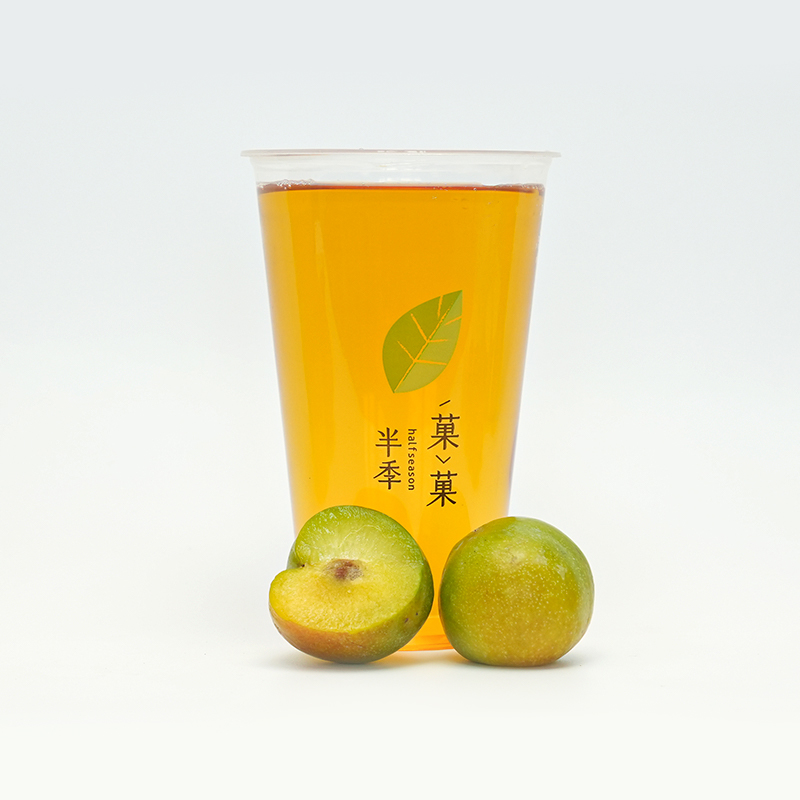 PP Injection Molded Cup for Hot and Cold BeveragesMade from food-grade polypropylene, this cup withstands temperatures up to 95°C, combining impact resistance and durability. It suits hot tea, drip coffee, and takeaway soup while supporting custom branding.View Product →
PLA is the biobased option, derived from fermented corn or sugarcane starch. It looks similar to PET but cannot tolerate high heat, so it is best reserved for cold or room-temperature drinks. Brands that lead with a sustainability message often select PLA despite its narrower usability window.
| Property | PET | PP | PLA |
|---|---|---|---|
| Recommended temperature range | -30°C to 65°C | -10°C to 110°C | -5°C to 45°C |
| Clarity | Excellent | Good | High |
| Impact resistance | Good | Excellent | Fair |
| Typical drink applications | Cold drinks, bubble tea, juice | Hot drinks, coffee, soup | Cold drinks, eco-branded lines |
| Disposal category | #1 PETE | #5 PP | Industrial compost |
Lid Style Is the Part Customers Touch Every Time
Buyers often spend more time evaluating cups than lids, but regular customers interact with the lid on every sip, close, and reopen. The lid population in custom plastic cups with lids can be grouped into four styles:
- Flat lids create a simple seal and suit dessert cups, water cups, and drinks sealed with film.
- Direct-drink lids have a molded drinking hole and are the default for coffee and milk tea, especially when a hot beverage is served without a straw.
- Ball lids combine a large domed opening with a wider rim, designed for slushies, smoothies, and milkshakes that need straw access through thick texture.
- Leakproof lids are built for delivery. A one-piece structure removes the bridge seam between the lid body and the drink tab, so there is no weak line that can crack while a bag bounces in a scooter carrier.
Delivery-oriented brands are shifting to leakproof lids faster than any other segment. A one-piece leakproof lid is molded as a single component, which means the sealing surface is continuous around the entire rim. When paired with a well-tooled cup rim, the result is a practical seal that survives temperature change, pressure, and sideways movement.
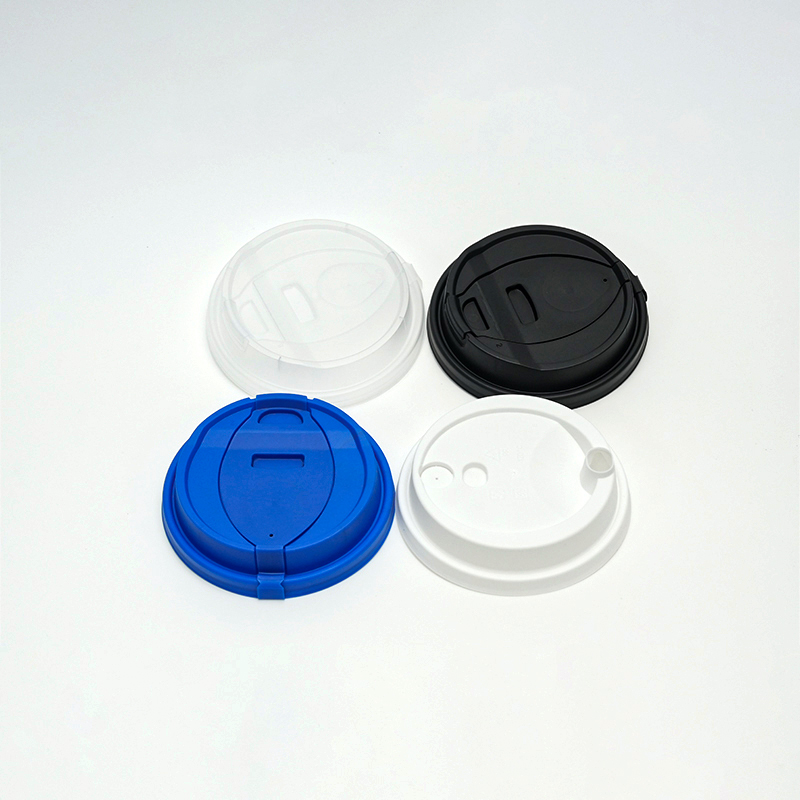 Patented One-Piece Leak-Proof Plastic Cup LidFeaturing a patented one-piece design with continuous sealing, this lid prevents leaks during delivery and temperature changes. Its thickened construction and stackable build make it durable and space-saving.View Product →
- Direct-drink lid — 40%
- Flat lid — 25%
- Ball lid — 20%
- Leakproof lid — 15%
The chart reflects a typical takeaway beverage order mix: direct-drink lids lead because coffee and milk tea dominate volume, while flat and ball lids cover dessert and slush categories. Leakproof lids are still the smallest segment in volume, but their growth rate is the highest because delivery now accounts for a significant share of urban store revenue.
Sizes, Print, and Decoration That Fit Your Brand
Custom plastic cups with lids are commonly produced from 12 oz to 32 oz, with the most frequent SKUs at 16 oz, 22 oz, and 32 oz. The rim diameter stays constant within a series, because lids are tooled to match a fixed rim profile. Changing the wall thickness, stacking ring, or rim curl changes the lid snap-fit, so any design change should be confirmed with the factory before mass production.
Print Methods and Quality Checks
Large-volume orders are usually printed flexographically; photographic detail is handled by offset printing; short pilot runs can be done digitally. Ask the supplier whether the inks have adhesion tests for condensation and for friction during delivery bag packing. A high-quality print on the cup body is the cheapest advertising the brand will ever buy.
Color, Contrast, and Perceived Value
Cup body color and logo contrast change how the drink box looks. A white cup with a full-wrap print delivers strong presence from behind a counter. A clear cup with a small logo lets the drink itself lead the sale. The balance depends on whether the product is a standard menu item or a limited edition.
Food Safety Standards Decide the Real Cost of Cheap Cups
Food contact packaging is regulated because polymers can transfer migrated substances into a drink. Reputable factories hold QS production licenses and maintain quality systems based on ISO 9001. Export-oriented manufacturers add BRC certification, German DIN safety testing, and RoHS+ screening, which restricts heavy metals and certain hazardous substances.
Ask any supplier for migration test reports, heavy metal screening, and sensory test results. The conversation is fast with well-documented factories and short with the rest. The food safety requirements applied to plastic cups matter most when the cup will hold acidic drinks, hot liquids, or beverages with high-fat content, because those conditions increase the possibility of migration. Read the specific food safety requirements for plastic cups and how manufacturers meet them for a deeper breakdown of standards and test routines.
What to Clarify with Your Supplier Before Placing an Order
The unit price of custom plastic cups with lids falls sharply as volume grows, but the shape of that curve differs by material, lid style, and print coverage. Ball lids and leakproof lids carry different tooling costs. A full-wrap print costs more than a one-color logo. The buyer who asks for a clear piece-price breakdown by component selects a supplier based on facts rather than a single headline figure.
Three questions every buyer should ask before placing a first order:
- Is the quoted price per 1,000 pieces including the matching lid, or is the lid quoted separately?
- Are the cup and lid produced in the same factory? A single line owner controls the rim-lid mating better than two separate suppliers.
- Does the sample you receive reflect the production tolerance for rim ovality and lid snap strength?
Factories with in-house tooling and quality control on both cup and lid are faster to answer these questions. If your project needs a custom size, a special lid color, or a short timeline, discussing the details directly with the manufacturer helps you avoid misalignment between marketing expectations and production reality. Contact the TOPCUP team to review your specification.
Frequently Asked Questions About Custom Plastic Cups with Lids
What is the lead time for custom plastic cups with lids?
Typical lead time is 15 to 25 days for printed cups after the artwork and tooling files are approved. Plain stock cups can ship in 7 to 10 days. Multi-color print, special lid colors, and large volumes extend the schedule, so confirm the date in writing before tooling starts.
Can I order a small quantity for a market test?
Most manufacturers set a conservative MOQ for printed cups and a lower MOQ for blank cups and stock lids. A pilot run of 5,000 to 10,000 pieces is usually possible. Ask whether the pilot price includes the same lid quality and print standard as the mass production run.
How can I be sure the lid will seal properly with the cup?
Request the rim diameter specification and the lid snap-fit test data. Good factories measure rim ovality with a go/no-go gauge and test random cups and lids from every production lot. If a supplier cannot describe this process in concrete terms, treat the risk as high.
What does a patented leakproof lid actually mean?
A patented one-piece leakproof lid is molded as a single component without a separate hinge or insert. The sealing surface is continuous around the entire rim, which reduces the chance of liquid escaping during delivery. It also removes the tabs that can bend and break on generic two-piece lids.




