


 English
 Español
 عربى
Content
- 1 Short Answer: Rated for Hot, Not for Boiling
- 2 What Heat Actually Does to a Foam Cup
- 3 Styrene Migration: What the Measured Numbers Look Like
- 4 Three Scenarios Worth Testing Before You Buy
- 5 If Your Fill Temperature Runs Above 90°C, Change the Cup, Not the Habit
- 6 A Procurement Checklist for Hot-Fill Cups
- 7 Frequently Asked Questions
- 8 Matching the Cup to the Fill Temperature
At 7:40 on a weekday morning, a takeaway counter pours 93°C filter coffee into a 12 oz foam cup, presses on a lid and hands it over the counter. The customer holds it for fifteen minutes, takes two sips, and drops it in the bin. Nothing visible happens, which is why the same question keeps returning: are styrofoam cups safe for hot drinks?
Here is the short answer before the detail. A food-grade expanded polystyrene cup, used inside its stated temperature rating and thrown away after one drink, is not treated as a health hazard by any major regulator. The two issues that genuinely deserve attention are physical and gradual: the foam softens somewhere above 90°C and the rim loses stiffness, while styrene migration into the drink rises with temperature and contact time. Both are manageable, and neither is the dramatic hazard the internet describes.
What follows is what the material does at temperature, what the migration limits actually are, where foam still makes sense, and what to specify instead when your fill temperature sits above 90°C.
Short Answer: Rated for Hot, Not for Boiling
Food-contact polystyrene is an authorised material, not a loophole. In the United States it sits among permitted food-contact polystyrene resins; in the European Union styrene carries a specific migration limit of 0.01 mg per kilogram of food simulant; in China, GB 4806.6 and GB 4806.7 govern food-contact plastic resins and finished articles. Regulators examined foam cups and wrote rules rather than bans.
What no regulator promises is that EPS behaves like an insulated flask. Polystyrene's glass transition sits close to 100°C, and thin foam walls approach that zone far sooner. That is why a typical cup is rated to roughly 200°F, about 93°C. Pour near-boiling water into one and the wall softens, the rim slackens, and a lid that sealed a moment ago may begin to weep.
- Comfortable: coffee, tea or hot chocolate filled at 80–90°C and finished within 15–30 minutes.
- Borderline: fills at 92–95°C, long delivery holds, or refilling the same cup a second time.
- Outside the design case: microwaving the cup, or using it to carry boiling water.
What Heat Actually Does to a Foam Cup
EPS is roughly 95 to 98 percent air. That is why it insulates so well, and also why it carries so little structural margin. Three changes happen as the temperature climbs.
1. The wall, and then the rim, loses rigidity
Between 85°C and 95°C a cup that felt firm at 70°C starts to feel slightly pliable. Squeeze it and the dent stays. The rim is the thinnest load-bearing part, so it reports the problem first.
2. Lid fit degrades faster than the cup body
A lid depends on the rim holding its circular shape. Once the rim softens, the interference fit loosens, condensation collects at the seam, and leaks appear. This is the most common real-world complaint about hot foam cups, and it is a mechanical failure rather than a chemical one.
3. Microwaving is a different case entirely
Most cups carry an explicit warning against microwave use, for a straightforward reason: a microwave drives local temperatures far above the rating and the container can deform or melt. Reheating coffee in the same cup is the single habit most worth stopping.
Styrene Migration: What the Measured Numbers Look Like
Styrene is the monomer polystyrene is built from, and a small amount of unreacted monomer remains in the finished resin. When a hot, sometimes acidic or fatty drink sits against the wall, traces can migrate into the liquid. Migration scales with temperature and contact time, which is exactly why the concern attaches to hot drinks rather than iced ones.
Published studies on hot beverages typically report styrene in the low parts-per-billion range, meaning micrograms per litre, and those values usually sit below the migration limits set for food-contact plastics. The margin widens sharply once the drink drops below roughly 70°C. The accurate summary is therefore: measurable, temperature-dependent, and normally compliant. Anyone weighing supplier claims should also review the food safety standards the plastic cup industry has to meet, because the difference between compliant and unverified stock is documentation, not appearance.
It matters equally to name what is not happening. A polystyrene cup does not form dioxins. Dioxin formation requires chlorine chemistry at high temperature, and polystyrene contains no chlorine. That claim has been recycled since the 1980s and does not survive contact with the chemistry.
| Material | Typical hot-fill ceiling | Behaviour near boiling | Best fit |
|---|---|---|---|
| EPS foam | About 90–93°C | Softens, rim slackens, lid fit drops | Short-hold hot drinks |
| PP, injection moulded | About 100–120°C | Holds shape at near-boiling fills | Coffee, tea, hot soup |
| PP, thin-wall blister | About 90–100°C | Stable, but rim tolerance decides | Medium servings |
| Coated paper, PE or PLA lined | About 90–95°C | Stable; seam quality is critical | Takeaway coffee and tea |
| PET | About 65–70°C | Deforms above its rating | Iced drinks only |
| PLA | About 55–60°C | Softens quickly in hot liquid | Cold drinks, desserts |
Three Scenarios Worth Testing Before You Buy
Drive-through coffee with a 20-minute hold
Fill at 90°C, cap, and drive for twenty minutes. The cup body is rarely the problem; the rim is. Look for a soft, dented rim, condensation pooling at the seam, and any lid lift when the cup is squeezed. If the lid pops, the drink is a spill waiting to happen. For delivery-heavy menus, a closure with added sealing geometry such as a patented leakproof lid is often the component that decides whether the bag arrives dry.
Tea and hot-water dispensers
Tea is frequently dispensed at 95°C or higher and served with lemon, which lowers the pH. Heat plus acid is the harshest combination any plastic cup will face, and it is the test most likely to expose a thin wall or a poorly seated base. Foam performs worst here.
Where foam still earns its place
Short-hold service where the drink is finished in ten minutes, single-serve vending, and warm or cold beverages. In those cases the insulation and the low unit cost remain genuinely useful, and the material is doing exactly what it was specified to do.
If Your Fill Temperature Runs Above 90°C, Change the Cup, Not the Habit
The most direct answer for hot-fill programmes is polypropylene. Injection moulded PP cups tolerate near-boiling fills, hold their shape, and keep the rim stiff enough for a dependable closure. PP also accepts the design features that matter in service: rolled or flat rims, a range of diameters, high transparency, and a two-way hole for sipping or for a straw.
Closure choice is just as decisive. A one-piece lid reduces the number of components on the line and removes the risk of a mismatched cup-and-lid pairing, which is where most leaks actually begin.
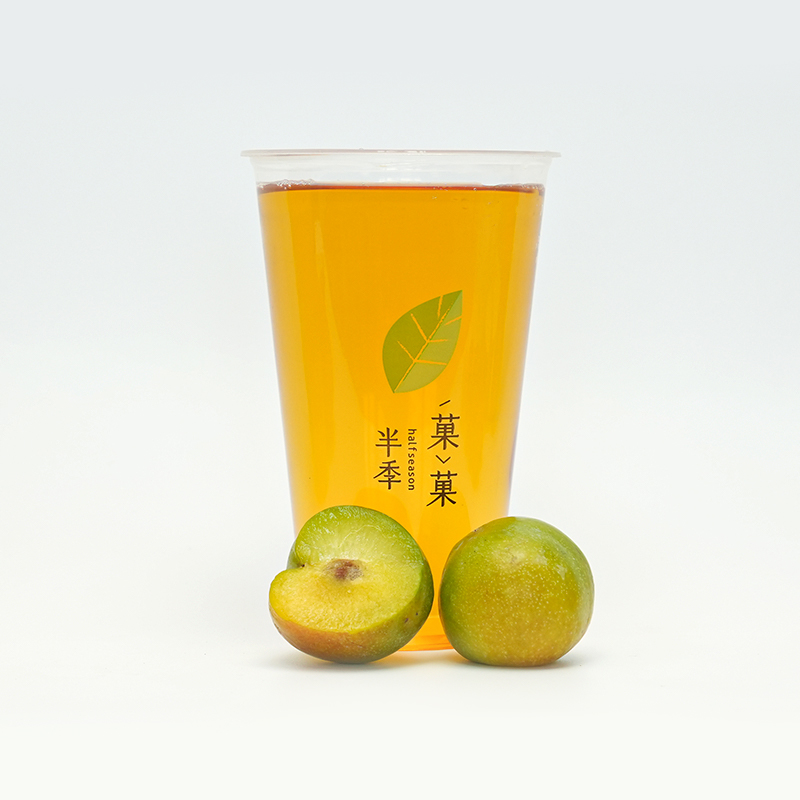 PP Injection Molded Cups for Hot and Cold Beverage ServiceCustom polypropylene cups rated 0–95°C, offered in multiple volumes and caliber options for high-volume hot and cold beverage service.View Product →
A Procurement Checklist for Hot-Fill Cups
- Pin down the real fill temperature, not the brewing temperature. Measure at the dispense point, because brewers run hotter than the cup on the counter.
- State the hold time. A drink finished in ten minutes and one carried for forty are different specifications.
- Ask for migration data tied to a temperature. A report run at 70°C says very little about a 93°C fill.
- Confirm the certification stack: ISO 9001, BRC, and where relevant national production licences and DIN safety testing.
- Test lid fit at temperature, not at room temperature. Warm the filled cup for five minutes, then re-check the seal.
- Check wall thickness and rim tolerance between batches. A tenth of a millimetre on the rim is enough to change how a lid engages.
For high-volume hot service, pairing the cup and the closure from a single moulding source removes an entire category of fault. A one-piece PP injection moulded lid is the simplest way to hold that consistency across deliveries.
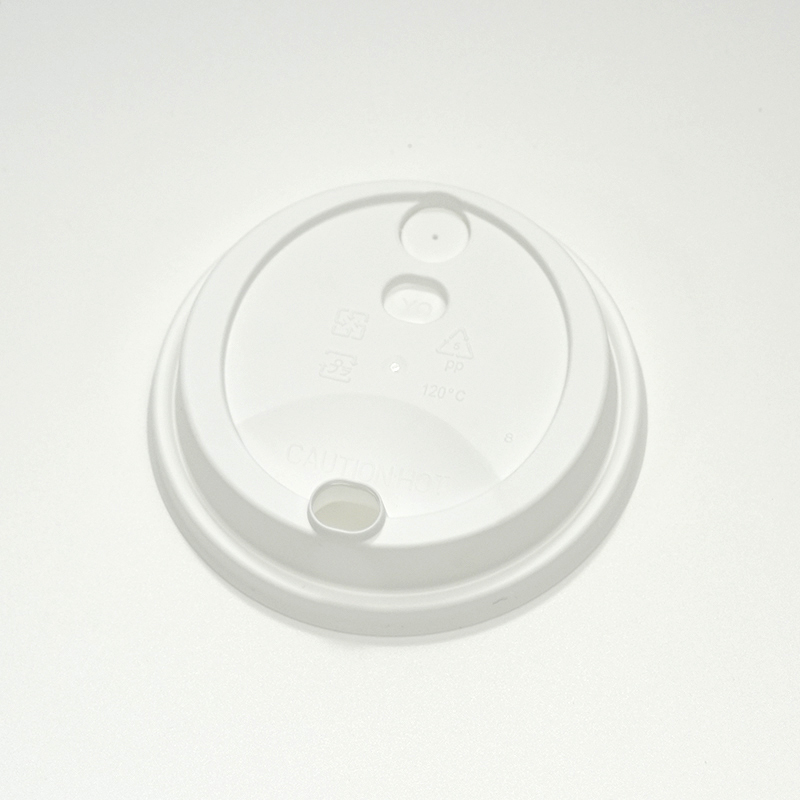 PP One-Piece Cup Lids for Beverage PackagingOne-piece food-grade PP lids with dual-purpose plug holes, designed to fit beverage cups and help reduce splashing, leakage, and mismatched closures.View Product →
Frequently Asked Questions
Can you put boiling water in a styrofoam cup?
Not safely. Boiling water exceeds the usual 93°C rating, so the foam softens, the rim distorts, and the structure stops being reliable. Use a PP cup or a lined paper cup when you need boiling-water service.
Does styrofoam release dioxins with hot drinks?
No. Dioxins require chlorine in the material at high temperature, and polystyrene contains no chlorine. The concern that does have a factual basis is styrene migration, which is measured and regulated.
Is styrene the same thing as polystyrene?
No. Styrene is the single-unit monomer; polystyrene is the long chain assembled from it. The finished plastic is stable, while a small quantity of residual monomer can migrate under heat.
How long is a hot drink safe in a foam cup?
There is no fixed clock, because the risk is practical rather than sudden. The longer the drink stays hot and in contact with the wall, the more migration occurs and the softer the rim becomes. For fills between 80°C and 90°C, most operators treat 15 to 30 minutes as a sensible working window.
Matching the Cup to the Fill Temperature
The honest position is that a styrofoam cup and a hot drink are compatible inside a temperature band and uncomfortable outside it. That band runs roughly from 80°C to 90°C for short holds. Above it, the failure mode is ordinary rather than dramatic: a softening wall, a lid that no longer seals, and migration that stays within limits only while the temperature stays controlled.
If your menu pours at 92°C and above, the specification to change is the cup and its closure, not the customer's expectation. Matching material to fill temperature is a low-cost decision that removes spills, complaints and compliance questions in a single step. Whether the answer is a thicker PP cup or a sealing lid with a documented leak test, the right choice is made at the dispense point, not in the warehouse.
 Patented Leak-Proof Thickened Plastic Cup LidsPatented thickened lids with leakproof structure, available as flip or flat styles, for matching cups and closures to higher-temperature beverage service.View Product →
For migration documentation or physical samples to test at your own fill temperature, talk to the team and we will match a cup and lid set to your process.



