


 English
 Español
 عربى
عربىContent
- 1 What Actually Gets Recycled: Material Choices Compared
- 2 Design Rules That Protect Recyclability After Printing
- 3 Specs to Lock In Before Tooling Starts
- 4 Recycled Content: rPET and PCR-PP in Practice
- 5 Food Safety and Compliance Paperwork to Request
- 6 Matching the Cup to the Drink
- 7 Frequently Asked Questions
Two cups can leave the same production line looking identical and still end up in completely different places. One is baled with polypropylene at a materials recovery facility; the other is landfilled because a full-body shrink sleeve turned it into a mixed-material item no sorter can separate. For anyone buying custom recyclable plastic cups, that outcome is settled on the specification sheet, long before the first print plate is cut.
The short answer comes down to four decisions: choose the resin carefully, match the lid to it, decorate without adding a second polymer, and hold documents that support whatever the print claims.
- Resin: PP (code 5) or PET (code 1), not a compostable polymer sold as recyclable.
- Closure: a lid in the same polymer family as the body.
- Decoration: direct print or a same-material label instead of a PVC sleeve.
- Evidence: food-contact and material paperwork behind the claim.
What Actually Gets Recycled: Material Choices Compared
Recycling is a local service, and what one municipality accepts another rejects. The material hierarchy is fairly consistent, though. Polypropylene and PET both have established end markets, and PET has the longest one because of beverage bottles. Cups made from these two polymers sort well with near-infrared equipment and run on existing lines, provided nothing else is fused to them.
| Material | Resin code | Typical end-of-life route | Temperature fit | Effect on custom printing |
|---|---|---|---|---|
| PP, injection moulded | 5 | Accepted in mixed plastics and rigid PP streams | Hot and cold drinks | Direct printing, no sleeve required |
| PP, thermoformed | 5 | Same streams where facilities accept cups | Cold to warm | High clarity for cold beverages |
| PET | 1 | Best established recycling stream worldwide | Cold drinks only | Sharp print definition on clear walls |
| PLA | 7 (other) | Industrial composting, rarely curbside | Cold drinks only | Strong plant-based story, weak recycling fit |
| PE-coated paper | Mixed | Fibre and coating are hard to separate | Hot and cold | Print sits on board, plastic barrier remains |
Rating reflects typical curbside acceptance of the cup construction, not a measured laboratory result. Local collection rules vary and should be confirmed for each destination market.
PLA deserves its own note. It is genuinely useful for the right job, and it is why TOPCUP produces PLA straws and PLA packaging bags, but it belongs to industrial composting streams rather than the bottle-and-cup recycling stream. If a customer is measuring recyclability or recycled content, a PLA cup does not answer the brief. A PP cup with a PP lid usually does.
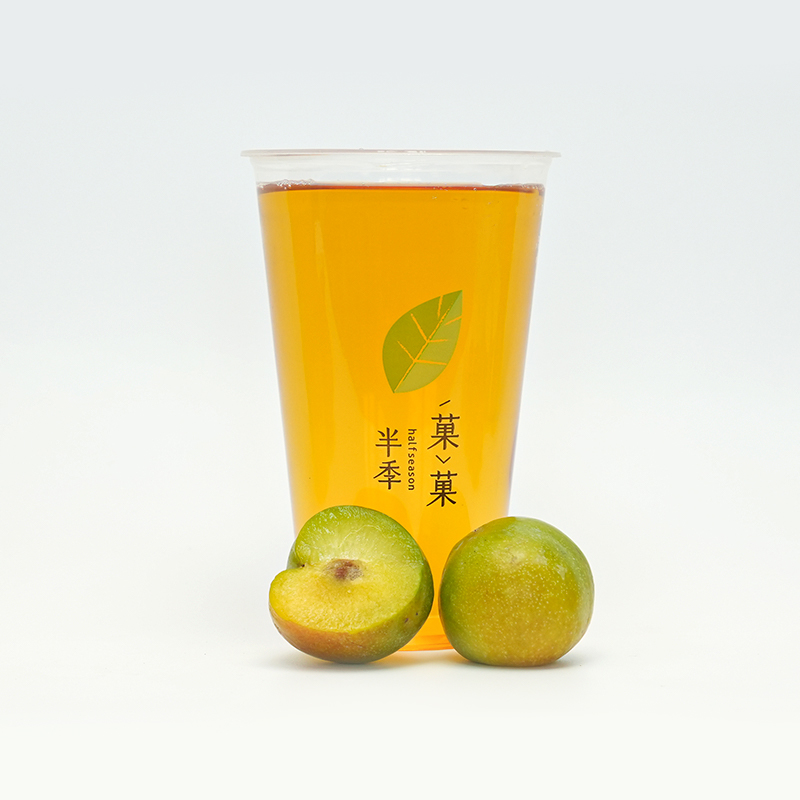 PP injection cupProduct name: PP injection molded cup Features: Suitable for temperatures of 0-95°C, suitable for both hot and cold use, good toughness and not easily deformed, good s...View Product →
Design Rules That Protect Recyclability After Printing
A cup is only as recyclable as the object the customer throws away. If the body is PP, the lid is PP and the print sits directly on the wall, the whole item is one polymer and one sorting decision. Add a sleeve, a metallised band and an adhesive label, and you have created three materials no recovery facility has an economic reason to separate.
- Match the closure to the body. A PP cup with a PP lid stays in one stream; a PET lid on the same cup adds a polymer for no functional gain.
- Print directly where the artwork allows, so no extra film enters the waste stream.
- Avoid full-body sleeves in PVC or PETG, and keep metallised ink coverage modest.
- Watch the pigment. Carbon black is effectively invisible to the near-infrared sensors in modern sorting plants, so dark designs are worth reviewing with an alternative pigment.
- Keep any label in the same material as the cup, or leave labels off entirely.
- Material choice 35%
- Lid and closure pairing 25%
- Decoration method 20%
- Recycled content 12%
- End-of-life labelling 8%
Editorial weighting of the factors that most often decide whether a custom cup is accepted in a recycling stream. It is a planning aid, not a measured result.
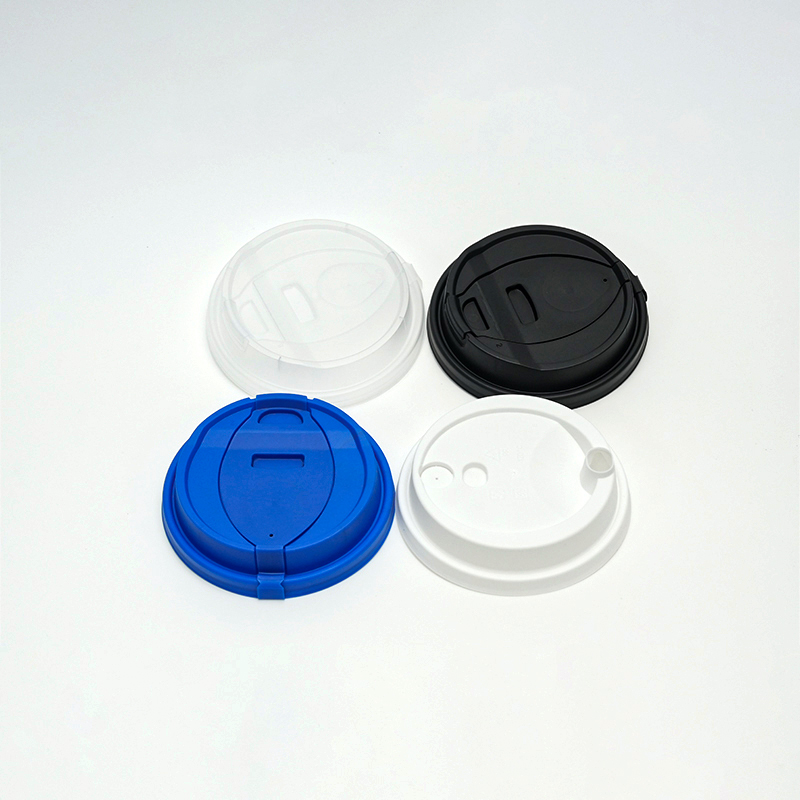 Patented one-piece leak-proof plastic cup lidProduct name: Patented one-piece leak-proof plastic cup lid Type: Patented Leak-proof Lid Patented one-piece leak-proof cover Product features: (1) Leak-proof design, ...View Product →
Leak performance and recyclability are not opposites. A one-piece PP lid with an integrated seal does the work of a liner-plus-lid assembly with one material instead of two, which is usually simpler to mould and easier to recycle.
Specs to Lock In Before Tooling Starts
Most recyclable cup projects fail on fit rather than material. Agree the numbers before plates or tooling are ordered.
- Rim diameter and tolerance. Ask what the factory holds in production, not what the drawing states. A rim that drifts by a few tenths of a millimetre changes lid removal force noticeably.
- Rim profile. Curled, rolled and flared rims take different lids, so fix the profile first and then match the lid.
- Wall thickness and cup weight. Thin walls print cheaply but deform under a firm grip; thicker walls raise material cost per thousand cups.
- Stacking height and base diameter. These decide how many cups fit a sleeve and a carton, which drives freight cost.
- Performance tests. Request leak, tilt, drop and lid-retention results on the finished cup-and-lid combination, not on the cup alone.
Recycled Content: rPET and PCR-PP in Practice
Recycled content is the other half of the story, and it is where buyers most often meet a surprise.
- Food-grade recycled resin needs clearance. Recycled PET or PP used in direct food contact must come from an approved process, usually supported by a regulatory opinion in the destination market. Ask for that document, not only a supplier declaration.
- Appearance shifts. Recycled PET tends to read slightly grey or hazy, and high recycled content in PP limits how bright a white or pastel can stay. Design around it instead of fighting it.
- Availability moves. Food-grade recycled resin supply and pricing swing more than virgin resin, so quotations hold for shorter periods.
- Claims need numbers. If the print states a percentage, the same figure should appear in the paperwork behind the shipment.
Virgin PP remains the safest default for a first custom run. Add recycled content once the design is stable and the documentation is in place.
Food Safety and Compliance Paperwork to Request
Environmentally themed packaging attracts more scrutiny, not less. A recyclable cup still touches food, so the compliance file should be complete before artwork is approved.
Ask for the food-contact declaration covering the specific resin grade, migration test reports for the finished article, and plant certificates that show the factory is audited. Yuqian Packaging Technology (Jiangsu) Co., Ltd. operates under QS production licensing, ISO 9001, BRC, German DIN safety certification and EU RoHS+ testing, and those documents are issued for the site and the product rather than for the website.
The detail most buyers miss is that food safety requirements for plastic cups also apply to the printed surface: ink, varnish and any external coating still go through migration assessment when cups are stacked or handled before use.
Matching the Cup to the Drink
Recyclability narrows the shortlist; the drink itself decides the final pick.
- Hot coffee and tea. Injection moulded PP handles heat without distortion and pairs with a PP lid.
- Iced drinks and smoothies. PET gives the clearest wall and the sharpest print definition, and low-temperature grades stay tough when the cup is filled over ice.
- Chilled and frozen desserts. Low-temperature PET resists the brittleness that standard grades show below zero.
- Delivery combinations. Where a bowl or a divided container joins the order, keep the same polymer logic across the whole pack.
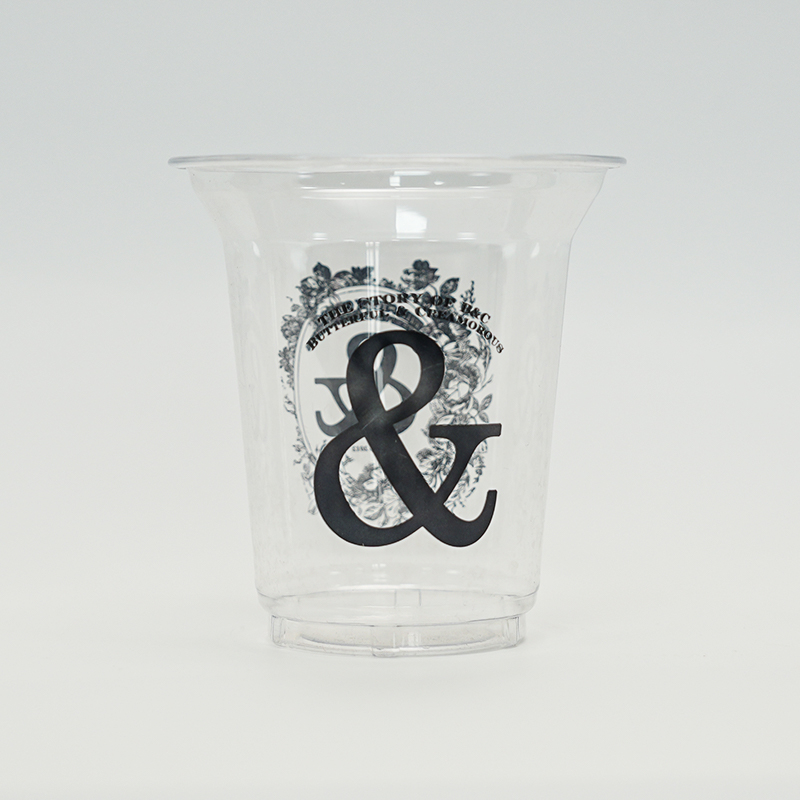 Low-Temperature Resistant PET plastic cupProduct name: Low-Temperature Resistant PET plastic cup Features: Adaptable to temperatures of -20-55℃, the cup mouth is round, Various calibers, rich styles, highly t...View Product →
When one supplier covers the cup, the lid, the straw and the bag in consistent materials, you avoid the mixed-material trap that often starts with a well-intentioned second purchase.
Frequently Asked Questions
Are custom printed plastic cups recyclable?
They can be, if the body and lid are the same polymer and the decoration adds no second material. Direct printing on a PP or PET cup fits recycling; a full-body PVC sleeve generally does not.
Which material suits a recyclable branded cup best?
PP for hot and cold drinks, PET for cold drinks where clarity matters most. Both have established recycling streams, and PP is the easier choice when one cup has to cover a mixed menu.
Does recycled content change print quality?
It changes the base colour of the cup more than the print itself. Whites and pale shades suffer first, so plan darker or mid-tone artwork if high recycled content is a target.
How do we avoid leaks after switching suppliers?
Fix the rim profile and rim tolerance in writing, then test the actual cup-and-lid combination rather than the cup alone. Most leak complaints trace back to a rim dimension that was never specified.
A custom recyclable plastic cup is a design decision, not a label. Choose PP or PET, keep the lid in the same family, print directly where you can, and keep the compliance file as tidy as the artwork. Do that, and the environmental claim on the cup will survive contact with a customer's procurement team.
If you want a second opinion on a specification, send the rim diameter, lid type and print brief through the contact page and the team will come back with a material recommendation and a sampling plan.




