


 English
 Español
 عربى
Content
- 1 Why the cheapest quote is usually the most expensive supplier
- 2 Five checks that predict whether a supplier will actually work out
- 3 Match the material to the dish, not to the catalogue photo
- 4 The formats small caterers reorder most
- 5 Leaks, vents and the two seconds that decide a review
- 6 Samples, MOQ and lead time: test before you commit
- 7 Sustainability claims that survive a customer question
- 8 Frequently asked questions
A 60-cover catering kitchen running 25 delivery orders a night ships out roughly 9,000 containers a year. When one of those containers fails — a lid lifts in transit, a bowl buckles under a hot stew — the real cost is never the container. It is the refund, the review, and the customer who quietly stops reordering.
So here is the conclusion up front: build your shortlist of takeout packaging suppliers for small catering around format fit, lid performance and reorder consistency first, and unit price second. A supplier who holds tight rim tolerances and ships the same lid-to-base pairing every quarter will cost you less over twelve months than a marketplace seller charging two cents less per piece and shipping a different mould each time.
Why the cheapest quote is usually the most expensive supplier
Price per unit only tells you one number. What you actually pay per delivered order is the container, plus the lid, plus the failure rate, plus the labour of repacking an order that leaked. On a 25-order night, a 2% leak rate is half an order every evening — close to 180 replacement meals a year, plus the ratings that follow them.
Small kitchens feel this harder than chains because there is no spare capacity to absorb it. A single person handles the pass, the packing and the phone. Every container that needs repacking pulls that person off the line at the busiest hour of the night.
Five checks that predict whether a supplier will actually work out
Before you compare prices, score each candidate on the same five points. Heavier paperwork and longer sample cycles now save a lot of firefighting later.
| Check | Why it matters | What to ask |
|---|---|---|
| Food-contact certification | Buyers, venues and inspectors increasingly ask for it before a listing is approved | Which certificates cover this exact factory and this product line? |
| Rim and lid tolerance | A few tenths of a millimetre decide whether a lid clicks home or creeps loose | Can cups and lids be supplied from the same production batch? |
| Material grade and heat range | PP, PET and PLA behave very differently once food passes 70 °C | What is the stated working temperature for this item? |
| MOQ against your weekly volume | Over-ordering ties up cash and turns a small store room into a warehouse | Is this size available unprinted or in stock colours? |
| Lead time and repeatability | A supplier who re-tools between runs drifts on fit, quietly | What is the reorder lead time, and is the mould kept between orders? |
Certification is the row most small operators skip, and it is the one worth checking hardest. A manufacturer working to QS, ISO 9001, BRC, German DIN and EU ROHS standards has already built the documentation trail you will be asked for at some point. TOPCUP, for example, lists that combination alongside patent-protected lid designs — the paperwork is a fair proxy for how seriously a factory treats consistency.
Match the material to the dish, not to the catalogue photo
Most packaging complaints trace back to a material chosen for looks rather than for the food going inside it. Clear cups photograph well; they are also the wrong choice for a 90 °C soup.
| Material | Best for | Watch out for |
|---|---|---|
| PP (polypropylene) | Hot dishes, soups, microwave reheating, takeaway bowls and rigid cups | Cheaper grades can turn brittle in the freezer |
| PET | Cold drinks, iced coffee, clear dessert cups | Softens well below boiling — never hot-fill it |
| PLA and paper | Straws and carry bags where customers expect a lower-impact option | PLA needs industrial composting conditions; keep it away from hot holding |
Rigid PP is the workhorse for hot catering, and it earns that position on structure rather than marketing — see this breakdown of why PP injection-moulded cups hold up in food packaging for the wall-thickness and impact-resistance side of the argument.
The formats small caterers reorder most
Reorder behaviour is the honest test of a format. These are the items that come back on the second and third purchase order, because they solve a specific problem rather than filling a catalogue page.
- Rectangular takeaway bowls for rice, pasta, curries and grain bowls — stackable, and easy to seal with a lined lid.
- Multi-compartment containers such as four-grid hot pot trays, so sauces and sides arrive where they were put.
- Cups plus matched lids for drinks, desserts and sides, chosen as a pair rather than separately.
- Straws and carry bags — small line items, but the ones customers notice when they are missing.
If your menu runs to sauced, wet or gravy-heavy dishes, start with a bowl that has a genuinely matched lid rather than a universal one.
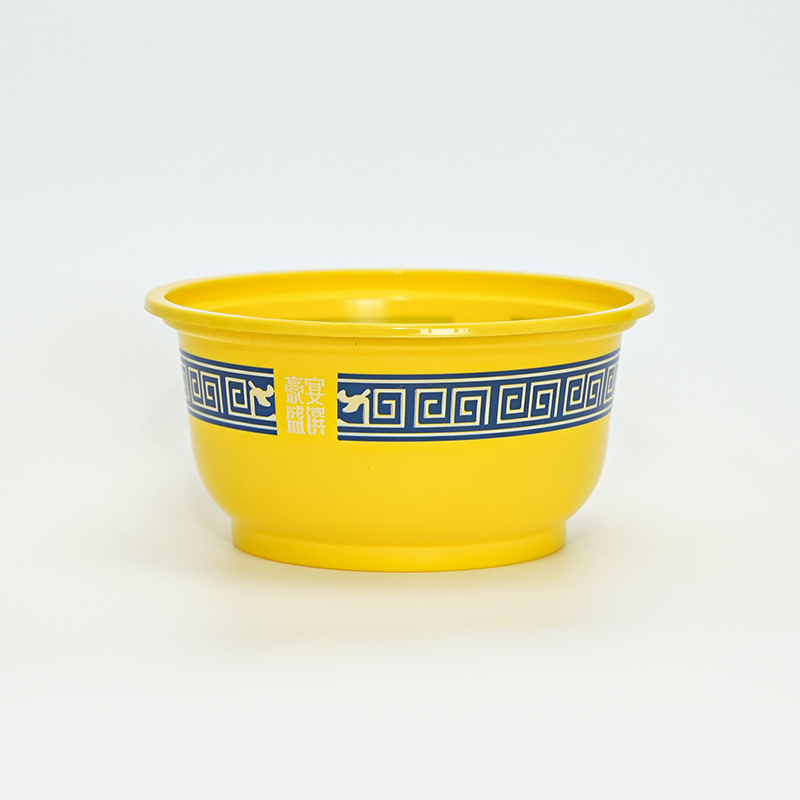 Customizable PP Takeaway Bowls and BoxesFor saucy, wet or gravy-heavy menus, these stackable PP containers suit refrigerated storage and microwave heating, with capacities from 360 to 1750 ml.View Product →
Leaks, vents and the two seconds that decide a review
Most delivery complaints are decided in the first two seconds after the bag is opened: is there condensation dripping down the inside, or is the sauce still in the container?
When you want a vent
Fried food, fresh bread, tempura and anything that steams needs somewhere for moisture to go. A vented lid releases steam so the crust stays crisp instead of turning soft on a fifteen-minute ride. The trade-off is spill risk, so vents belong on dry or semi-dry items, not on a bowl of soup.
 Clear PP Vented Takeaway Bowl LidFor fried food, bread or tempura that needs steam release, this clear PP vented lid fits 179 mm bowls and is stackable for storage.View Product →
When you want a seal
Sauces, drinks, dressings and anything liquid need the opposite: a closed, gasket-style seal with an even clamping force around the whole rim. A one-piece moulded lid removes the weak point that two-part lids introduce, which is why leak testing on a tilted tray matters more than a spec sheet claim.
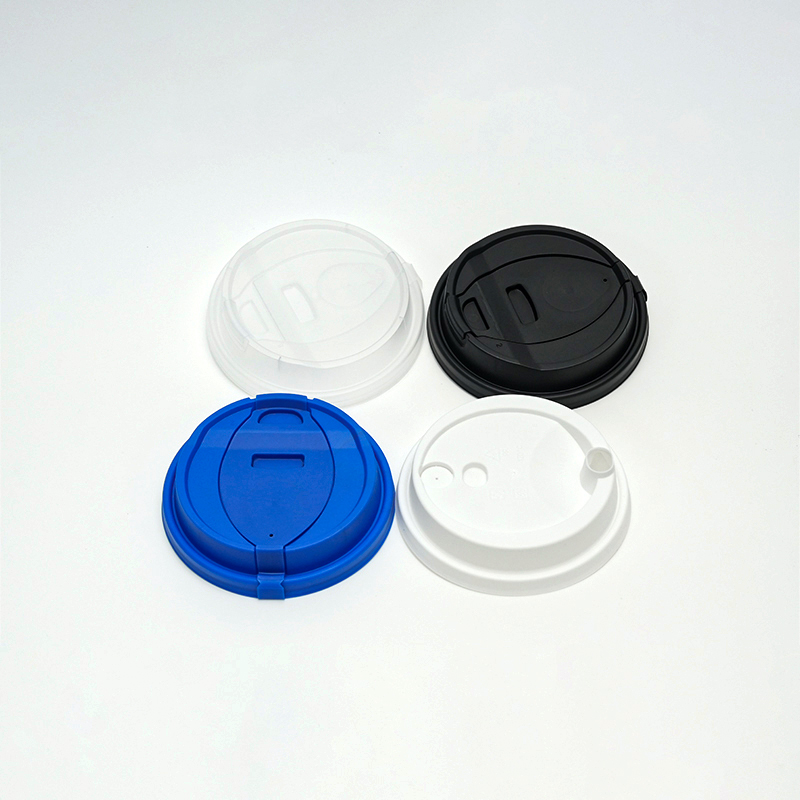 Patented One-Piece Leak-Proof Cup LidFor liquids, sauces and drinks, this patented one-piece lid is designed for a tight seal and comes in 80/90 mm calibers and multiple colors.View Product →
A practical rule for a small kitchen: stock two lid types, one vented and one sealed, and write on the packing station which dish takes which. That single line of tape prevents most of the leaks you will otherwise spend Friday night apologising for.
Samples, MOQ and lead time: test before you commit
Samples are free market research. Run them through the conditions your worst Tuesday night creates, not the conditions in a showroom.
- Fill each container with the hottest dish on your menu and close it as your staff would, in a hurry.
- Tilt it 45 degrees for two minutes and check the rim seam for weeping.
- Stack three filled containers and leave them for twenty minutes — look for buckling at the base corners.
- Drive them around for fifteen minutes, or simulate it on a rough trolley, then open the bag and inspect.
- Weigh ten lids and ten bases from the sample batch; if the weights scatter, the mould is not holding.
Ask for the reorder lead time in writing at the same time, and confirm whether stock sizes ship faster than printed ones. For a small operation, a supplier who can hold a repeatable lead time on unprinted stock usually beats one offering custom printing at half the MOQ. When you have your shortlist down to two, send a sample request with your dish list and expected weekly volumes attached — it gets you a far more useful answer than a generic price enquiry.
Sustainability claims that survive a customer question
Biodegradable and compostable are not the same promise, and customers are starting to know it. PLA straws and bags genuinely break down — in an industrial composting facility, at controlled temperature and humidity. Dropped in a hedge, they behave much like anything else.
If you print an environmental claim on a lid or a bag, be ready to explain the condition attached to it. The safest framing is also the most honest one: "made from plant-based material, compostable where commercial composting is available." It costs nothing to say and it survives the follow-up question.
Frequently asked questions
What MOQ should a small caterer expect?
It varies by format and by whether you want custom printing. Ask specifically about unprinted or stock-colour items — those are usually sold in far smaller quantities than printed runs, and for a kitchen moving a few thousand units a year, stock is the sensible starting point.
Can one supplier cover cups, lids, bowls and bags?
Often yes, and consolidating is worth the effort when it removes three separate deliveries and three separate invoices from your week. Check that the lid and base you are pairing come from the same manufacturer — mixed sourcing is where fit problems appear.
Are PET cups safe for hot drinks?
No. PET is a low-temperature material and will distort under hot fill. Use it for iced and cold menu items, and choose PP for anything served above roughly 70 °C.
How many container sizes should a small kitchen stock?
Three is usually enough: one single-portion, one larger sharing size, and one compartmented option. Every extra size adds storage, ordering complexity and the risk of running out of the one you actually needed on a Friday.
The best takeout packaging supplier for a small catering business is the one whose lids click the same way in month twelve as they did on the first sample. Test the format against your hottest, wettest and most awkward dish, confirm the certifications and the reorder lead time, and only then negotiate on price. The container is the last thing your customer touches and the first thing they judge you on.



