


 English
 Español
 عربى
Content
- 1 The Short Answer: Choose the Carrier After You Choose the Pack
- 2 Four Recycled Carrier Formats Compared
- 3 What a Carrier Has to Survive Before It Reaches the Customer
- 4 What to Put in Your First RFQ
- 5 Where the Carrier Meets the Cup and Lid
- 6 What Moves the Unit Price
- 7 Take-Home Packs Need a Second Carrier
- 8 Five Mistakes That Cost Startups Money
- 9 Quick Answers
The Short Answer: Choose the Carrier After You Choose the Pack
If your startup ships cans or bottles, the best recycled carrier is almost always a paperboard carrier made from 100 percent post-consumer waste (PCW) board in the 350 to 450 gsm range, cut to your actual container diameter instead of a generic four-pack die. It has the lowest cost per unit, it prints cleanly in two or three colours, and it ships flat, so 500 carriers take up one shelf rather than a pallet.
The exception is a cup-based menu. For iced coffee, cold brew poured to order, or kombucha served at a taproom, a molded pulp cup carrier with four-way dividers protects a 16 oz cup with a domed lid better than a folded paperboard sleeve, because it cradles the base and stops the cups leaning into each other.
Clip-on rPET rings and rigid reusable trays sit at the other end of the scale. They earn their tooling cost when you run a deposit or return scheme, or sell into a market where plastic ring carriers are already expected. At 200 units a week with no return loop, they are usually the wrong first purchase.
Four Recycled Carrier Formats Compared
The recycled content figure is the number you may end up printing on the pack, so it matters more than the material name. These are the ranges you will typically see quoted for each format.
| Format | Typical recycled content | Best suited to | Main watch-out |
|---|---|---|---|
| Recycled paperboard (PCW) | 80 to 100 percent post-consumer fibre | Four- and six-packs of cans and bottles, sleeve carriers | Loses a large share of its stacking strength when damp; specify a wet-strength grade for chilled distribution |
| Molded pulp | 95 to 100 percent recycled fibre, often newsprint or mixed paper | Cup carriers, trays, multi-cup taproom orders | Bulky to ship and store; printing is limited to debossing or single-colour stamps |
| rPET (recycled PET) | 30 to 100 percent post-consumer PET | Clip-on rings, rigid reusable trays, humid climates | Needs a food-contact declaration and a mould; colour consistency varies between batches |
| Bagasse and recycled fibre board | 90 to 100 percent agricultural fibre | Hot cup carriers, compostable-positioned programmes | Home compostability is rare; most grades require industrial composting |
A carrier described as recyclable and a carrier described as made from recycled content are two different claims. Paperboard handles both comfortably, molded pulp handles the second, and rPET depends entirely on what your local collection stream accepts.
What a Carrier Has to Survive Before It Reaches the Customer
A carrier tends to fail in three places: the walk from the bar to the car, the twenty-minute drive, and the moment someone lifts four bottles by a single finger hole. Test for those three and most specification arguments resolve themselves.
Load and drop
Load a finished carrier with full containers at serving temperature, then drop it from about 60 cm onto concrete, corner first. A four-pack of 330 ml cans weighs roughly 1.4 kg; a six-pack of 500 ml bottles can reach 3.6 kg. If the locking tabs pop on the second drop, the board is too light or the tab depth is a millimetre or two short.
Wet strength
Chilled cans sweat. Standard recycled board loses a noticeable share of its stiffness once it takes up moisture, and a carrier that felt rigid in the office will sag inside a cooler bag. Ask for the wet-strength grade, and check whether the supplier reports strength figures on conditioned board rather than on a dry lab sample.
Print and brand surface
Recycled board is darker and more mottled than virgin board, so a design that depends on a large white area or a fine gradient will read grey and speckled. One or two spot colours, a heavy solid, or a debossed logo usually looks better and costs less than four-colour process printing.
What to Put in Your First RFQ
Suppliers quote very differently depending on how much you specify. Include these points and the quotes become comparable:
- Board grade and caliper, for example 400 gsm PCW with wet strength and a 1.0 to 1.5 mm finished thickness.
- Internal dimensions taken from the real container, not the nominal size; measure the widest point including the label.
- Locking method: tab-and-slot, glued sleeve, or folded gusset, plus the assembly time you can accept per carrier.
- Dimensional tolerance, commonly plus or minus 1 mm on the die-cut blank and plus or minus 2 mm on the erected carrier.
- Recycled content percentage and the certificate behind it.
- Print colours, artwork format, and whether a physical proof is included.
- Packing format: flat blanks per carton, cartons per pallet, and the pallet footprint.
Ask for a sample run of 50 to 100 units and test them with your own filled containers before you approve the die. A die correction after production starts costs far more than one extra sample round.
Where the Carrier Meets the Cup and Lid
A carrier only solves half of the takeaway problem. The other half is the cup and lid interface, because a cup that leaks into the carrier base ruins the carrier as well as the order.
For cold drinks, a low-temperature-resistant PET cup holds up in an ice bath and stays clear enough to show the drink, which matters when the cup itself carries the brand.
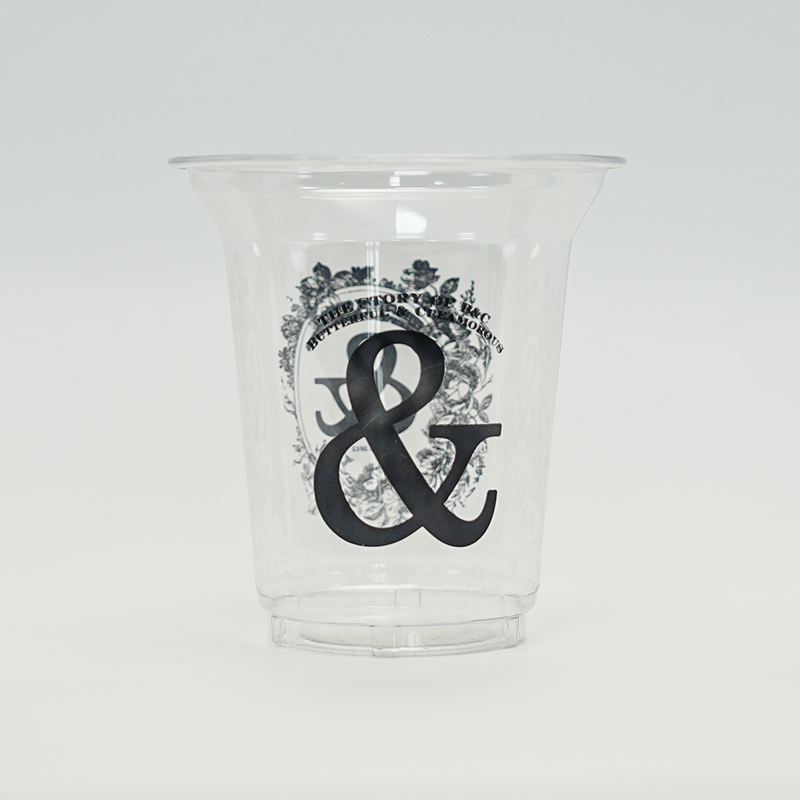 Low-Temperature Resistant Customizable PET Beverage CupClear food-grade PET cup for chilled drinks, available in multiple sizes and customizable colors or branding; pair it with a locking lid.View Product →
Pair it with a lid that locks rather than rests. A one-piece leakproof lid removes the separate straw-slot plug and reduces the number of parts your bar staff handle during a rush.
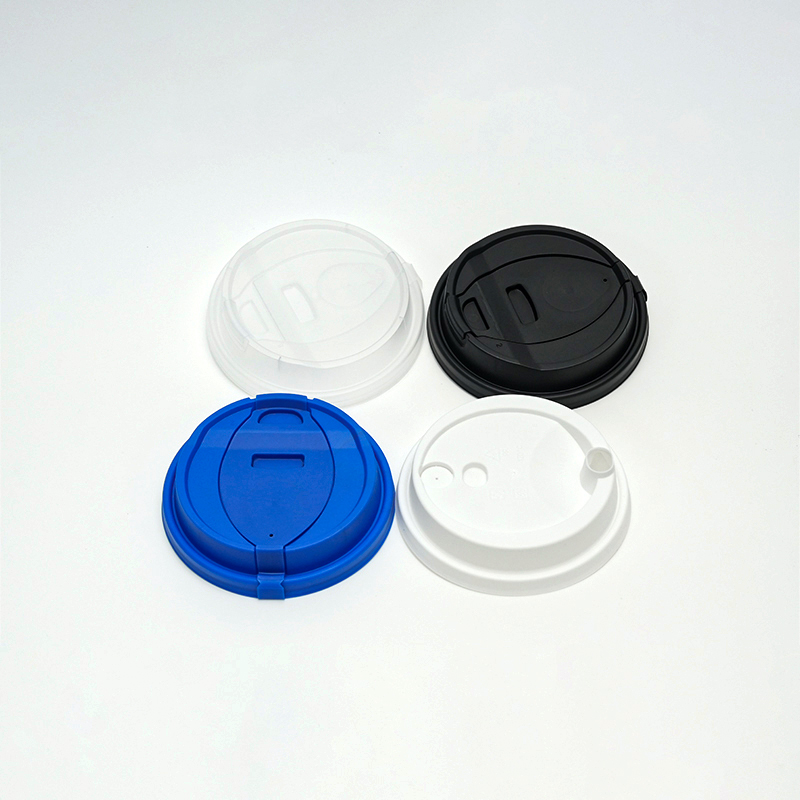 Patented One-Piece Leak-Proof Cup LidCustomizable 80 mm and 90 mm lid with a one-piece sealing design and stackable build; reduces separate parts during busy service.View Product →
Food-contact documentation belongs in the same conversation. If you are buying recycled-content board and plastic cups in one order, request the migration and material declarations together, because the food safety requirements for plastic cups set the baseline most beverage packaging is checked against.
What Moves the Unit Price
Carrier pricing is driven by four things, and only one of them is the material itself.
- Order quantity. Recycled board carriers commonly start around 1,000 to 3,000 units per size; below that, set-up and die costs dominate the unit price.
- Die ownership. Paying for your own cutting die removes the size restriction and typically pays back within two orders.
- Printing method. Single-colour flexo is the cheapest option; four-colour process on recycled stock is the most expensive and the most likely to disappoint.
- Freight cube. Flat-shipped paperboard is cheap to move, while molded pulp and pre-assembled trays are not, and freight can exceed material cost on small orders.
A practical first order looks like this: 2,000 carriers, one size, one spot colour, flat-packed, with the die owned by you.
Take-Home Packs Need a Second Carrier
Once a customer buys a four-pack of cans or a bottle of something barrel-aged, the carrier stops being the outer package. A recycled paper bag that fits the erected carrier without tearing at the handle is the difference between a tidy hand-off and a juggling act at the door.
 Paper Cup Carrier Bags for One to Four CupsWhite or kraft paper carriers in single-, double-, and four-cup sizes, with reinforced handles and customizable printing for takeaway drink hand-offs.View Product →
Match the bag gusset to the carrier footprint, and test the handle attachment with a loaded carrier. A bag rated for 5 kg with a stitched handle is more reliable than a heavier paper bag with a glued one.
Five Mistakes That Cost Startups Money
- Ordering the standard size and padding it with tissue. A carrier 5 mm too wide lets cans rattle and tips the pack on a car seat.
- Printing sustainability claims before the recycled content certificate arrives.
- Testing with empty containers instead of filled ones at serving temperature.
- Buying molded pulp for a 300-unit first run and paying more in freight than in product.
- Skipping the wet-strength grade to save a few percent, then replacing soggy carriers at every weekend market.
Quick Answers
Is recycled paperboard as strong as virgin board?
Usually within 5 to 10 percent at the same caliper, and modern wet-strength grades close most of that gap for chilled drinks. Specify the grade rather than assuming either way.
Can a recycled carrier still be recyclable?
Yes. Paperboard and molded pulp carriers made from recycled fibre are generally accepted in kerbside paper streams provided they are not heavily laminated or food-soiled, so keep coatings to a minimum.
What is a realistic lead time?
Stock sizes typically run two to four weeks; a custom die plus printing usually takes four to six weeks, with samples about a week before that.
If you are comparing recycled carriers alongside cups, lids and bags, send over your container dimensions and weekly volume. We can quote the carrier spec and the cup-and-lid pairing in one round, so contact our packaging team when you are ready to lock the die.



