


 English
 Español
 عربى
Content
- 1 Why the 32 oz size exposes every weak point in a lid
- 2 Match rim diameter before you discuss anything else
- 3 Choosing a lid style for a 32 oz cup
- 4 PET, PP or PS: temperature and clarity decide the material
- 5 Five checks that prevent 32 oz lid complaints
- 6 What to write into the lid specification
- 7 Frequently asked questions
A buyer reorders "32 oz lids for cups" from a supplier they have used for two years, and half the carton will not seal. The cups carry the same item number as before. So do the lids. What changed is the cup tool: the new rim measures 97.4 mm instead of 98.0 mm. On a 12 oz cup that 0.6 mm is a nuisance. On a 32 oz cup full of ice and soda, it is a leak on the customer's table and a chargeback on yours.
So the conclusion first: a 32 oz lid is not defined by the cup's volume at all. It is defined by three measurable facts, the outside diameter of the cup rim, the skirt depth and wall stiffness of the lid, and the resin the lid is molded from. Volume only tells you how much leverage that lid has to survive. Pick the rim diameter first, then the drinking style, then the temperature. Price and packing come after those three are locked.
Why the 32 oz size exposes every weak point in a lid
A 32 oz cup holds roughly 946 ml. Filled with ice and beverage it weighs close to a kilogram, and most of that mass sits above a rim that is only a few millimetres thick. When a customer tilts the cup to drink, the liquid pushes sideways against the lid skirt. That is a lever arm, and it grows with both cup height and cup diameter. A lid that passes on a 16 oz cup can fail here for reasons that have nothing to do with lid quality in isolation.
The three failures we see most often on this size are consistent:
- Rim creep and dome lift. A thin flat lid bows upward under the weight of a full cup, opening a gap along part of the rim.
- Skirt slip. The lid snaps on in the plant but releases when the cup is carried by the body and the lid flexes.
- Seam leakage during tilt. Liquid finds the shortest path between the cup's rolled edge and the inside of the lid skirt, usually where the rim diameter runs small.
None of these show up in a five-second check at the line. They show up in a delivery bag twenty minutes later, which is why the specification work matters more on 32 oz than on any smaller size.
Match rim diameter before you discuss anything else
Lids are quoted and stocked by rim diameter, not by ounces. Ask the cup supplier for the outside diameter of the rolled rim measured on a finished, cooled cup, plus the tolerance. If the answer is a range rather than a nominal figure with a tolerance band, ask again. Moulded rims typically move within about plus or minus 0.3 mm run to run, and a lid built for the low end of that band will still seal at the high end if the skirt is deep enough.
| Nominal rim OD | Typical cup range | Lid types usually used | What to watch on 32 oz |
|---|---|---|---|
| 90 mm | 12 to 20 oz | Flat, low dome, straw slot | Rarely used at this volume, low leverage |
| 98 mm | 20 to 24 oz | Flat, dome, straw slot | Forgiving fit, common in fountain programmes |
| 107 mm | 32 oz | Dome, flat, direct-drink | Needs a deeper skirt and thicker centre panel |
| 118 mm | 32 oz and above | Heavy dome, no-hole | Highest leverage, tightest tolerance control required |
If your cup measures 107 mm and your lid catalogue listing says "fits 32 oz", that listing is a marketing shorthand, not a specification. Always confirm the number.
Choosing a lid style for a 32 oz cup
Drinking style decides the geometry, and the geometry decides skirt depth and packing volume. Four families cover almost every 32 oz application.
Flat lids with a straw slot
The default for fountain drinks, iced tea and cold brew. Low profile, stacked densely in the carton and the least expensive to freight. The risk on a 32 oz cup is the centre panel: a thin flat lid will visibly bow once the cup is full. Specify a reinforced centre and a straw slot sized to your straw, commonly around 9 to 11 mm, tight enough that the straw stays upright but open enough for a customer to push through without spilling.
Dome and ball lids
Used for bubble tea, smoothies, shaved ice and anything with toppings or whipped cream. A dome adds 25 to 40 mm of headroom, and that extra height also raises the centre of gravity, so the skirt has to grip harder than a flat lid does. The practical trade-off is freight: dome lids do not nest as tightly, so a pallet holds noticeably fewer units. Check the carton count before you compare quotations.
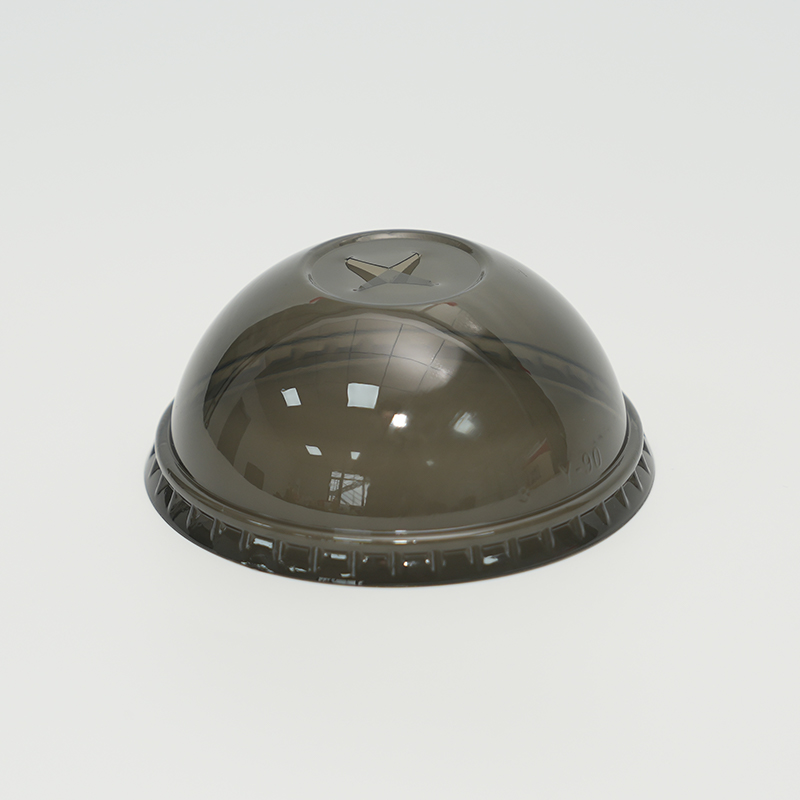 PET Ball Plastic Cup Lid for Beverage CupsTransparent spherical PET lid in 90, 93, and 98 mm sizes; food-grade, high-temperature resistant, stackable, and customizable for beverage cup lid projects.View Product →
Direct-drink and sip lids
Reclosable lids for coffee, shakes and cold brew, with a raised spout and a hinged cap. On a 32 oz cup, look at two details: whether the cap stays folded back while drinking instead of dropping onto the nose, and whether the hinge survives repeated open-and-close cycles over a full cup. A hinge that is fine when empty can fatigue when the lid is warm and loaded.
No-hole and vented lids
Delivery packaging uses both. A no-hole lid keeps soup, sauce and hot drinks contained with nothing to leak through. A vented lid releases steam from fried food so the coating stays crisp instead of going soft in the bag. They look similar on a shelf, so colour-code them in storage if both run on the same line.
PET, PP or PS: temperature and clarity decide the material
Material choice follows fill temperature and the look you want, not personal preference. PET is clear, prints sharply and is the natural match for cold drinks, iced coffee and smoothies; it is not intended for hot fill. PP takes heat well and is the standard choice where a 32 oz container holds hot soup, noodles or a hot beverage, and it tolerates the distortion that comes with warm lids pressed onto warm cups. PS is rigid and clear but stress-cracks under impact and heat, so it is a poor fit for a heavily loaded cup.
For hot or dual-use programmes, an injection-moulded one-piece lid is usually the sturdiest option, because the skirt and centre are formed in a single shot with a controlled wall thickness rather than drawn from a thin sheet.
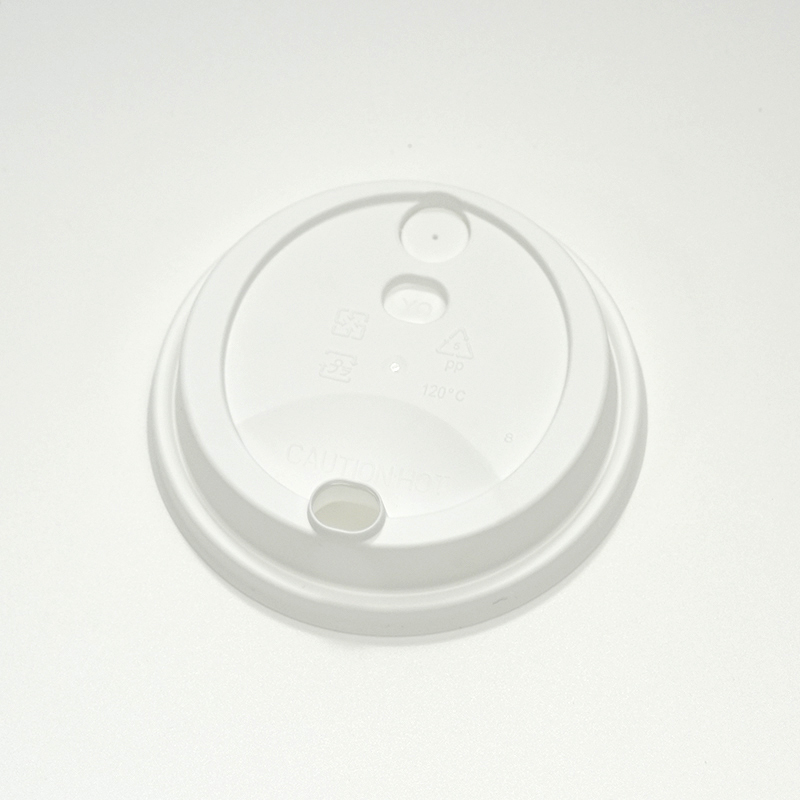 PP Plastic One-Piece Cup Lid for FoodserviceInjection-molded one-piece PP lid for hot or dual-use cups, with dual-purpose plug hole, customizable leak-proof options, 90 mm variants, and available compliance paperwork.View Product →
Compliance belongs in the same conversation. For food-contact packaging sold into export markets, ask for the paperwork before the samples: a national industrial production licence, ISO 9001, BRC, German DIN safety testing and EU ROHS testing are the documents buyers most often request. If you want the background on how these standards are actually applied to cups and lids, our overview of food safety requirements for plastic cup and lid suppliers walks through the checks that matter at each stage.
Five checks that prevent 32 oz lid complaints
Run these before a bulk order, not after. All five take less than a day and cover the failure modes that generate claims.
- Rim measurement record. Measure the outside diameter of ten cups at three points around the rim and log the minimum and maximum. That range is the real specification your lid must seal across.
- Tilt test. Fill a cup, cap it, lay it at roughly 45 degrees and inspect after one hour and again after twenty-four. Any weeping at the rim shows up here rather than in transit.
- Drop test. Drop a filled cup from 60 to 80 cm onto a hard floor, base first and then sideways. Watch for lid release and for hairline cracks near the rim, both of which appear at cold temperatures first.
- Straw push-through and squeeze. The straw should need a firm push, not a jolt, and the lid should not separate when the cup wall is squeezed as a customer would.
- Stack and lift test. Stack two filled cups and lift the upper one by its body. This is the single fastest way to expose a skirt that grips in the plant but releases under load.
Where leak containment is the priority, for example in delivery and ride-share channels, a patented leakproof lid with a thickened sealing ring and a deeper skirt is a more reliable starting point than a general-purpose flat lid, and it usually removes the need for a secondary seal or a sleeve.
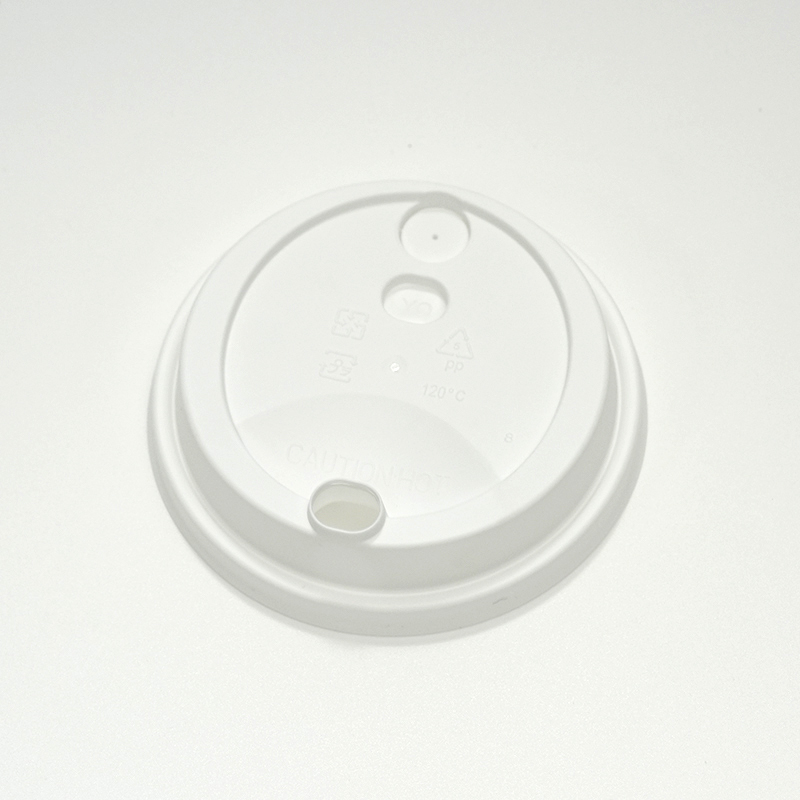 Patented Leak-Proof Thickened Plastic Cup LidPatented thickened leak-proof cup lid in flip and flat styles, 80/90 mm, for delivery and ride-share; specify measurable parameters to avoid substitution.View Product →
What to write into the lid specification
A purchase order that says "32 oz lids, PET, clear" invites substitution. A specification that lists measurable parameters does not. Include at minimum:
- Rim outside diameter with tolerance, and the measurement method.
- Lid family and slot or spout size, if applicable.
- Resin type and grade, with the food-contact declaration attached.
- Skirt depth, and whether a gasket or sealing ring is required.
- Colour reference, print position and print area limits.
- Packing count per sleeve and per carton, plus pallet configuration.
Two commercial points are worth settling early. Custom colours, logos and non-standard slot sizes normally require tooling, so ask for the tooling cost and lead time separately from the unit price. And always order samples from the same production run you intend to buy, then repeat the tilt and lift tests on those exact samples. If you want measured samples against your own cup rim, send us the rim dimensions and fill temperature and we will confirm the closest matching lid before you commit to a run.
Frequently asked questions
Do all 32 oz lids fit all 32 oz cups?
No. "32 oz" describes the cup's capacity, while the lid is sized to the rim diameter, which varies between 107 mm and 118 mm across common moulds. Two cups holding the same volume can take completely different lids.
Can a 32 oz lid be used on a smaller cup?
Only if the rim diameter matches. A 98 mm lid will not grip a 107 mm rim and will fall off, even though it sits visually on top of the cup.
Should I choose a dome or a flat lid?
Choose a dome when the drink carries toppings, cream or a wide straw, and a flat lid when the drink is a standard cold beverage served with a straw. Dome lids cost more to freight because fewer nest per carton.
How do I stop lids from leaking in delivery?
Start with rim tolerance, then move to a thicker lid with a deeper skirt. A thickened leakproof lid removes most delivery leaks; a wider straw slot or a bowing centre panel will reintroduce them.
A 32 oz lid is a small part with an outsized effect on whether a drink reaches the customer intact. Decide the rim diameter first, confirm it with measurements rather than catalogue shorthand, then choose the lid family and the resin to match the drink temperature. Run the tilt, drop and stack checks on production samples, and put the numbers you tested into the purchase specification so the second order behaves exactly like the first.



