


 English
 Español
 عربى
عربىContent
- 1 What 3 Oz Means on a Real Specification Sheet
- 2 Why PP Is Still the Default for Scooped Ice Cream
- 3 PET, PLA and Paper: Where They Fit and Where They Fail
- 4 Rim Diameter and Lid Fit: The Test That Decides Everything
- 5 Food-Contact Compliance: Documents to Collect Before the First Shipment
- 6 What Actually Drives the Unit Price of a 3 Oz Cup
- 7 A Practical Trial Order Checklist
- 8 Frequently Asked Questions
If a 3 oz ice cream cup order goes wrong, it is rarely because the cup was the wrong size. It goes wrong because the rim diameter drifted by 3 mm between two production runs, because the lid was designed for a 4 oz cup with a similar-looking opening, or because the resin chosen for the body turned brittle at -18 degrees and cups cracked on the way to a catering job.
Start with three numbers: rim diameter, body material, and lid geometry. Capacity, print quality and unit price come afterwards, because a beautifully printed cup with a lid that pops off in a delivery bag is still a failed purchase.
What follows is how "3 oz" is actually defined on a specification sheet, which materials survive a freezer, how rim tolerance decides whether your lids seal, which documents to collect before the first shipment, what drives the unit price, and how to run a trial order that tells you the truth in two weeks instead of two quarters.
What 3 Oz Means on a Real Specification Sheet
Capacity in disposable cups is quoted two ways, and mixing them up is the single most common cause of rework. Brim capacity is the volume the cup holds when filled right to the top edge; a "3 oz" cup is usually 88 to 95 ml brim capacity. Working fill is what you can actually serve without spilling in transit, typically 75 to 85 ml, or roughly 2.6 to 2.8 oz. If your scoop is 2.5 oz and your cups deliver 78 ml of usable volume, you will only discover the mismatch at the counter.
| Nominal size | Brim capacity (typical) | Working fill | Top diameter (typical) | Height (typical) | Typical use |
|---|---|---|---|---|---|
| 2 oz / 59 ml | 58-65 ml | 48-56 ml | 55-62 mm | 40-48 mm | Condiment, sampler |
| 3 oz / 89 ml | 88-95 ml | 75-85 ml | 60-72 mm | 50-62 mm | Single scoop, kids' scoop, tasting flight |
| 4 oz / 118 ml | 118-128 ml | 100-112 ml | 68-80 mm | 55-68 mm | Double scoop, small sundae |
Two tolerances matter as much as the capacity itself: top diameter and rim flat width. A well-maintained mould typically holds top diameter within about plus or minus 0.3 mm and rim flatness within about 0.2 mm. A mould that has run for years without servicing can drift to plus or minus 1 mm, which is enough to break lid fit even though the cups look identical in a photograph.
Why PP Is Still the Default for Scooped Ice Cream
Polypropylene dominates the 3 oz ice cream cup category for mechanical reasons rather than commercial ones. PP is semi-crystalline, so as it cools its structure still absorbs impact instead of shattering. A PP cup dropped on a concrete floor at -18 degrees scuffs or dents; it does not split into shards the way a brittle material does. That single property is why freezer-to-counter workflows use PP rather than crystal polystyrene or standard PET.
Two production routes produce a cup with the same nominal size, and they behave differently in service:
- PP injection moulded cups: a heavier, flatter rim with tighter dimensional control. Typical body wall 0.4 to 0.7 mm. Better choice when lids must seal reliably and when the rim carries printed branding.
- PP blister (thermoformed) cups: thinner wall, lower tooling cost, faster for high-volume plain cups. Typical body wall 0.3 to 0.5 mm.
For ice cream specifically the injection moulded route usually wins on two counts. The rim stays flatter, so lids seal at low temperature without extra force, and the wall thickness resists the squeeze that happens when staff pack cups tightly into a freezer bin.
When you write the specification, include the material grade, body wall thickness, rim flat width, brim capacity, masterbatch colour reference and print method. A cup spec that only says "3 oz, white, printed" gives the factory room to move on all six of those points.
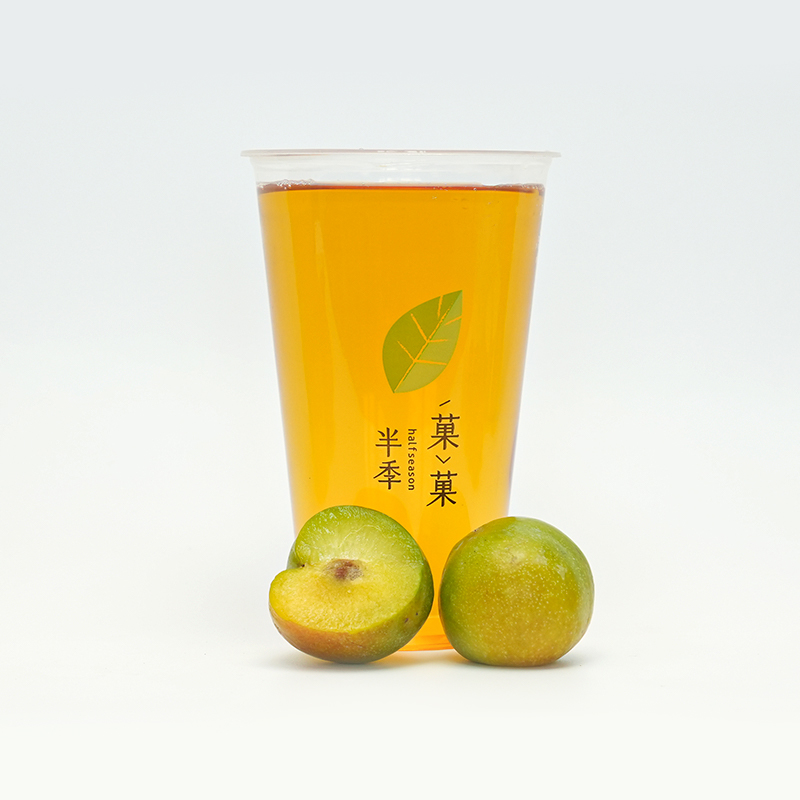 PP Injection Molded Cup for Hot and Cold Beverage ServiceFor custom hot and cold drink service, this food-grade PP cup supports detailed specification review and drop-test evaluation before bulk ordering.View Product →
Cold impact is the test that matters
Ask for a drop test rather than a description. A workable protocol: condition a full carton at -18 degrees for 24 hours, then drop ten individual cups from 1.2 m onto a concrete surface, rim up and rim down, and photograph the results. Cups that survive rim-down drops without cracking or a split seam are suitable for freezer-to-customer routes. Cups that only survive rim-up drops are suitable for counter service.
PET, PLA and Paper: Where They Fit and Where They Fail
Material selection for a 3 oz cup is a temperature question before it is a sustainability question. Each material has a usable window, and ice cream sits near the bottom of it.
Indicative service temperature ranges in degrees Celsius. Confirm actual limits against your supplier's resin data sheet.
Low-temperature PET is the clarity option. It gives a glass-like appearance that shows product colour well, and freezer-grade grades hold up at serving temperatures below zero. Its weakness is heat: standard PET starts to distort well below the boiling point, so it is unsuitable if the same cup will be used for hot fudge or warm toppings. It also becomes brittle if the grade is not genuinely specified for freezing, so insist on the low-temperature grade rather than accepting a general-purpose PET drawing.
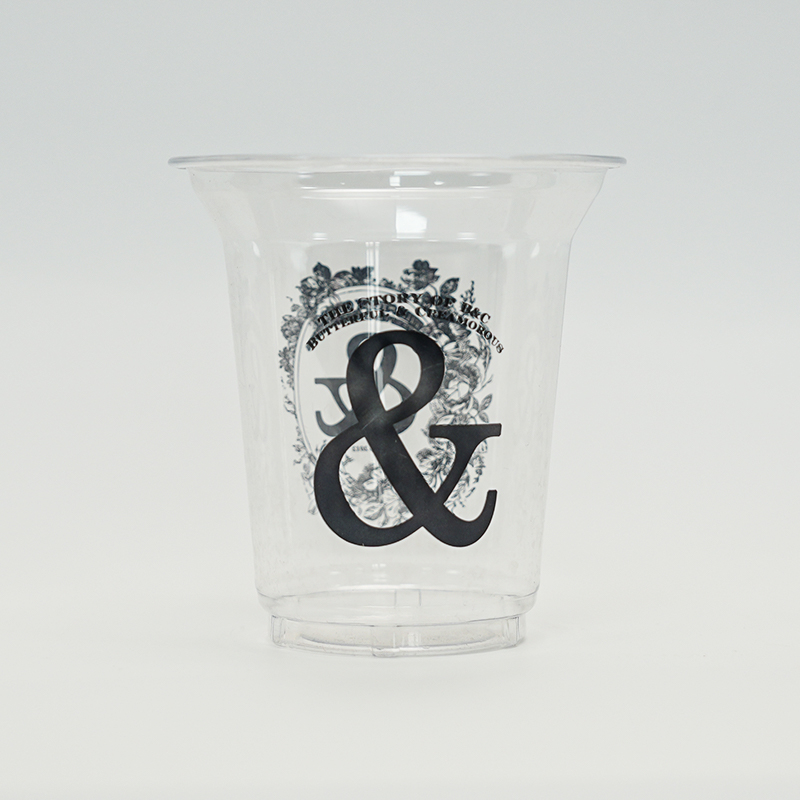 Low-Temperature Resistant PET Plastic Cup for Cold and Frozen UseFor cold and frozen beverage packaging, this clear PET cup keeps shape at low temperatures; compare it with PLA when heat resistance is not required.View Product →
PLA is the compostable option and is increasingly requested by gelato brands with sustainability commitments. Its practical limit is heat: PLA softens at temperatures far below PP, so it works for cold and frozen desserts but not for warm service or hot-fill cleaning cycles. PLA also has a shorter shelf life than PP before it starts to lose impact strength, so inventory planning matters.
Coated paperboard is the branding option. It prints beautifully, holds a strong sustainability story and is widely accepted in curbside recycling where facilities allow. The trade-off is dimensional: a paper rim deforms more easily under moisture and pressure, so lid fit must be re-tested on paper cups even if the same lid works on a plastic cup of the same diameter.
Rim Diameter and Lid Fit: The Test That Decides Everything
Lids are matched to a rim profile, not just a diameter. Two cups can both measure 68 mm across the top and still take different lids, because the rim's flat width, undercut depth and taper angle all influence how the lid snaps and holds.
If your 3 oz cups are served in a shop, lid fit is a convenience question. If they go out for delivery, it becomes a commercial risk. A single leaked cup in a catering order costs more than the cup, the lid and the scoop of gelato combined.
A practical leak and retention protocol takes about twenty minutes:
- Fill the cup to 80 percent of working capacity with water cooled to about 4 degrees.
- Apply the lid with normal one-hand pressure and confirm it seats visibly all round.
- Invert the cup and hold it for 30 seconds.
- Shake it 20 times with a moderate vertical motion.
- Turn it upright, then lay it on its side for 60 seconds.
- Repeat the whole sequence with the cup at room temperature and again after two hours in a freezer.
Zero drips across all three conditions is the pass mark. Any seepage at the rim means the lid is not matched to the cup, even if it feels tight.
For delivery applications, look specifically at lids with a continuous sealing bead and a one-piece construction, which remove the seam weaknesses of two-part designs. TOPCUP's patented leakproof series was developed around exactly this problem: a thicker sealing bead and a one-piece body that holds its grip after repeated handling.
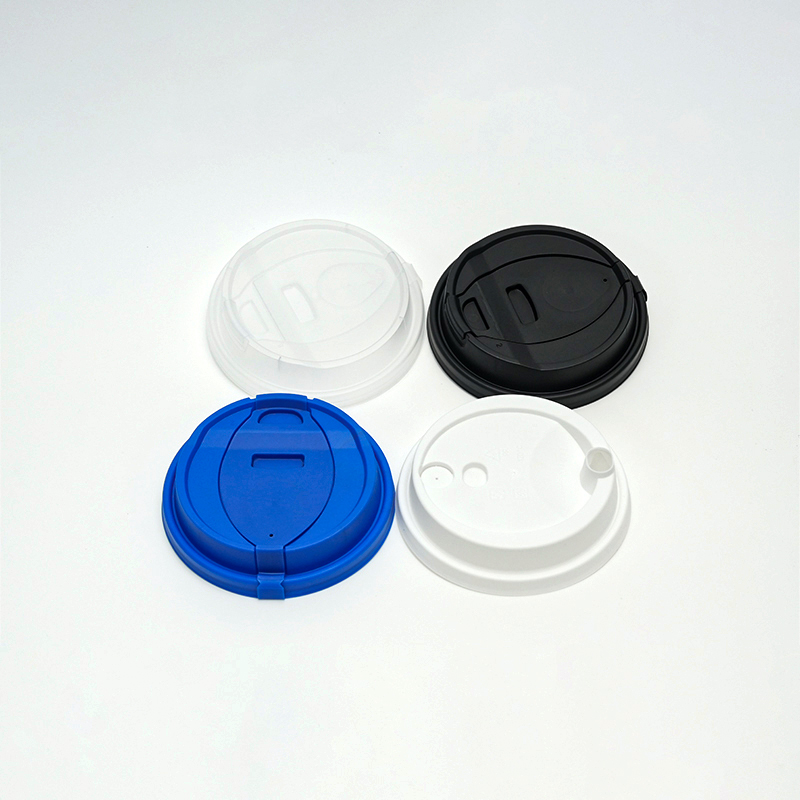 Patented One-Piece Leak-Proof Lid for Beverage CupsFor delivery and transport, this one-piece leak-proof lid offers a continuous seal; fit-test smaller cup diameters before approving production runs.View Product →
Matching lids to small cups
Smaller diameters are less forgiving. A 3 oz cup has less rim length to distribute sealing force, so the same lid design that works well on a 16 oz drink cup may fail on a 3 oz dessert cup. Always fit-test on the specific cup, at the specific temperature, before approving a production run.
Food-Contact Compliance: Documents to Collect Before the First Shipment
Food packaging buyers are increasingly audited by their own customers, so the paperwork matters as much as the product. For plastic cups intended to contact food directly, a supplier should be able to provide, on request and per batch:
- A production licence such as the Chinese QS national industrial product licence.
- Quality management certification, for example ISO 9001.
- Retail and food-safety scheme certification such as BRC, which many grocery and foodservice chains require from their packaging suppliers.
- Food-contact safety certification such as the German DIN safety mark.
- Heavy metal and restricted substance test reports, for example RoHS+ testing.
- A written food-contact declaration identifying the resin grade and confirming compliance with the applicable regulation for the destination market.
It helps to know what regulators actually ask for on the resin side, because "food grade" without a grade reference is not a specification. A useful primer on the standards that govern plastic cup production, and how manufacturers demonstrate compliance, is summarised in this guide to plastic cup food safety requirements.
Also ask how batch traceability works. If a customer reports an odour or a deformation issue six months after delivery, you want to trace that carton back to a resin lot and a production date, not to a general assurance that the factory is certified.
What Actually Drives the Unit Price of a 3 Oz Cup
Buyers are often surprised that a 3 oz cup does not cost proportionally less than a 16 oz cup. The reason is that a small cup carries nearly the same printing, packing and handling cost as a large one, concentrated into far less material.
- Resin 48%
- Packing and labour 17%
- Tooling and setup 13%
- Printing 12%
- Freight 10%
Indicative cost mix for a printed 3 oz PP cup at mid-volume order quantities.
Three levers move the price more than any other:
- Print method and colour count. Each additional colour typically adds a cylinder or plate cost that must be amortised across the order. Four-colour branding on a 3 oz cup can add more to the unit price than the resin itself at low volumes.
- Tooling amortisation. A dedicated mould for a new rim diameter is a fixed cost. If an existing mould already matches your specification, you skip it entirely.
- Nesting and carton configuration. Smaller cups nest tightly, so carton count per pallet is high. Specifying a packing arrangement that maximises cups per carton cuts freight more than a small resin discount ever will.
A Practical Trial Order Checklist
Run these steps before committing to a full production run. Most of them cost nothing but an email and a freezer shelf.
- Request a dimensioned drawing, not a product photo, showing brim capacity, top diameter, rim flat width and body wall.
- Ask for samples from at least three different production dates, sealed in bags, to see batch-to-batch variation.
- Condition one carton at -18 degrees for 24 hours and repeat the drop test.
- Fit-test every lid in the sample bag, not just the top three cups.
- Run the invert, shake and side-lay leak sequence described above at three temperatures.
- Check nesting force: cups should separate with light one-hand pressure, not a tug.
- Measure stacking height for ten nested cups and confirm it matches the packing plan.
- Compare print colour against the approved reference under daylight and shop lighting.
- Collect compliance documents and confirm the batch code format.
- Order a small first quantity, then scale once the leak test, drop test and print colour all pass.
Frequently Asked Questions
Can I use the same lids on 3 oz and 4 oz cups?
Only if both cups share the same rim diameter and the same rim profile. A 3 oz and a 4 oz cup with the same 68 mm top diameter can often take the same lid, but the undercut depth and rim flat width must match as well. Test both, do not assume.
Are 3 oz cups freezer-safe?
PP cups are, and they are the safest default for freezer storage and freezer-to-counter transport. Low-temperature PET is also suitable when the correct grade is specified. Standard PET, PLA and thin paperboard all need verification at your actual storage temperature.
What is the minimum order quantity?
It depends almost entirely on printing. Plain cups in an existing mould can often be produced in relatively small quantities, while custom-printed cups carry a cylinder or plate cost that only makes sense above a certain volume. Ask your supplier to show the quantity at which the unit price stops falling steeply.
How many 3 oz cups fit in a carton?
It varies with wall thickness, nesting design and carton dimensions, but small nested cups pack very densely. Ask for cups per carton, cartons per pallet and total pallet weight, then calculate landed freight per cup rather than freight per carton.
Can a supplier match an existing lid I already stock?
Usually yes, if you send the physical lid and the cup it must fit, together with a dimensioned drawing. Providing the cup and lid together matters, because a lid that fits a nominal 68 mm rim from one factory may not fit a nominal 68 mm rim from another.
None of this requires special expertise, but it does require buying on dimensions rather than on photographs. Get the drawing, test the freezer performance, fit the lids yourself, and collect the compliance paperwork before the purchase order is signed.
If you are comparing two suppliers, send both the same dimensioned drawing, the same lid sample and the same drop-test protocol. If you would like your specification reviewed against an existing mould before you invest in new tooling, send our team the cup and lid details and we will tell you which of the two routes is realistic for your volume.




