


 English
 Español
 عربى
عربىContent
- 1 Pick the Cup Body Before You Approve the Artwork
- 2 PET, PP or PLA: What the Material Decides
- 3 Printing Methods: Where Color and Cost Both Come From
- 4 Color Control: Tolerances Worth Writing Into the PO
- 5 Food Contact Compliance Is Not a Marketing Line
- 6 Lids and Rims: One System, Not Two Parts
- 7 What Drives Unit Cost, and Why Volume Changes the Math
- 8 Ordering Checklist and Common Questions
Your first 10,000 printed cups matched the approved sample. Four months later, the reorder shows a logo that reads a shade darker and rims that no longer hold the lid the same way. The artwork never changed, so the cause sits elsewhere in the process.
Three decisions govern whether a run of custom printed plastic cups turns out well: the cup body you print on, the decoration method, and how the lid seals against the printed rim. Get those right and artwork files, minimum order quantity, freight and reorder timing all become routine.
The sections below cover each decision with the tolerances and cost figures that get negotiated in a purchase order, plus the food-contact paperwork printed drinkware requires.
Pick the Cup Body Before You Approve the Artwork
Printing is a finishing step applied to a container that already exists, so the container sets the limits. Wall thickness, rim profile and taper decide how evenly an ink blanket wraps the surface, how crisply small type reproduces, and whether colors sit on an opaque base or glow through a translucent wall.
Three cup bodies, three print outcomes
Thermoformed PP blister cups are light and inexpensive, and the gentle taper lets the ink blanket contact the wall evenly. They suit iced drinks at high volume.
Injection molded PP cups are stiffer, hold a sharper rim and take hot fill better. The rigid wall also keeps registration stable across a long run, which matters when the logo contains a thin rule or small type.
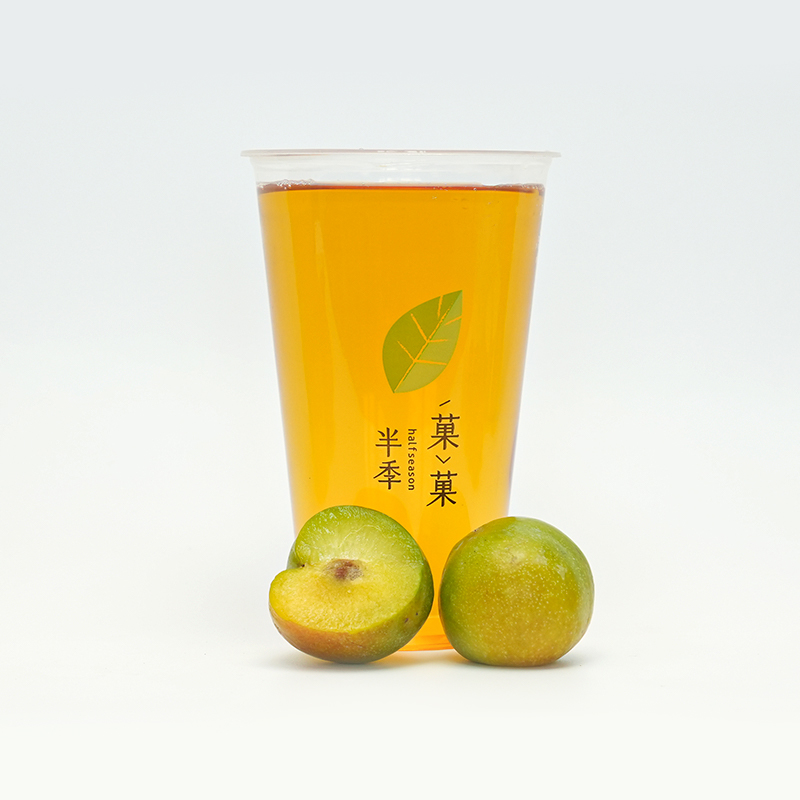 PP injection cupProduct name: PP injection molded cup Features: Suitable for temperatures of 0-95°C, suitable for both hot and cold use, good toughness and not easily deformed, good s...View Product →
PET cold cups give the clearest look and the crispest ink lay, but the material softens above roughly 60°C, so they belong with iced coffee, smoothies and cold brew rather than hot tea.
Rim geometry is a print decision too
A rolled rim gives the lid a shoulder to snap over, while a thin cut rim can flex under load. The rim is also the one zone where printing and sealing compete, so flag it before plates are cut: ink adds a few hundredths of a millimeter exactly where the lid needs a clean fit.
PET, PP or PLA: What the Material Decides
Material is the first cost lever and the first compliance lever. The comparison below covers the options buyers ask about most for printed drink cups.
| Material | Best for | Service temp | Print behavior | Watch out for |
|---|---|---|---|---|
| PP, injection molded | Hot tea and coffee, sturdy takeaway | up to about 100°C | Rigid wall holds registration tightly | Slightly less clear than PET |
| PP, thermoformed | Iced drinks, high-volume programs | up to about 90°C | Even wrap on a gentle taper | Thin wall can flex under lid pressure |
| PET | Iced coffee, smoothies, clear look | about 60 to 65°C | Crisp ink lay on clear or opaque stock | Not for hot fill; stress cracking risk |
| PLA, compostable | Compostable and sustainability SKUs | about 45 to 55°C | Prints well but needs tight drying control | Higher cost, humidity sensitivity |
Two cautions. Heat resistance is a service temperature, not a survival record: a cup that handles boiling water for ten seconds can still soften after twenty minutes under a heat lamp. And PP and PET take ink differently even with identical plates, because surface energy and gloss change how the ink film cures.
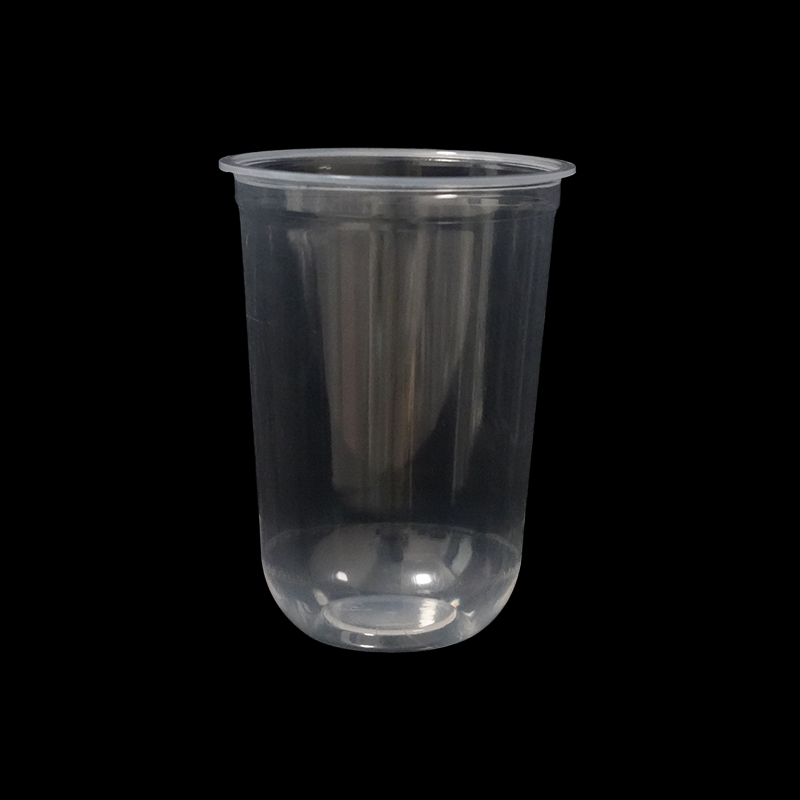 Disposable PET plastic drink cupProduct name: Disposable PET plastic drink cup Features: safe and non-toxic material, no odor, environmentally friendly and healthy Product advantages: (1) A variety o...View Product →
Printing Methods: Where Color and Cost Both Come From
Decoration method drives unit price and decides how close the artwork gets to the original design. For branded drink programs, dry offset does most of the work: it lays down opaque, abrasion-resistant ink at speed and holds small type.
| Method | Typical volume | Colors | Detail level | Cost note |
|---|---|---|---|---|
| Dry offset | 30,000 and up | 1 to 6 | Sharp small type, no gradients | Plate per color, low unit cost at volume |
| Flexographic | 50,000 and up | 1 to 4 | Softer edges, solid blocks | Cheaper plates, less crisp |
| In-mold label | 100,000 and up | Full color | Photo quality | Highest tooling, label set in the mold |
| Digital or UV inkjet | 500 to 20,000 | Full color | Good detail, no plates | Higher unit cost, check abrasion |
| Pressure-sensitive label | 500 and up | Full color | Excellent detail | No tooling, but labels can peel |
Two rules of thumb. Four colors or fewer keeps plate cost and registration risk down, and anything photographic usually belongs on a label rather than a direct print. Whatever the method, approve a sample printed on the production cup; a proof on white paper tells you little about how ink sits on a translucent wall.
Color Control: Tolerances Worth Writing Into the PO
Color drift is the most common reorder complaint, and it is almost always a process variable: ink viscosity, plate wear, curing temperature or a new substrate batch. You cannot remove those variables, but you can bound them in writing.
- A Pantone reference for every color in the design.
- A measurable tolerance, for example a Delta E of 2.0 or less on the printed cup under D65 light.
- The exact substrate the sample was approved on, including material and wall thickness.
- A retained golden sample that stays with the supplier and travels with the reorder.
Registration on a curved surface is normally quoted at plus or minus 0.5 mm. If the artwork carries small lettering or a barcode, tighten that to 0.3 mm or simplify the design. A full 360-degree wrap also consumes more ink than a two-side print, and it changes how the cup feels in the hand.
Food Contact Compliance Is Not a Marketing Line
Food-contact rules are enforced by test data. In the European Union, plastic cups fall under Framework Regulation 1935/2004 and the plastics measure 10/2011, which sets an overall migration limit of 10 mg per square decimeter of surface area. In the United States the polymer must meet the relevant FDA 21 CFR section, and in China, GB 4806.7 covers food-contact plastic articles. Inks and lids need their own declarations: a compliant cup paired with an undeclared lid still fails an audit.
At plant level, ask for current certificates together with their scope and issue date. ISO 9001 covers the quality system, BRC covers food safety practice, DIN covers material safety and RoHS+ covers restricted substances. Those documents belong in your supplier file next to the migration test report.
Our note on how the plastic cup industry meets food safety standards walks through the tests and documents in order.
Lids and Rims: One System, Not Two Parts
A printed cup and its lid are one system. Two parts made on separate tools can each sit inside tolerance and still leak, because the fit depends on rim diameter, the lid's inner plug and the stack-up between them. Change supplier for one half and you retest the pair.
A ten-minute test saves launches: fill at your real service temperature, cap, tilt 45 degrees, hold five minutes, then drop from about 60 cm inside a carrier bag holding four filled cups.
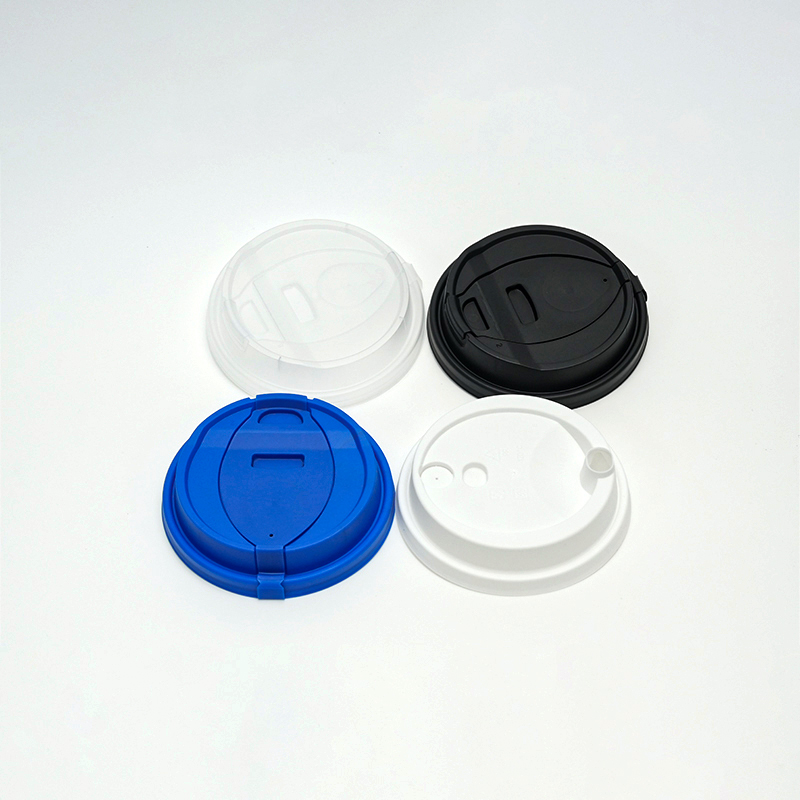 Patented one-piece leak-proof plastic cup lidProduct name: Patented one-piece leak-proof plastic cup lid Type: Patented Leak-proof Lid Patented one-piece leak-proof cover Product features: (1) Leak-proof design, ...View Product →
Sealing zones deserve one line in the artwork specification. The rim band is usually kept ink-free or lightly inked, since ink adds thickness exactly where the lid plugs in, and holding print back 1 to 2 mm from the sealing edge is normal practice. For delivery drinks and soup, a lid with an inner plug ring beats a flat lid.
What Drives Unit Cost, and Why Volume Changes the Math
Four variables you control decide the unit price: material grade and wall weight, print method and color count, tooling amortization, and packaging density. The mix below is typical for a four-color dry-offset wrap on a mid-weight PP cup.
Where the unit cost sits
Tooling explains why small orders look expensive per cup. A four-color dry-offset set is a one-time charge spread across the run: at 100,000 units it adds a few percent to each cup, while at 10,000 units it can add more than twenty percent. Storing those plates between runs is what makes a reorder cheaper, so confirm in the contract who keeps them.
Unit cost index by order volume
Freight is the other lever. Cups nest, so a container holds far more nested cups than assembled cup-and-lid units, and shipping lids separately is normal for large programs. Ask for the nesting ratio before comparing two quotes.
Ordering Checklist and Common Questions
Bring these items to the quotation stage and most reorder risk disappears before it starts:
- Cup material, wall weight and rim diameter, stated in millimeters.
- Lid part number matched to that rim, with a leak test on file.
- Print method, color count and coverage, wrap or two-side.
- Pantone targets plus a stated color tolerance.
- Vector artwork with the print-free sealing band marked.
- Migration test report covering cup, lid and ink.
How many colors can be printed on a plastic cup?
Dry offset can reach six or eight colors, but four to six is the practical range before registration risk and plate cost climb faster than the design gains.
What minimum order quantity is realistic?
Direct printing with plates usually starts around 30,000 to 50,000 pieces per design. Labels and digital decoration can start at a few hundred, because the MOQ is driven by setup time rather than material.
Can I print on clear cups instead of white ones?
Yes, but colors behave differently. On a clear wall the ink reads against whatever is poured into the cup, so a light yellow turns green in iced tea. Approve the sample with a filled cup, not an empty one.
When you are ready, send the artwork, cup size, lid specification and annual volume, and ask for a printed sample on the actual cup body. A two-minute check of the rim and the lid fit tells you more than any render: send your specifications to our team and we will come back with the cup body, print method and tooling plan that fit your volume.




