


 English
 Español
 عربى
Content
- 1 Decision One: Fill Temperature Sets the Material
- 2 Decision Two: Lid Engagement Beats Lid Thickness
- 3 Decision Three: Treat Cup and Lid as One Part Number
- 4 Cold Service: PET Cups and the Condensation Problem
- 5 Hot Service: Injection Molded or Blister PP?
- 6 Decision Four: Paperwork You Should See Before the Sample Cup
- 7 Sustainability Choices Without Cost Surprises
- 8 Ordering, Printing and the Details That Delay a Launch
- 9 Frequently Asked Questions
A café switches cup suppliers to save a little on every carton, keeps the lids it already has in stock, and within a week a customer posts a photo of a latte leaking from the lid seam. The new cups matched the quoted diameter. The lids had not changed. What moved was the rim profile and the consistency of that rim from batch to batch — the kind of detail that never appears on a quotation sheet.
That story is the short version of how beverage cups should be purchased: as a system, not as a single line item. Match the material to the fill temperature, match the lid to the rim, and confirm the food-contact paperwork before the first pallet ships. Price per thousand still matters, but leaks, re-sleeving, refunds and lost repeat orders cost more. The four decisions below cover most of that risk.
Decision One: Fill Temperature Sets the Material
Before comparing quotations, write down two numbers: the fill temperature and how long the drink sits in the cup. A 92 °C pour that is handed over in three minutes is a different duty than an iced drink that sweats on a counter for forty minutes. Getting this wrong is the most expensive mistake in the category, because a cup that softens under heat cannot be rescued by a better lid.
In practice, the choice narrows quickly. Polypropylene handles hot fills and keeps its shape; PET gives the clarity that cold drinks are judged by; PLA and paper answer a sustainability brief but come with their own limits. The table below maps material to use, and the watch-outs column is where most orders actually go wrong.
| Material | Typical beverage use | What it does well | Watch-outs |
|---|---|---|---|
| PP, injection molded | Hot coffee, tea, milk tea | Rigid wall, holds shape under heat, stable rim for lid engagement | Heavier per unit; printing coverage and colour affect unit cost |
| PP, blister or thermoformed | Hot and cold, high-volume service | Light wall, lower tooling entry point | Wall stiffness varies — test the rim under a fully seated lid |
| PET | Iced coffee, cold brew, smoothies | High clarity that shows the drink; low-temperature grades for ice-blended menus | Not for hot fills; check performance in iced holding and transport |
| PLA (straws, bags) | Cold drinks and takeaway kits | Compostable positioning for a sustainability brief | Low heat tolerance; should not sit in hot drinks or hot cars |
| Paper with lining | Cold or warm drinks, branded campaigns | Large printable surface for seasonal artwork | Seam quality and lining integrity decide whether it holds |
Decision Two: Lid Engagement Beats Lid Thickness
Most "leaking cup" complaints are not cup complaints at all. They are lid-to-rim engagement problems. A lid that snaps on with a satisfying click but sits a fraction proud of the rim will open a capillary path once the cup is tilted in a delivery bag. Before adding thickness or a new lid design, confirm that the rim diameter, rim profile and lid groove were designed against each other, and that both parts are measured with the same gauge.
Where drink is travelling — delivery, drive-through hand-off, bike couriers — a purpose-built leakproof design is worth the unit premium. Patented one-piece structures remove the plug-and-straw interface that tends to weep under vibration, and thickened walls resist the deformation that happens when a cup is squeezed into a carrier.
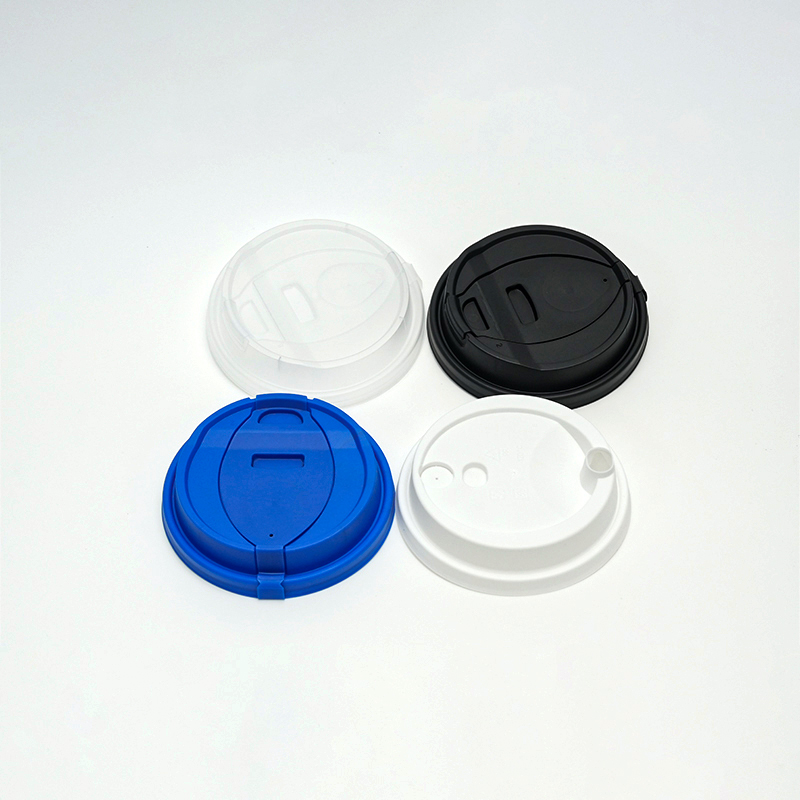 Patented One-Piece Leak-Proof Plastic Cup LidA one-piece leak-proof lid for delivery and takeaway cups, with thickened walls, stackable design, multiple calibers and colors, and food-safety certifications.View Product →
Decision Three: Treat Cup and Lid as One Part Number
Buyers who specify the cup and the lid separately usually discover the mismatch at the worst possible moment: the first busy Saturday. The safer habit is to lock cup and lid into one specification with a single owner, so a supplier change in either part triggers a re-test.
- Confirm the rim style — rolled or flat — and make sure the lid groove is cut for that profile.
- Record the diameter at the rim, not the nominal "size" on the marketing sheet, and set an acceptance band.
- Decide the drinking method early: flat lid with a straw hole, direct-drink lid, ball lid for toppings, or a dual-use hole that supports both.
- Keep a reference sample from each approved batch and check new deliveries against it, not against a drawing.
The broader cup range follows the same logic across PP, PET and injection-molded formats, so a menu change does not have to mean a new supplier relationship.
Explore the plastic cup range to see how the diameters and rim options line up with the lid families.
Cold Service: PET Cups and the Condensation Problem
Cold drinks put two demands on a cup that hot drinks do not: clarity and condensation. Clarity is a purchasing decision — customers read freshness from an unobstructed view of the drink — while condensation is an operational one, because a wet cup is a slippery cup, and a slippery cup is a dropped cup.
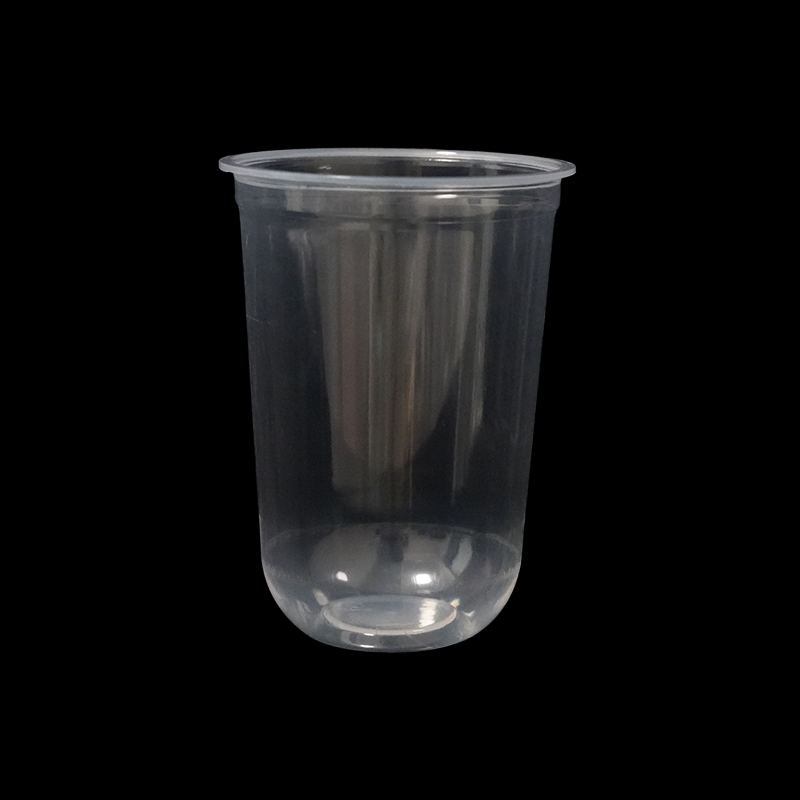 Customizable Disposable PET Plastic Drink CupA food-grade PET cup for cold drinks, available in 500 ml and 700 ml sizes with branding options, stackable storage, and clear presentation.View Product →
For iced menus, pair low-temperature resistant PET bodies with the lid that matches the serve style: a ball lid for boba and topped drinks, a flat lid where a straw is expected, and a direct-drink lid where straws are being phased out. Ask for a filled-cup test at chilled holding temperature, not a room-temperature fit check, because the two are not the same measurement.
Hot Service: Injection Molded or Blister PP?
Both formats are polypropylene, but they are not interchangeable in service. Injection-molded cups carry a more rigid wall and a cleaner, more dimensionally stable rim, which is why they tend to be the choice for hot milk tea, coffee and drinks that are carried a distance. Blister cups are lighter and cheaper to enter, with the trade-off that wall stiffness and rim consistency need to be verified cup by cup rather than assumed.
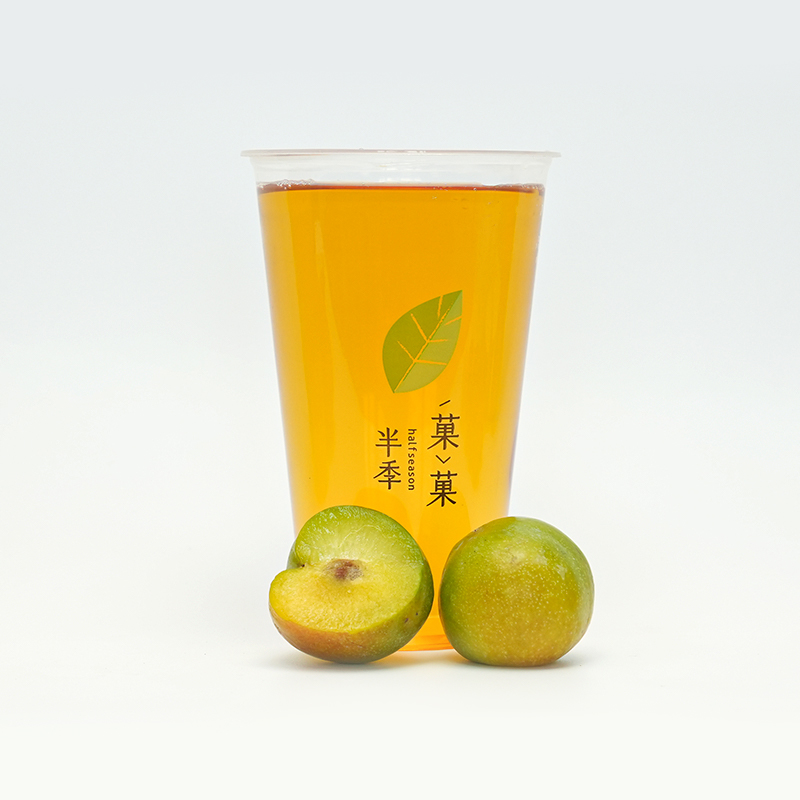 PP Injection-Molded Cup for Hot and Cold DrinksA rigid PP injection-molded cup for hot and cold beverages, with stable rim, 0–95°C use, custom branding, and 490–700 ml sizes.View Product →
Whatever the format, run a hot-fill check: pour at your real service temperature, seat the lid, tilt the cup 45 degrees, and hold it for the length of your longest hand-off. If the rim distorts, the lid will follow — usually after the drink has left the counter.
Decision Four: Paperwork You Should See Before the Sample Cup
Food-contact compliance is not a sales claim, it is a document trail. A serious supplier can produce certification and test evidence on request, and will not treat the question as an insult. For a food packaging manufacturer working across export markets, the usual set includes a national industrial production licence, ISO 9001 quality management, BRC, German DIN safety certification and EU ROHS testing, alongside material declarations for food-grade PP or PET resin.
- Ask which standard applies to your market and confirm the certificate scope covers the exact product and material.
- Request migration or food-contact test reports tied to the material, not to a comparable product line.
- Confirm batch traceability, so a problem on one pallet can be narrowed to one production window.
- Keep the specification sheet — wall thickness, rim diameter, material grade, lid pairing — attached to the purchase order.
The underlying requirements are worth understanding rather than outsourcing to a certificate folder; this overview of food-safety standards for plastic cups explains what inspectors and buyers typically look for.
Sustainability Choices Without Cost Surprises
Compostable and recycled material is now a normal part of a beverage cup programme, but it should be specified by function rather than by slogan. PLA and paper straws answer the no-plastic-straw expectation; biodegradable PLA bags, PE high-pressure recycle bags and recycled paper bags handle the takeaway kit around the cup. Each carries its own handling rule, and mixing them up is how a good intention becomes a complaint.
- Keep PLA items out of hot drinks, hot cabinets and hot vehicles — heat tolerance, not durability, is the limiting factor.
- Check whether your waste stream actually offers industrial composting before printing "compostable" on a menu or lid.
- Match straw diameter to the lid hole; a 6 mm straw in a 12 mm opening drips on the customer, not on the supplier.
- Confirm that recycled-content packaging meets the same food-contact standard as the cup it travels with.
Ordering, Printing and the Details That Delay a Launch
The gap between an approved sample and a smooth launch is almost always administrative. Printing is the usual culprit: a logo that reads well on a flat proof can sit over a curved rim, and a colour match under one lamp looks different in a cold-drink fridge. Sign off on a printed production sample, not a digital file.
- Fix the print method and colour reference before confirming the artwork.
- Confirm sleeve, carton and pallet configuration — packaging choices affect warehouse space and unit cost.
- Agree the acceptance criteria for print position, lid fit and dimensional tolerance in writing.
- Ask for the production lead time in working days with a stated start point, and plan a buffer for your busiest season.
Where customization matters, a supplier with in-house design and tooling support shortens the loop considerably. The manufacturing base in Taizhou, Jiangsu, with a Shanghai branch in place since 2019, exists to keep that design-to-delivery conversation in one place rather than spread across three intermediaries.
Frequently Asked Questions
Can one cup handle both hot and cold drinks?
Sometimes, but not always well. A PP cup rated for hot fills will hold a cold drink safely, yet it will not deliver the clarity customers expect from an iced menu, and a PET cup should never be used for hot fills. Split the specification by temperature band instead of forcing one SKU to do both jobs.
How many lid options do we really need to stock?
Fewer than most buyers expect. Two or three formats usually cover a full menu: a flat or direct-drink lid for standard serves, a dome or ball lid for topped drinks, and a leakproof design for delivery. Each additional SKU adds storage and mismatch risk.
Diameter is only one dimension. Rim thickness, rim profile, undercut depth and shrinkage behaviour all affect whether a lid seats correctly. Two cups can measure the same across the opening and still behave differently once the lid groove meets the rim.
What should a first sample order include?
Ask for the cup, the intended lid, a printed example, and the material and food-contact documentation. Test them as a set, with your real drink, at your real service temperature, before committing to a production run.
Beverage cups are a small line item with an outsized effect on how a drink is judged: a leaking lid, a cloudy iced coffee, a cup that softens under a hot pour, and the customer remembers the packaging rather than the coffee. Working backwards from fill temperature, then locking the cup and lid together as one specification, then confirming the documentation, removes most of that risk before a single carton is opened.
Bring your fill temperature, rim diameter, serve style and monthly volume to the conversation, and ask for a matched cup-and-lid sample rather than a catalogue page. The right supplier will treat that combination — not the cup alone — as the product.




