


 English
 Español
 عربى
عربىContent
Three years ago, a 40-store coffee chain ordered 80,000 custom plastic cups with a full-color logo and paid the deposit. When the cartons were opened, roughly one cup in ten had a lid that wobbled or popped off, because the rim geometry had never been written into the purchase order. The artwork was perfect; the cup was the problem.
That scenario repeats in every beverage market. A custom cup order is an engineering purchase with a print on top, not a print job with a cup attached. The real risks sit in material selection, rim tolerance, print compatibility, and food-safety documentation.
TOPCUP, the export brand of Yuqian Packaging Technology (Jiangsu) Co., Ltd., has manufactured foodservice cups, lids, straws, and takeaway containers in a 30,000-square-meter plant in Taizhou, Jiangsu, since 2010. Because cup bodies, lids, and printing are handled in-house, the whole system can be matched before production starts. This guide walks through the decisions that separate a smooth order from a costly one.
1. Start With the Right Plastic
The resin determines what a cup can do before any color is printed. In the custom plastic cup market, three material and process combinations cover almost every beverage program.
PET (polyethylene terephthalate) is thermoformed into thin, crystal-clear cups. It is the default for cold drinks because it stays stable in refrigerated cases and resists condensation without softening. For smoothies, iced tea, juices, and bubble tea, a low-temperature-resistant PET plastic cup delivers the glass-like clarity customers expect at the counter.
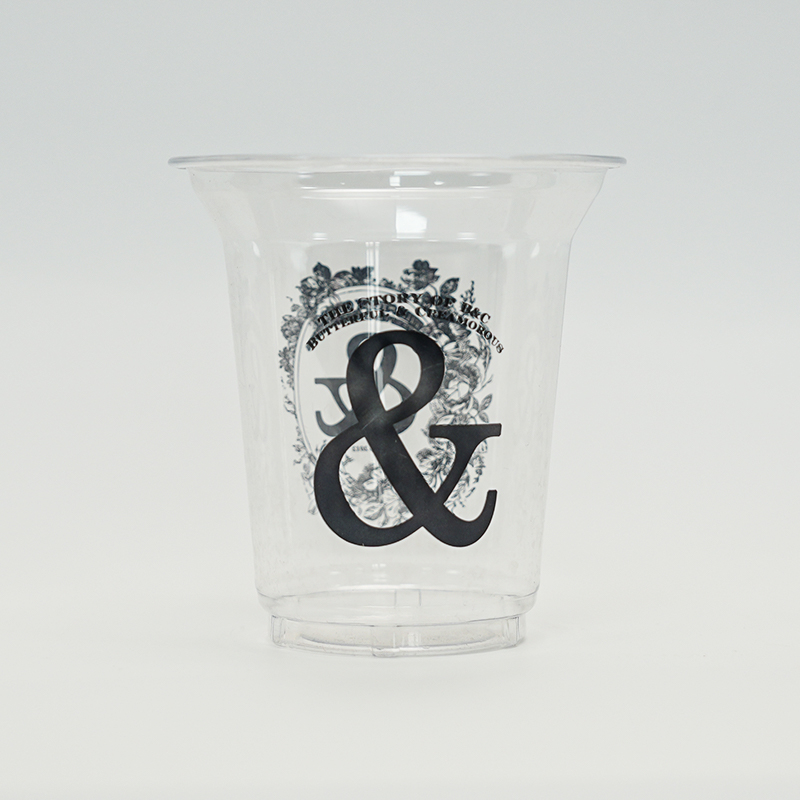 OEM Low-Temperature Resistant PET Cup ManufacturerAs a China OEM low-temperature resistant PET cup manufacturer and factory , Yuqian Packaging Technology (Jiangsu) Co., Ltd professional l...View Product →
PP blister cups are thermoformed from polypropylene sheet. They are lighter and more economical than injection-molded parts, with good impact resistance for daily stacking and delivery handling. Value-priced beverage programs and event organizers rely on them.
PP injection-molded cups are formed from food-grade PP resin rather than sheet. The heavier wall makes them sturdier, the transparency is higher than most buyers expect from PP, and a properly cured cup does not release odor when filled with hot tea or coffee. They are the workhorse of hot takeaway programs.
The table below summarizes how the three custom cup lines differ in normal foodservice use.
| Cup line | Material & process | Clarity | Typical serving temperature | Best-fit applications | Printing fit |
|---|---|---|---|---|---|
| Low-temperature-resistant PET cup | PET sheet, thermoformed | High, glass-like | Cold drinks, refrigerated display | Smoothies, bubble tea, juice bars, cold brew | Silkscreen or offset, 1–6 Pantone colors |
| PP blister cup | PP sheet, thermoformed | Good, lightweight | Cold and ambient beverages | Cafeterias, stadiums, events, delivery | Economical 1–2 color band printing |
| PP injection-molded cup | Food-grade PP resin, injection molding | High transparency, sturdy wall | Hot beverages, tea and coffee service | Coffee chains, tea shops, hot takeaway | In-mold label, transfer, or offset |
Relative material cost, not selling price. Wall thickness, print coverage, and order volume change the unit price.
Relative cost is only one variable. Match the material to the serving temperature and the lid system first, then compare price per thousand. A cup that is cheap per unit but fails on the line is not cheap at all.
2. Dial In Size, Wall Thickness, and Print Method
Sizes, capacities, and tolerances
Cups are normally specified by top diameter, capacity, wall thickness, and rim tolerance. Most beverage chains standardize on 12 to 24 oz cups with top diameters between 90 and 98 mm; the printed band height is then planned around the taper of the cup. Cold-drink PET cups typically run 0.3 to 0.5 mm wall thickness, while injection-molded PP cups start around 0.6 mm and go heavier when the lid needs a strong seat.
The most misunderstood number is the rim tolerance. If the rim diameter swings by even 0.3 to 0.5 mm across a production lot, a stock lid will seal on some cups and leak on others. Ask the factory for the rim tolerance in writing, and test the actual lid you plan to use.
Decoration methods and design constraints
Each decoration method has a different sweet spot. Silkscreen is the workhorse for one to four Pantone colors in a band around the cup. Thermal transfer handles variable data and subtle gradients. Offset printing gives fine detail for photographic artwork. In-mold labeling fuses the design into the wall so it cannot be scratched off during stacking or delivery.
- Keep print at least 3 mm below the rim and above the bottom stacking ring.
- Avoid fine text under 6 pt in silkscreen; strokes thicken on a curved surface.
- Full-coverage ink adds layer thickness, which can affect stacking and lid fit. Ask for a pre-production fit test with a fully printed cup.
- Confirm the ink is food-contact compatible before production, not after.
For a simple one- or two-color logo on a value-driven menu, the custom PP blister cup keeps the decorated unit cost low while still offering a clean, professional print surface.
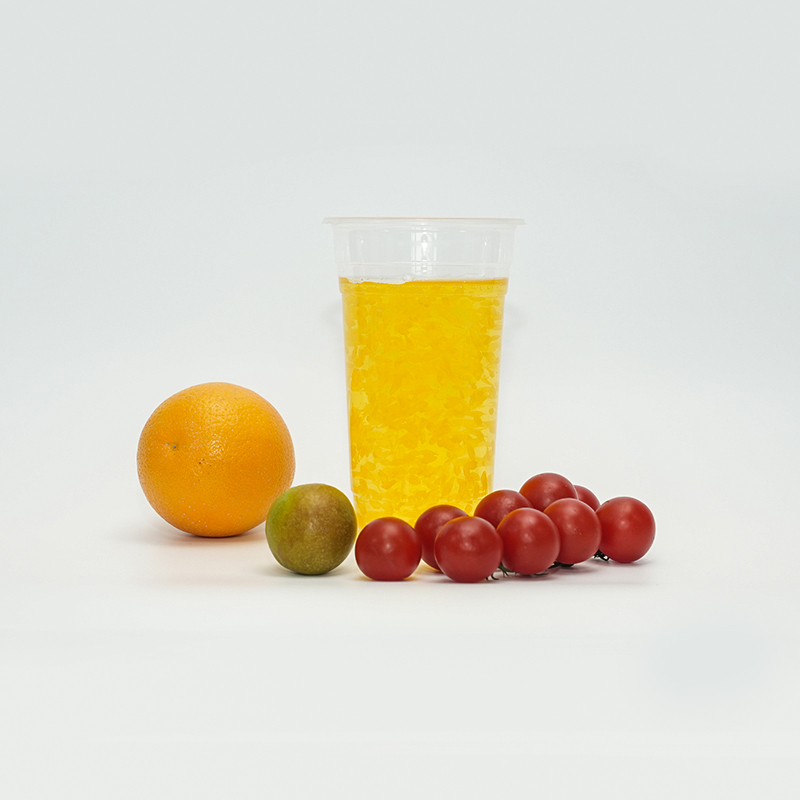 Custom PP thermoforming cup Manufacturer, OEM/ODM Factory - Yuqian Packaging TecYuqian Packaging Technology Co., Ltd is China custom PP thermoforming cup manufacturer and PP thermoforming cup OEM/ODM factory,Product n...View Product →
Decoration cost depends on color count, coverage, and run length. The index is directional, not a quote.
3. Food Safety Documents Are Part of the Product
A printed cup is food-contact material. Both the plastic and the ink can migrate into the drink in tiny amounts, which is why serious buyers evaluate the whole system, not just the resin. TOPCUP operates under a QS national production license, ISO 9001 quality management, BRC certification, the German DIN safety certification, and EU RoHS+ testing. Those certificates should be audit evidence you can see, not marketing copy.
The basic food safety requirements for the plastic cup industry cover raw resin, additives, inks, and production hygiene. Before you approve a pilot run, request these documents:
- Food-contact material declaration and the test report for the resin.
- Migration test results for the printed, finished cup, not just the plain sheet.
- A certificate from the ink supplier confirming food-contact compatibility.
- Current BRC or ISO 9001 certificate of the factory.
- Certificate of analysis for each production lot you receive.
For hot beverage programs, add a simple sensory check: fill a sample cup with hot water and confirm that no odor is released. An injection-molded PP cup that passes this test and carries the right documentation removes most of the food-safety risk in a hot-drink launch.
4. Sampling, MOQs, and Lead Times You Can Plan Around
The fastest way to ruin a launch is a last-minute cup surprise. A disciplined ordering process is short and boring, which is exactly why it works:
- Submit the artwork and a written cup specification: capacity, top diameter, wall thickness, lid model, and print method.
- The factory produces plain and printed pre-production samples in the final material.
- You approve the sample, the Pantone references, and the packaging cartons.
- Mass production runs with inline quality checks on wall thickness, rim roundness, print adhesion, and stacking.
- Finished goods pass a packing inspection before the container is loaded.
Custom printed cup orders require meaningful volume because screen and plate setup costs are spread across the run. As a general industry pattern, printed PET and PP cups in one SKU commonly start around 10,000 to 30,000 pieces, while unprinted stock cups can be ordered in much smaller batches. TOPCUP's service model is built on reasonable pricing and flexible delivery, so the practical next step is to send the artwork and let the factory quote the exact setup for your cup, lid, and print combination.
Lead time is driven by three variables: resin availability, print setup, and lid matching. The curve below shows a typical production window after artwork approval for quantities from 10,000 to 100,000 printed cups.
Working days after artwork approval. Schedule depends on cup type, printing method, and lid color; always confirm a date in writing.
Directional planning estimate; actual shares shift with print coverage and cup complexity.
Sample strategy matters as much as lead time. Order pre-production samples with the final lid combination and the final print coverage, not a bare cup and a separate lid. A 100-piece sample carton is cheap insurance against a 100,000-piece mistake.
5. Match the Cup to the Serving Scenario
Cold drinks, smoothies, and bubble tea
Clear PET is the natural fit here. It shows off layered drinks and fruit, handles condensation well, and stays rigid in a cold chain. The low-temperature-resistant PET cup line is built for exactly this duty cycle, from refrigerated prep stations to delivery routes.
Coffee, tea, and hot takeaway
Hot programs need a cup that stays rigid, seals well, and does not create off-taste. An injection-molded PP custom cup is the reliable choice: the wall is stiff enough for a snug lid, the material is food-grade PP, and a quality part is odor-free even when filled at dispensing temperature.
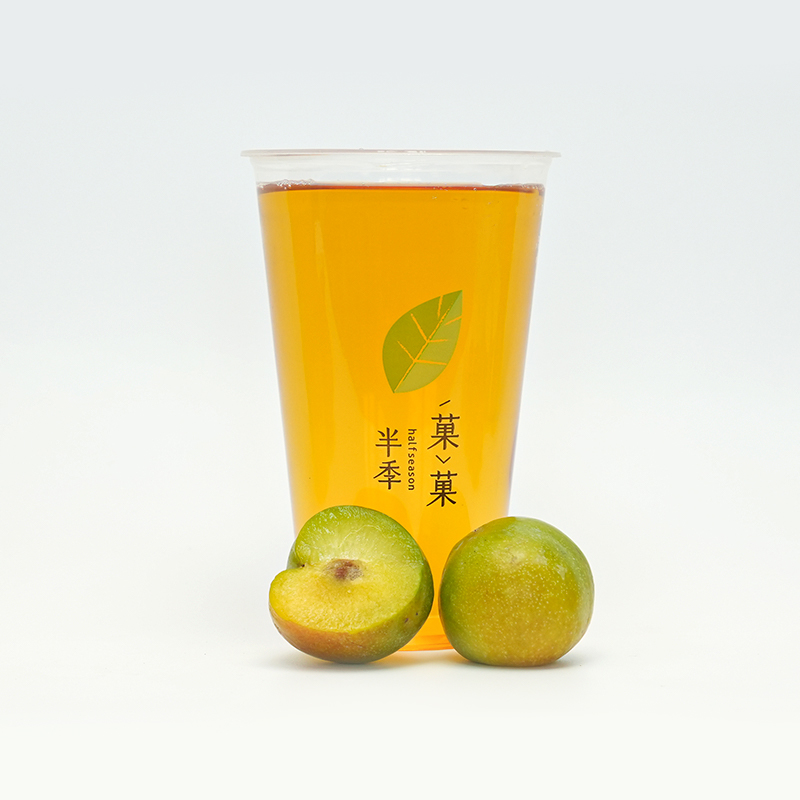 Custom PP injection cup Manufacturer, OEM/ODM Factory - Yuqian Packaging TechnolYuqian Packaging Technology Co., Ltd is China custom PP injection cup manufacturer and PP injection cup OEM/ODM factory,Product name: PP ...View Product →
Events, cafeterias, and delivery programs
Where unit cost dominates and the serving window is short, PP blister cups carry the volume. They stack densely, ship light, and take simple band printing well. Pair any custom cup with the matching lid system; for delivery menus, TOPCUP's patented leakproof lid designs are worth evaluating because the seal holds through stacking in a delivery bag.
To compare capacities, diameters, and lid compatibility across the range, see the full custom cup lineup.
6. Custom Plastic Cups: FAQ
What is the typical MOQ for custom printed plastic cups?
A common starting point is 10,000 to 30,000 pieces per SKU for screen-printed cups, because setup cost needs to be absorbed by the run. Unprinted stock cups can be ordered in smaller volumes. Send the artwork and target price to the factory for a precise number.
Can I get samples before mass production?
Yes, and you should insist on it. Ask for plain samples, printed samples in the final Pantone colors, and the exact lid model that will ship with the order. Verify rim fit and stacking before approving the pilot run.
Are TOPCUP cups safe for hot drinks?
The injection-molded PP cup line is produced for hot beverage foodservice under BRC and ISO 9001 systems. Confirm the specific temperature range with the factory for your recipe, and always review the migration test results for the finished printed cup.
How long does a custom cup order take?
After artwork approval, typical production for 10,000 to 100,000 cups is about 12 to 24 days, plus shipping. Timing depends on cup type, print method, and lid color. A written schedule from the supplier is the only reliable projection.
7. The Bottom Line
Ordering custom plastic cups is a specification job with a logo on top. Choose the material for the serving temperature, lock down the rim tolerance and lid system, demand food-contact documentation, and approve pre-production samples before committing production. A supplier with in-house molding, printing, and lid production, like TOPCUP's Taizhou plant, makes all four steps easier to control. Request free samples and a quote before you lock the launch date.




