


 English
 Español
 عربى
عربىContent
- 1 PP Cup vs PET Cup vs Low-Temperature Resistant PET Cup: Choosing the Right Body for Each Drink
- 2 Why Injection Moulding Outperforms Thermoforming for High-Traffic Beverage Programs
- 3 Explore the Product Line
- 4 In-Mould Labeling: Branding That Survives the Full Supply Chain
- 5 Lids, Bowls and Multi-Compartment Containers That Complete the Set
- 6 Scaling an Order: How Volume Shapes Unit Cost
- 7 Certification: The Standards Behind Every Product Line
- 8 One Factory Chain, One Consistent Standard
Industry Guide 2026
A dependable disposable cup and food-container line comes down to three fixed factors: the resin matches the drink's temperature, the mould and decoration hold their shape through the full supply chain, and every product carries verifiable food-contact certification. Yuqian Packaging builds its injection moulded cup, PP cup, PET cup, hot pot container and takeaway box range around exactly these three factors.
- 01PP cups run 0°C to 95°C — one cup body for hot and cold service
- 02Low-temperature resistant PET cups hold shape down to -20°C
- 03In-mould labeling locks branding into the wall, not on top of it
- 04ISO 9001, BRC, German DIN and EU RoHS+ certification across the range
- 05Matching lids, liners and hot pot boxes from a single factory chain
PP Cup vs PET Cup vs Low-Temperature Resistant PET Cup: Choosing the Right Body for Each Drink
Resin choice is the first decision that determines whether a cup performs on the shelf or fails in the field. The table below sets out how the three core cup bodies in this product line behave under real serving conditions.
| Product | Working temperature | Best for | Typical grammage |
| PP injection moulded cup | 0°C – 95°C | Hot and cold takeaway drinks, milk tea, coffee | 17g – 24.5g (500ml – 700ml) |
| Disposable PET cup | Room temperature, cold fill | Cold soda, juice, iced tea — clarity matters | 12g – 15g (500ml – 700ml) |
| Low-temperature resistant PET cup | -20°C – 55°C | Frozen desserts, smoothies, cold-chain delivery | Round mouth, multiple calibers |
A menu that serves both a hot latte and an iced smoothie usually runs two cup bodies rather than one: a PP injection moulded cup for the hot and standard cold range, and a low-temperature resistant PET cup for anything served near or below freezing — this keeps the cup wall from clouding or turning brittle at either end.
Why Injection Moulding Outperforms Thermoforming for High-Traffic Beverage Programs
An injection moulded cup is formed by injecting molten resin into a closed steel mould under pressure, producing a heavier, stiffer wall than a cup pulled from a heated sheet in thermoforming. For beverage programs with high delivery volume or self-serve stations, that extra wall rigidity is what keeps a stacked column of cups from collapsing.
Illustrative comparison based on standard 90mm-mouth cup construction; actual figures vary by wall thickness and resin grade.
Yuqian's PP injection moulded cups run 17g to 24.5g across the 500ml–700ml range, giving the anti-fall performance that keeps a cup intact through busy takeaway handling — a detail that protects both the drink and the brand image printed on it.
Explore the Product Line
Five categories built on the same food-grade resin standard, from the drinking cup itself to the box it travels home in.
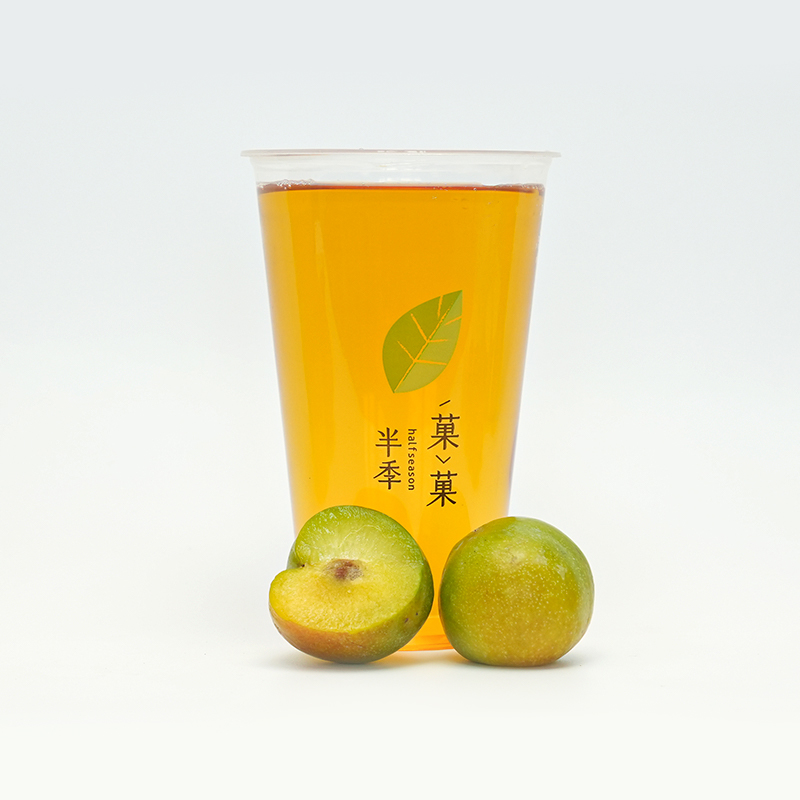
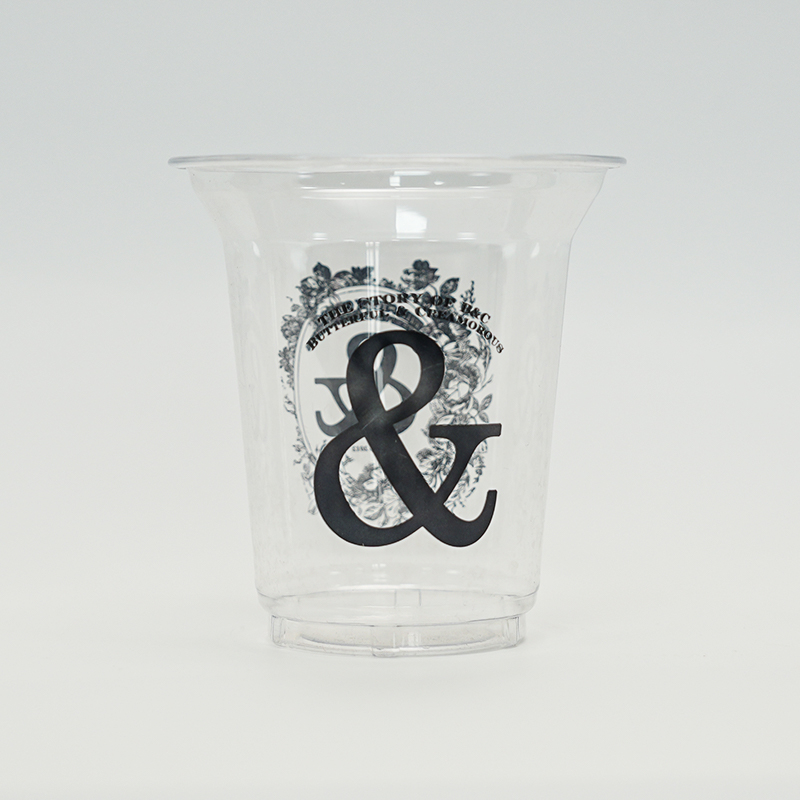
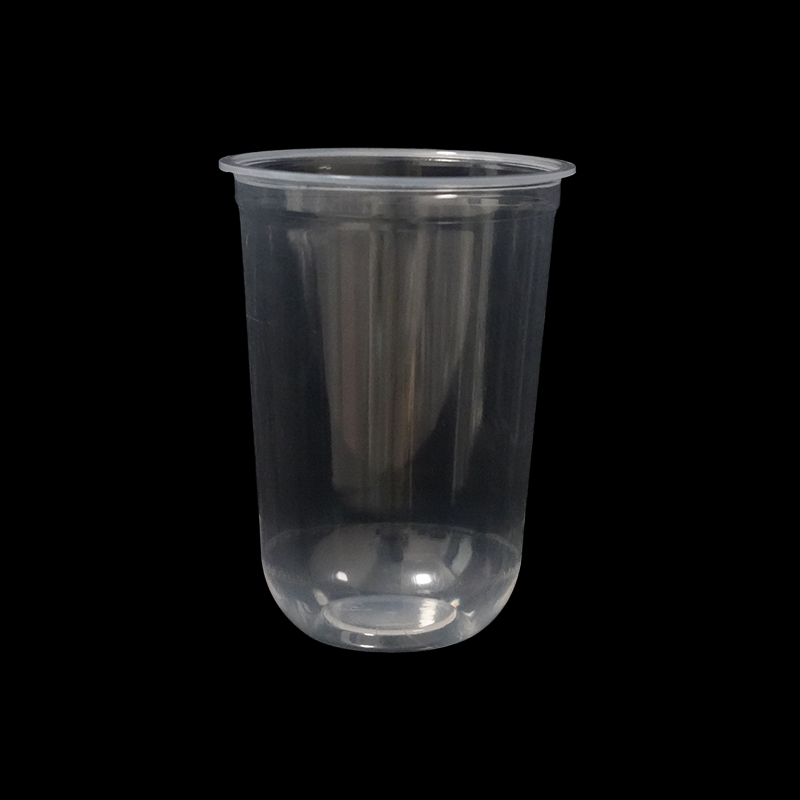
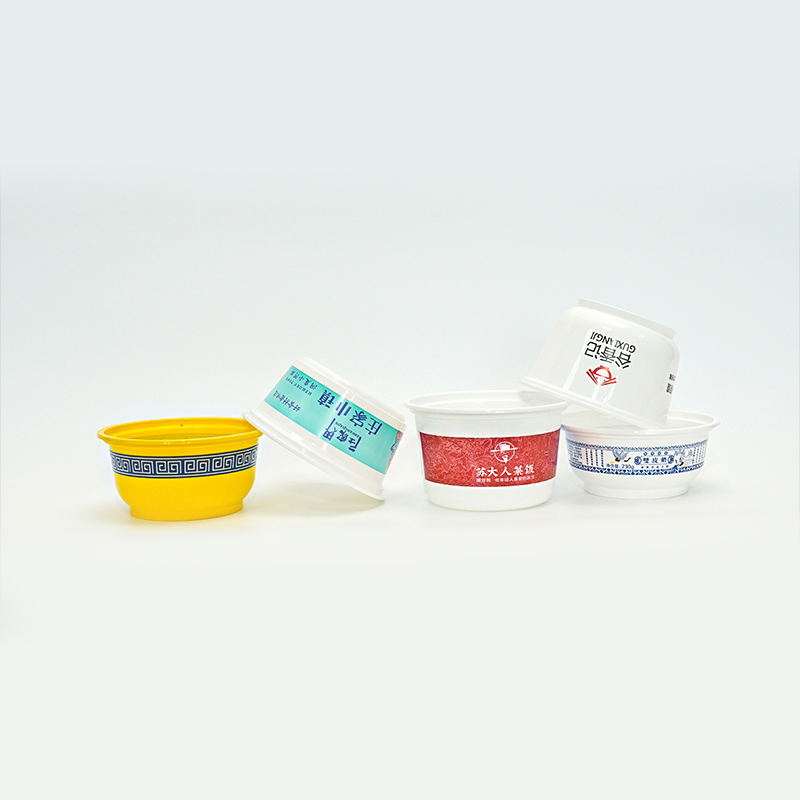
In-Mould Labeling: Branding That Survives the Full Supply Chain
Beyond material and shape, the decoration method decides whether a brand's artwork still looks sharp after refrigeration, stacking and freight. An injection molded cup with in-mold labeling and an injection molded box with in-mold labeling both use the same principle: a printed film is placed inside the mould before the resin is injected, so the graphic becomes part of the wall rather than a layer applied afterward.
- Offset / flexo printing directly on the cup wall
- In-mould labeling for an injection molded cup or an injection molded box with in-mold labeling
- Paper or PET sleeve applied after moulding
Because the label is fused into the resin rather than printed on the surface, an in-mould labeled cup or box resists peeling, scratching and moisture — which is why franchise and chain-brand buyers standardize on it for products that travel through cold storage before reaching the counter. An injection moulded lid can carry the same in-mould artwork, and a matching film-lined box keeps the branding consistent from cup to container.
Lids, Bowls and Multi-Compartment Containers That Complete the Set
A cup rarely travels alone. The four product families below round out a full takeaway and hot-food packaging set from a single factory chain.
Injection Moulded Lid
Precision-moulded to match a 90mm caliber cup, available flat or vented, and produced to carry the same in-mould label as the cup body for a seamless brand look.
PP Bowl / Takeaway Container
Rated for -10°C to 120°C, moving straight from refrigerator to microwave without deforming, with a tight-sealing lid built for stacked delivery.
Suction Plastic Meal Box
Thin-wall thermoformed boxes engineered for portioned meals, offering a lighter-weight alternative to an injection moulded box where courier handling allows it.
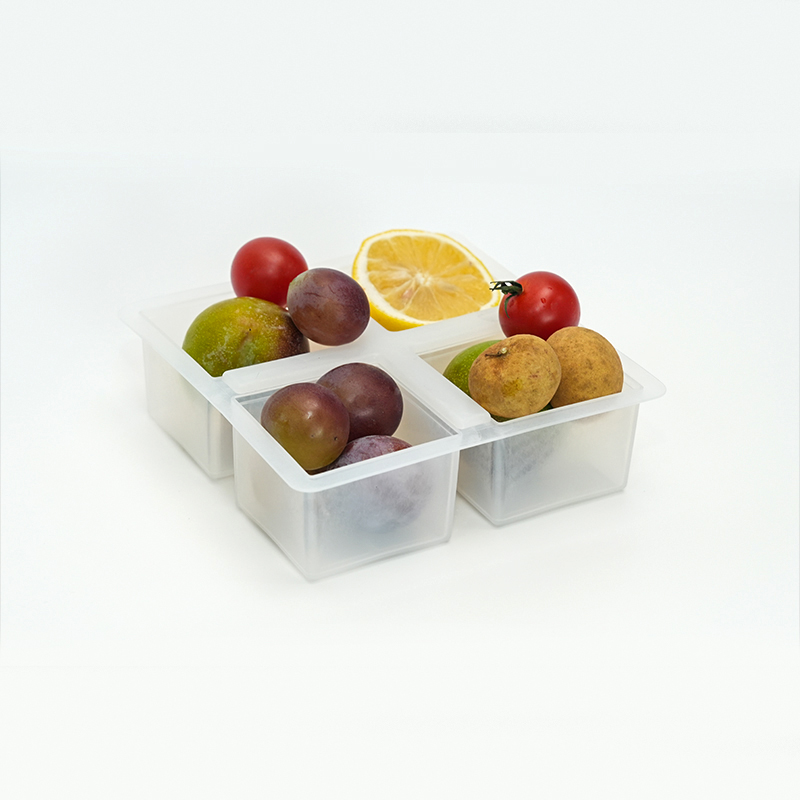
PE / PP Hot Pot Container
A four-grid design at roughly 145mm x 145mm x 46mm and about 74.5g, built for low-temperature stability so sauces and raw ingredients stay separated and intact in cold-chain delivery.
Scaling an Order: How Volume Shapes Unit Cost
Every product in this range, from the injection moulded cup to the PE/PP hot pot container, is produced from an established mould library, which keeps first-order pricing predictable and lets unit cost step down as volume grows.
Illustrative unit-price trend as order volume scales; actual pricing depends on material, wall weight, print method and mould ownership.
Sharing tooling across a caliber family is what drives most of the saving: a cup, its injection moulded lid and its box liner produced on matched mould sizes let a buyer combine SKUs into one production run instead of financing separate mould development for each item.
Certification: The Standards Behind Every Product Line
| Certificate | What it confirms |
| ISO 9001 | Consistent quality management from raw material to finished cup |
| BRC | Food-safety production standard widely referenced by retail buyers |
| German DIN safety certification | Independent safety verification recognized across the EU |
| EU RoHS+ testing | Restriction on hazardous substances for export into the EU market |
Every product across the injection moulded cup, PET cup, lid, bowl and hot pot container range carries this same certification base, so a mixed order does not require separate compliance checks per item.
One Factory Chain, One Consistent Standard
Yuqian Packaging Technology has run its own mould shop, resin sourcing and printing lines from its Taizhou facility since 2010, which is what keeps an injection moulded cup, a PET cup and a hot pot container ordered in the same shipment consistent in wall thickness, colour and print quality from batch to batch.
- Match material to temperature: PP for 0–95°C, low-temperature PET for -20–55°C
- Choose in-mould labeling for artwork that has to survive cold storage and freight
- Order the cup, lid and box liner together to consolidate tooling and cost
- Confirm certificate scope covers the specific product line being ordered
- Plan volume in tiers so pricing and mould strategy align from the first quote




