English
 Español
 عربى
Content
- 1 What Are Disposable PET Plastic Drink Cups?
- 2 Key Product Specifications
- 3 Advantages of Disposable PET Plastic Drink Cups
- 4 How PET Cups Compare with Other Beverage Containers
- 5 Manufacturing Process and Technical Control
- 6 Customization Options for Beverage Businesses
- 7 Applications Across the Food and Beverage Industry
- 8 Food Safety, Hygiene, and Compliance Considerations
- 9 Environmental Considerations and Responsible Packaging
- 10 Why Manufacturer Capability Matters
- 11 How to Select the Right PET Drink Cup
- 12 Quality Control Points for Buyers
- 13 Operational Benefits for Beverage Brands
- 14 Customer Service and Project Development
- 15 Frequently Asked Questions
- 15.1 What beverages are suitable for disposable PET plastic drink cups?
- 15.2 Are the cups available in different sizes?
- 15.3 Can the cups be printed with a logo?
- 15.4 Are PET cups food safe?
- 15.5 Are disposable PET cups recyclable?
- 15.6 Can PET cups be used with lids and sealing films?
- 15.7 What is the difference between the 500 ml and 700 ml cups?
- 15.8 Can the cups be stacked?
- 15.9 How should customized cups be ordered?
- 15.10 What quality controls should be requested?
- 15.11 Why choose a manufacturer with R&D capability?
- 16 Conclusion
- 17 References
- 18 Product: Disposable PET plastic drink cup
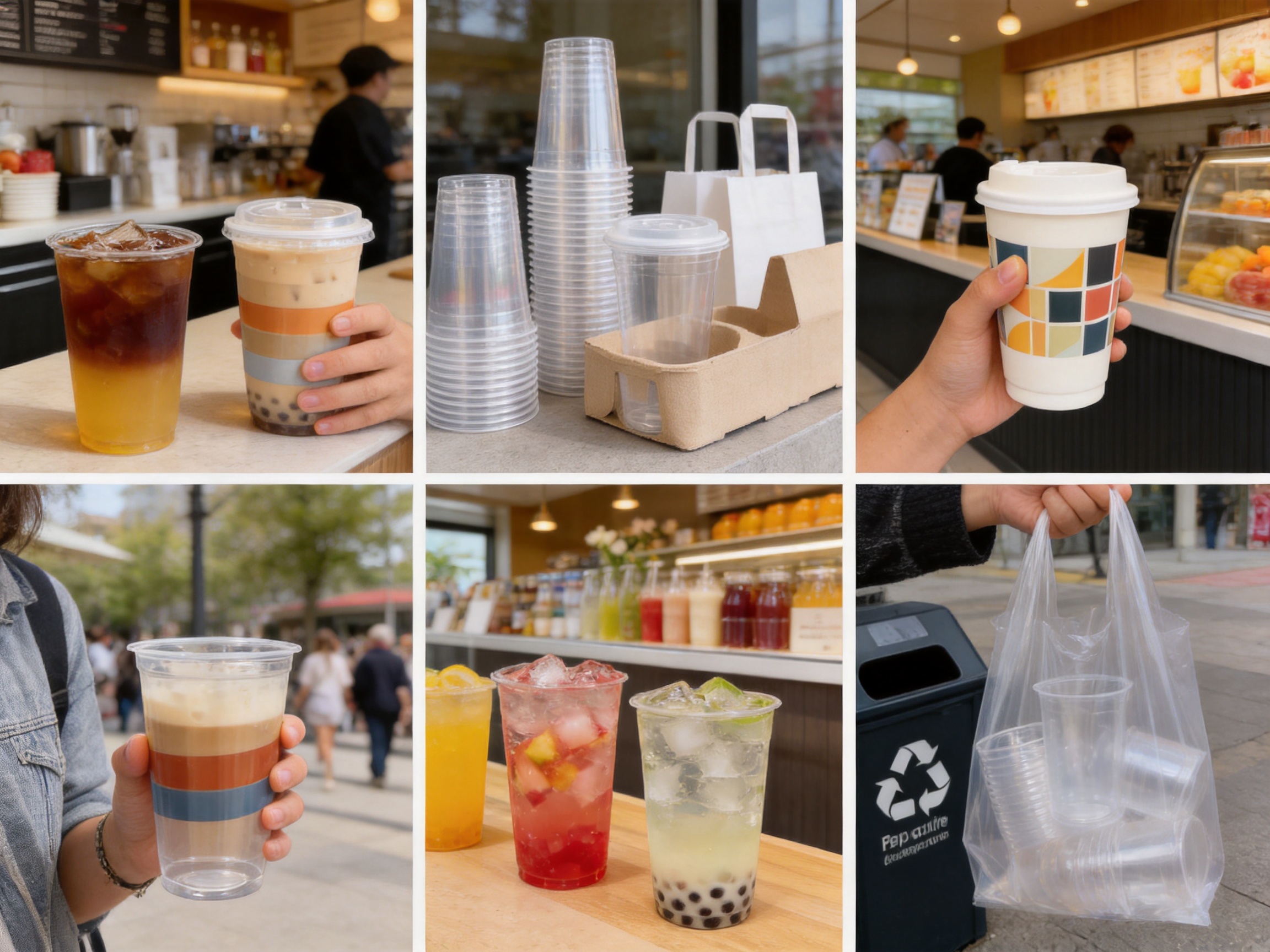
Disposable PET plastic drink cups have become an important packaging solution for cafés, juice bars, tea shops, restaurants, catering businesses, convenience stores, supermarkets, and event operators. Their combination of transparency, light weight, strength, stackability, and design flexibility makes them suitable for many cold beverage applications. From iced coffee and fruit juice to milk tea, smoothies, soft drinks, and flavored water, PET cups help businesses present beverages attractively while maintaining practical transportation and serving performance.
Yuqian Packaging Technology (Jiangsu) Co., Ltd. specializes in the research, development, production, and sale of food packaging materials and products. With production experience dating back to 2010, the company provides disposable PET plastic drink cups for domestic and international customers. Its capabilities include customized appearance design, multiple capacities and calibers, food-grade material selection, strict quality control, and customized printing for logos, patterns, and product information.
This article examines the construction, benefits, applications, manufacturing process, customization possibilities, quality controls, and purchasing considerations associated with disposable PET plastic drink cups. It also explains why a professionally managed manufacturer can provide greater value than a supplier focused only on low-cost standard products.
What Are Disposable PET Plastic Drink Cups?
Disposable PET plastic drink cups are beverage containers manufactured from polyethylene terephthalate, commonly abbreviated as PET. PET is a widely used food-contact plastic valued for its clarity, strength, dimensional stability, and relatively low weight. In beverage packaging, it is commonly used for cold drinks because it can create a transparent presentation while providing sufficient rigidity for normal handling and transportation.
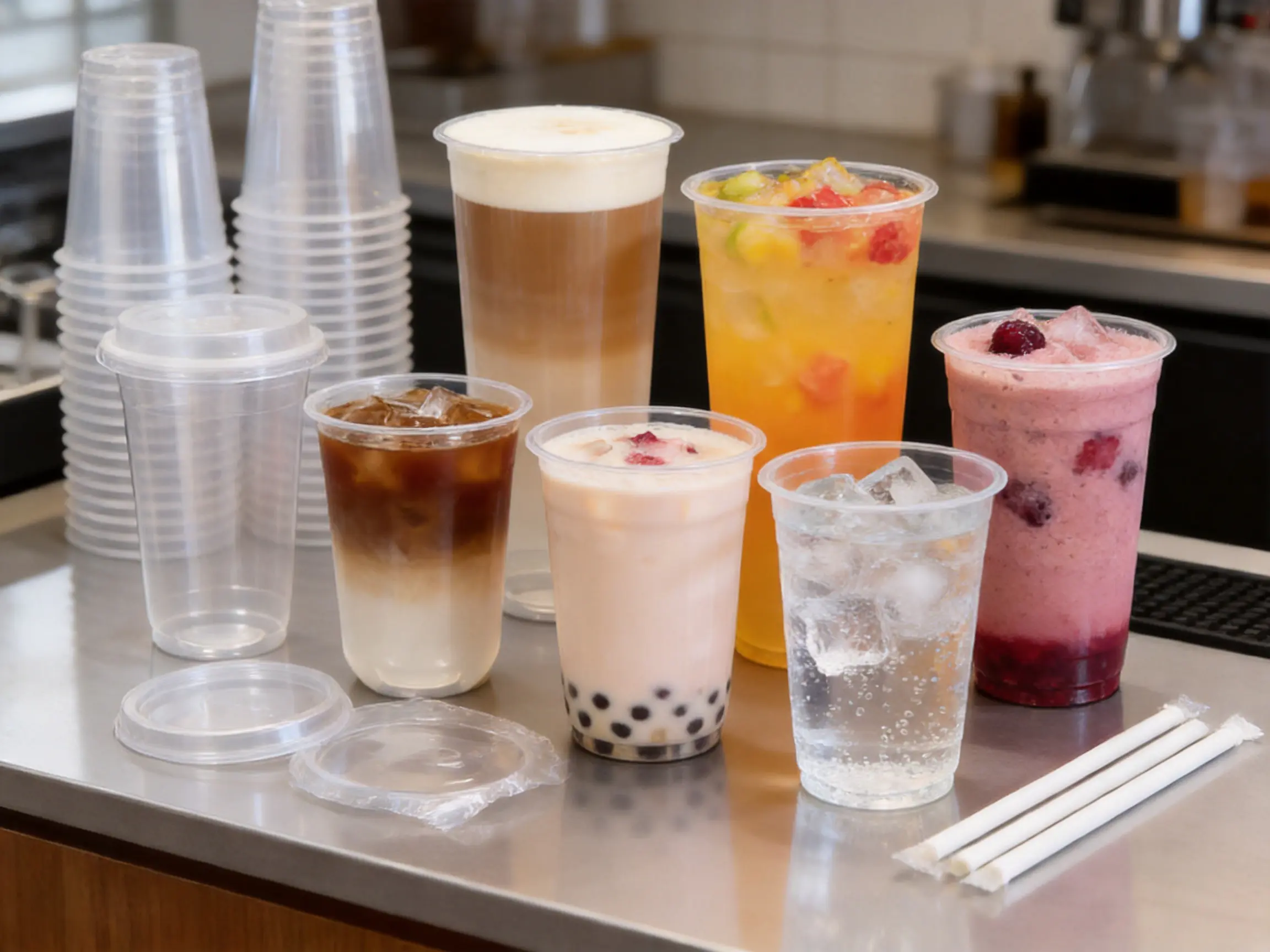
The clear appearance of PET allows customers to see the beverage, ice, fruit pieces, toppings, layered colors, or decorative ingredients inside the cup. This visual quality is especially valuable for businesses that use appearance as part of their product appeal. A bright fruit drink, colorful tea, or carefully layered specialty beverage can be displayed more effectively in a transparent cup than in an opaque container.
Disposable PET cups are designed for convenient single-service use. They can be supplied in different capacities, mouth diameters, heights, and base dimensions. This allows beverage companies to select a cup that matches their recipes, filling equipment, lids, sealing films, straws, and brand presentation. Standardized sizes also make inventory planning and customer ordering more efficient.
Although PET cups are disposable, responsible product selection should include consideration of collection, sorting, and recycling systems. PET is a recyclable material in many regions, but actual recycling depends on local infrastructure, consumer behavior, contamination control, and applicable regulations. Businesses can support better environmental performance by choosing appropriate materials, reducing unnecessary packaging, communicating disposal instructions, and cooperating with qualified recycling systems.
Key Product Specifications
The available product range includes different sizes for common beverage service requirements. The following specifications represent two listed options. Actual dimensions and weight may vary slightly according to production tolerances, design changes, wall structure, and customer requirements.
| Capacity | Mouth Diameter | Height | Bottom Diameter | Approximate Grammage |
|---|---|---|---|---|
| 500 ml | 90 mm | 135 mm | 58 mm | 12 g |
| 700 ml | 90 mm | 180 mm | 57 mm | 15 g |
The 500 ml cup is suitable for regular portions of iced coffee, juice, tea, milk tea, carbonated drinks, and other cold beverages. The 700 ml option provides a larger serving format for customers who prefer extra volume or for businesses that offer large-size drinks with ice, fruit, pearls, jelly, or other additions.
A 90 mm mouth diameter provides compatibility with suitable lids and sealing solutions. However, businesses should confirm lid design, sealing equipment, product tolerances, and fit before placing a large production order. A cup and lid should be tested together, especially when the application involves delivery, shaking, stacking, or long-distance transportation.
Advantages of Disposable PET Plastic Drink Cups
Clear and Attractive Beverage Presentation
Transparency is one of the most important advantages of PET drink cups. Customers can immediately identify the color, level, ingredients, and texture of the beverage. This is useful for premium drinks, fruit-based products, layered beverages, iced coffee, smoothies, and specialty teas.
Clear packaging also supports visual marketing. Beverage shops can use contrasting colors, fruit pieces, foam layers, ice, or toppings to create products that are easy to recognize in photographs and social media content. When the package allows the product itself to act as part of the visual promotion, businesses may reduce the need for additional decorative packaging.
Light Weight and Practical Handling
PET cups are lightweight compared with many rigid glass alternatives. Lower package weight can simplify handling during filling, storage, delivery, and customer service. It can also reduce the risk of breakage during ordinary use, which is particularly important in takeaway, catering, outdoor events, and high-volume beverage service.
Light weight does not mean that the cup should be treated as indestructible. The correct cup structure must be selected for the intended beverage volume, temperature, filling process, transportation conditions, and lid system. A professional manufacturer can help customers select a suitable specification rather than relying only on nominal capacity.
Good Rigidity and Shape Retention
A well-manufactured PET cup provides a stable shape during filling and normal handling. Its rigidity supports a clean appearance on counters, in display refrigerators, and inside takeaway bags. The base and sidewall structure can be designed to balance material efficiency with handling performance.
Shape retention is also important for sealing. A cup with consistent rim dimensions is more likely to achieve stable lid engagement or sealing-film performance. Consistency across production batches helps beverage businesses maintain a reliable customer experience.
Food-Grade Material Selection
Food safety begins with the selection and control of raw materials. Disposable PET drink cups should be manufactured with materials suitable for intended food-contact use and tested according to applicable standards and customer requirements. The supplier should maintain clear controls for incoming materials, production conditions, finished product inspection, and documentation.
Yuqian emphasizes food-grade materials, non-toxic and odorless product characteristics, strict quality control, and food safety testing. These controls are important because beverage packaging comes into direct contact with drinks that may be consumed immediately or after a period of storage and transportation.
Stackability and Space Efficiency
Stackable cups occupy less warehouse, transport, and service-counter space than many irregularly shaped containers. Efficient stacking can help beverage businesses organize multiple sizes and reduce handling time. It may also improve carton utilization and simplify replenishment in busy stores.
Stackability depends on cup geometry, rim design, sidewall taper, base construction, and acceptable nesting force. Cups should stack securely without becoming difficult to separate. Excessive nesting can slow operations, while insufficient nesting can create unstable stacks. Product testing should therefore include both storage stability and ease of separation.
Customization and Brand Visibility
Packaging is an important communication tool. A plain cup may perform its basic function, but a customized cup can communicate a brand name, logo, slogan, seasonal campaign, flavor information, or usage instruction. Printed packaging can make a beverage more recognizable when customers carry it in public, place it on a desk, or share it in a photograph.
Yuqian is equipped with advanced printing equipment that can print customer logos, patterns, and specific information on packaging. This capability supports customized appearance design and helps businesses create a consistent visual identity across beverage sizes and product lines.
Customization can be developed around color, print coverage, logo position, typography, seasonal artwork, promotional messages, and product information. Before mass production, customers should confirm artwork files, color expectations, print dimensions, minimum order quantities, and approval procedures. A physical sample or pre-production proof can help verify the final appearance.
How PET Cups Compare with Other Beverage Containers
Compared with Paper Cups
Paper cups are widely used for hot and cold beverages, but they often provide a different visual experience. A clear PET cup displays the beverage, while a paper cup generally requires printed graphics or a transparent window to reveal contents. For colorful cold drinks and drinks with toppings, PET can offer stronger product visibility.
Paper cups may be preferred for certain hot beverage applications or for brands seeking a paper-forward packaging image. PET drink cups are more closely associated with cold beverage presentation, transparency, and rigid shape retention. The appropriate choice depends on temperature, appearance, sealing method, beverage composition, branding goals, and local waste-management conditions.
Compared with Glass
Glass provides a premium tactile experience and excellent transparency, but it is heavier and more vulnerable to breakage. PET cups are generally easier to transport and handle in takeaway environments, outdoor events, delivery operations, and high-volume service. They can provide a clear appearance without requiring the weight and breakage precautions associated with glass.
For single-service beverage operations, the lower handling burden of PET can be a major practical advantage. Businesses can serve customers quickly without managing the return, washing, inspection, and storage systems associated with reusable glassware.
Compared with Other Plastic Materials
Different plastics have different properties. Some materials may offer higher flexibility, stronger heat resistance, or alternative environmental profiles, depending on the application. PET is especially attractive for cold drinks because of its clarity, rigidity, lightweight structure, and established role in beverage packaging.
Competitiveness should not be judged solely by material name or unit price. A reliable comparison should include transparency, dimensions, material consistency, cup weight, stackability, print quality, lid compatibility, odor control, defect rate, delivery reliability, and documentation. A lower-cost product may create additional expenses if it has unstable rims, poor stacking, inconsistent printing, or high rejection rates.
Manufacturing Process and Technical Control
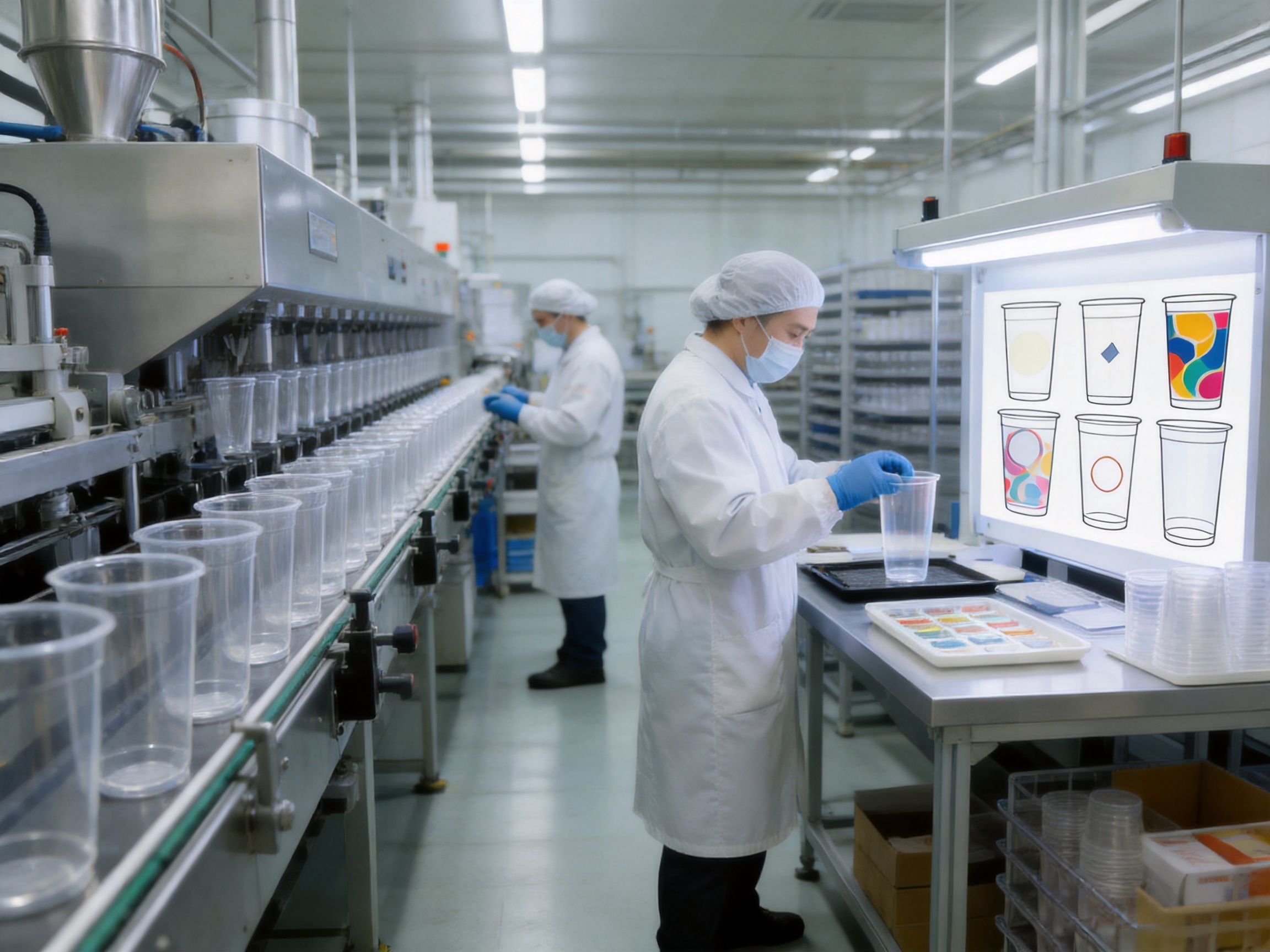
The quality of a disposable PET drink cup is influenced by every stage from design and material preparation to forming, trimming, printing, inspection, packing, and shipment. A professional manufacturer uses controlled processes to ensure that the finished cup meets the agreed design and performance requirements.
Product Design and Engineering Review
Production begins with a review of the customer's requirements. Important factors include capacity, mouth diameter, height, base diameter, wall structure, appearance, artwork, intended lid, filling method, beverage type, order quantity, packaging method, and delivery conditions.
Design review helps identify potential problems before tooling or mass production begins. For example, a cup designed for a standard lid may require a particular rim profile. A cup intended for sealing film may need a controlled sealing surface. A cup used for drinks containing heavy toppings may require different structural considerations from a cup used for plain water.
Yuqian can provide a variety of appearance designs and customize products according to customer needs. This design flexibility allows customers to move beyond a generic stock cup while maintaining practical manufacturing requirements.
Raw Material Preparation
Food-grade PET material must be managed carefully before processing. Incoming materials should be identified, inspected, and stored under controlled conditions. Material traceability supports quality investigations and helps manufacturers maintain consistency between production batches.
Moisture and contamination control are important in PET processing. Production teams should follow appropriate drying, handling, and cleanliness procedures according to the material supplier's requirements and the equipment process. Consistent raw material preparation helps reduce defects such as haze, bubbles, deformation, discoloration, or unstable mechanical performance.
Sheet or Preform Processing
Depending on the selected production route and product design, PET may be processed into an appropriate intermediate form before cup forming. The intermediate material must have suitable thickness distribution, clarity, strength, and dimensional consistency. Process parameters are adjusted according to cup size, geometry, material behavior, and equipment capability.
For thin-wall packaging, control of material distribution is particularly important. If the material becomes too thin in one area, the cup may lose rigidity or become more vulnerable to damage. If too much material is concentrated in another area, the product may become unnecessarily heavy and less cost-efficient. Process engineering therefore seeks a balanced structure that provides dependable performance with responsible material use.
Forming and Shaping
The forming stage creates the cup's final shape, including the mouth, sidewalls, base, and nesting profile. Temperature, forming pressure, mold condition, cooling, and cycle timing can all affect the result. Stable process conditions are needed to maintain consistent height, mouth diameter, bottom diameter, transparency, and wall appearance.
Modern production equipment supports repeatable forming and helps manufacturers produce large quantities with consistent geometry. However, equipment alone does not guarantee quality. Skilled technicians, preventive maintenance, process records, and regular inspection are necessary to keep production within the approved specification.
Trimming and Rim Finishing
After forming, excess material may be trimmed to create the final cup edge. Rim quality is especially important because it affects customer comfort, lid fit, sealing performance, and the visual appearance of the product. A clean and uniform rim reduces the risk of sharp edges, irregular engagement, and sealing inconsistency.
Finished cups should be checked for rim deformation, uneven cutting, cracks, excessive flash, and dimensional variation. These inspections are particularly important when a customer uses automatic filling, lidding, or sealing equipment.
Printing and Decoration
Printing transforms the cup from a basic container into a branded marketing surface. The printing process may involve artwork preparation, plate or setup work, ink selection, registration control, curing or drying, and final appearance inspection. Print quality should be evaluated for color consistency, position accuracy, adhesion, clarity, and resistance to ordinary handling.
Yuqian's printing equipment enables customers to add logos, patterns, and specific information. The manufacturer can work with customers to develop packaging that supports brand recognition while preserving the transparency or visual balance desired for the beverage.
Artwork should be reviewed for cup curvature and print distortion. A design that looks correct on a flat screen may appear different when wrapped around a tapered cup. Professional pre-production review helps ensure that logos remain legible, important information is not hidden, and the final image is visually balanced.
Inspection and Quality Assurance
Quality assurance should cover raw materials, in-process production, printing, finished dimensions, appearance, packaging, and shipment. Typical inspection points may include capacity, mouth diameter, height, base diameter, weight, clarity, color, rim condition, surface cleanliness, deformation, odor, print alignment, and packaging integrity.
Food-contact packaging also requires attention to hygiene and contamination prevention. Production areas, personnel practices, equipment cleaning, storage conditions, and packing procedures should be managed systematically. A documented quality management system gives customers greater confidence that quality is not dependent on a single operator or an informal inspection routine.
Yuqian reports a complete quality management system and strict quality inspection from raw material procurement through finished product delivery. The company also identifies ISO9001 quality management certification, BRC certification, German DIN safety certification, EU RoHS testing, and the QS national industrial product production license among its qualifications and compliance experience. Customers should confirm the current scope, validity, and applicability of any certification to the specific product and destination market.
Packing and Shipment
After inspection, cups are packed in a way that protects cleanliness, shape, printing, and stacking condition. Carton design should support efficient storage and transportation while reducing compression damage. Shipment planning should account for order quantity, production lead time, export documentation, destination requirements, and any special packaging instructions.
As a manufacturer serving domestic and international customers, Yuqian can coordinate product specifications, customized printing, production arrangements, and delivery requirements. Clear communication at the quotation and sampling stages reduces the risk of misunderstandings during mass production.

Disposable PET plastic drink cup
Customization Options for Beverage Businesses
Capacity and Size Selection
Capacity selection should reflect menu structure and customer purchasing habits. A 500 ml cup can serve as a regular size, while a 700 ml cup can support large beverages and products with substantial ice or toppings. Some businesses may require additional sizes to create a complete product hierarchy.
Capacity should not be considered separately from cup height and mouth diameter. A taller cup may require different storage cartons, delivery-bag arrangements, and display shelving. A wider mouth may improve topping visibility but may also require a different lid and sealing system. The manufacturer and buyer should assess the full packaging system rather than selecting a cup by volume alone.
Appearance and Structural Design
Customers can request different appearance designs according to their brand positioning and beverage category. Design elements may include sidewall proportions, base shape, rim structure, surface treatment, and the visual relationship between the cup and lid.
Good structural design balances appearance and performance. A cup should be attractive but also easy to hold, stable when placed on a counter, compatible with available lids, and suitable for efficient stacking. Yuqian's product development and manufacturing teams can review these requirements during customization.
Logo and Pattern Printing
Printed logos can improve recognition at the point of sale and after purchase. A repeated cup design can help customers remember a beverage brand and distinguish it from competitors. Patterns can also communicate flavor families, seasonal promotions, premium positioning, or special events.
Businesses should provide high-quality artwork and identify the intended print colors. If exact color matching is important, the customer should approve a physical sample or agreed color standard. Print placement should also be evaluated on the actual cup shape, particularly where the cup tapers or contains molded structural features.
Information and Promotional Printing
In addition to logos, cups may carry product names, promotional messages, preparation information, storage guidance, recycling instructions, or event details. Printed information should be legible and positioned where it can be seen without interfering with the beverage presentation.
Customers remain responsible for ensuring that legal and regulatory information is correct for the destination market. The manufacturer can support printing execution, but the buyer should approve all wording, symbols, claims, and artwork before production.
Applications Across the Food and Beverage Industry
Cafés and Coffee Shops
PET cups are suitable for iced coffee, cold brew, flavored coffee, fruit coffee, and other chilled drinks. Their transparency allows the customer to see ice, milk layers, syrups, foam, or decorative toppings. Customized printing can extend the café's identity beyond the store and into offices, vehicles, parks, and public spaces.
Milk Tea and Specialty Tea Shops
Milk tea, fruit tea, sparkling tea, and tea-based specialty drinks often rely on visible color and toppings. A rigid PET cup can present pearls, jelly, fruit, herbs, and ice while supporting a compatible lid or sealing film. Multiple capacity options allow a shop to offer regular and large products without changing its entire packaging strategy.
Juice and Smoothie Businesses
Juice and smoothie products benefit from clear packaging because color and texture influence purchase decisions. PET cups can showcase fresh-looking beverages, blended fruit, yogurt layers, and decorative ingredients. Businesses should confirm that the selected cup and lid can withstand the weight and movement associated with thicker beverages.
Restaurants and Takeaway Operations
Restaurants can use PET cups for soft drinks, iced tea, fruit beverages, and meal-combination drinks. Their light weight and stackability support high-volume service. Printed cups can also help restaurants maintain brand consistency when customers order drinks for delivery or takeaway.
Catering and Events
Outdoor events, conferences, festivals, parties, and promotional campaigns often require large numbers of uniform beverage containers. Disposable PET cups can simplify distribution and cleanup compared with reusable glassware. Customized printing can identify the event, sponsor, organization, or campaign.
Retail and Private-Label Beverages
Retailers and beverage producers can use customized cups for private-label drinks, seasonal products, sampling programs, and promotional launches. A well-designed cup can combine product visibility with brand communication. For retail applications, businesses should also evaluate shelf life, transportation conditions, sealing, labeling, and local packaging requirements.
Food Safety, Hygiene, and Compliance Considerations
Food safety is a core purchasing requirement for disposable drink cups. Buyers should ask whether the material is suitable for the intended food-contact application, whether production controls are documented, and whether relevant testing has been completed for the target market.
Important questions may include whether the cups are manufactured from food-grade materials, whether odor and appearance are controlled, whether the factory maintains batch traceability, whether finished products are inspected, and whether the supplier can provide appropriate compliance documentation.
Testing requirements vary according to country, region, beverage type, temperature, contact duration, and applicable regulations. A cold beverage cup may have different requirements from packaging used with hot liquids or high-fat products. Customers should provide accurate application details so that the manufacturer can recommend a suitable specification.
Storage and transportation after production also affect hygiene. Cups should remain protected from dust, moisture, chemicals, strong odors, and excessive heat. Warehouses should be clean and organized, and cartons should not be placed directly in conditions that could compromise packaging integrity.
Yuqian's stated quality approach covers the production chain from raw material procurement to finished product delivery. Its identified certifications and testing experience can support customer evaluation, but buyers should always request current documents and confirm that they apply to the exact product, material, and market.
Environmental Considerations and Responsible Packaging
Environmental performance is increasingly important to consumers, food-service companies, and regulators. PET offers recyclability in many established systems, but a disposable cup's actual environmental outcome depends on collection, sorting, cleaning, transport, and reprocessing. A recyclable design does not automatically guarantee that every used cup will be recycled.
Businesses can take several practical steps. They can select an appropriately lightweight cup without compromising safety or function, avoid unnecessary secondary packaging, provide clear disposal guidance, and work with local waste-management partners. They can also assess whether the cup is compatible with the collection systems available in the markets where it will be sold.
Yuqian states that it actively responds to environmental protection policies and is committed to supporting the green transformation of the packaging industry. The company also maintains an R&D team focused on new packaging materials and product innovation. This direction is relevant as customers seek packaging solutions with improved material efficiency, recycling compatibility, and environmental performance.
Environmental claims should be specific and supported by evidence. Terms such as recyclable, degradable, compostable, recycled-content, and environmentally friendly can have different technical and legal meanings. Buyers should ask for documentation and avoid using broad claims that cannot be verified in the intended market.
Why Manufacturer Capability Matters
Choosing a manufacturer rather than an intermediary can provide advantages in communication, customization, quality control, and production coordination. Direct access to technical and production teams allows customers to discuss dimensions, printing, material requirements, samples, and quality concerns more efficiently.
Yuqian Packaging Technology (Jiangsu) Co., Ltd. was established in 2010 and is located in Taizhou City, Jiangsu Province. The company reports a plant area of approximately 30,000 square meters and operates as a high-tech enterprise integrating research and development, production, and sales of new food packaging materials and products.
The company's strengths include experience in disposable food packaging, customized product development, printing capability, quality management, and service for domestic and foreign customers. Its professional R&D team supports the development and improvement of packaging materials and products, while its production resources support larger-scale manufacturing requirements.
The company also established a Shanghai branch in January 2019. The branch was created to improve service quality and expand business channels. A regional service presence can make communication, customer support, and business coordination more convenient for certain customers.
For buyers, the most important advantage is the ability to connect product design with mass production. A cup that looks attractive in a sample must also be manufacturable, stackable, printable, inspectable, and deliverable at the required volume. Integrated technical and production capabilities help reduce the gap between concept and finished product.
How to Select the Right PET Drink Cup
Define the Beverage Application
Begin by identifying the beverage type, serving temperature, viscosity, topping weight, ice volume, filling method, and expected holding time. These details help determine whether the cup requires a particular wall structure, rim design, lid, or sealing method.
Confirm Dimensions and Compatibility
Confirm capacity, mouth diameter, height, base diameter, and cup weight. The selected cup must fit the customer's lid, sealing machine, straw, carrier, carton, and delivery bag. Small dimensional differences can create operational problems when equipment is automated.
Evaluate Appearance and Printing
Consider how much of the cup should remain transparent and where the logo or pattern should be placed. A design should be readable from the normal customer viewing angle while preserving the visual appeal of the beverage. Ask for a physical sample when print position and color are important.
Review Quality Documentation
Request relevant material declarations, food-contact test reports, quality certificates, and product specifications. Confirm that documents are current and suitable for the destination market. A responsible supplier should be able to explain its inspection process and respond to technical questions.
Assess Supply Capacity
Discuss minimum order quantity, tooling or setup requirements, production lead time, monthly capacity, packing method, shipment schedule, and repeat-order arrangements. Stable supply is especially important for beverage chains and seasonal promotional campaigns.
Request Samples and Conduct Practical Tests
Samples should be tested with the actual beverage, ice, toppings, lid, straw, sealing equipment, carrier, and delivery process. Check leakage, cup rigidity, print appearance, stacking, separation, lid fit, and customer handling. Practical testing can identify issues that are not visible in a specification sheet.
Quality Control Points for Buyers
Buyers can establish a clear acceptance standard before mass production. The standard may define permitted dimensional tolerances, weight range, print position, color variation, surface defects, rim condition, odor, cleanliness, carton quantity, and labeling.
Appearance inspection should look for haze, foreign particles, black spots, bubbles, scratches, deformation, discoloration, incomplete forming, and uneven trimming. Not every visual variation has the same functional importance, so the buyer and manufacturer should agree on classification of critical, major, and minor defects.
Functional checks may include lid fit, sealing performance, stacking behavior, resistance to ordinary squeezing, and stability on a flat surface. If the cups are used for delivery, they should be tested inside the actual delivery packaging and under realistic movement conditions.
Print inspection should evaluate logo clarity, registration, color consistency, missing areas, smearing, scratching, and adhesion. Customized printing represents the customer's brand, so appearance standards may need to be stricter than those for an unprinted stock cup.
Batch records and retained samples can support investigation if a problem appears after delivery. A manufacturer with a documented quality management system is better positioned to trace production conditions and implement corrective action.
Operational Benefits for Beverage Brands
A well-designed PET cup can improve more than beverage appearance. Standardized dimensions help staff work faster because the same cup can be used with established lids, sealing machines, straws, and carriers. Stackability helps reduce clutter behind the counter and supports organized inventory management.
Customized cups can also reduce the need for separate promotional packaging. When the cup itself carries the brand identity, every takeaway order becomes a mobile display. This can be useful for small independent shops as well as national beverage chains.
Transparent packaging may support upselling by making premium ingredients visible. Customers can see fruit, toppings, ice layers, and color variations before purchase. A consistent cup design also gives different stores or franchise locations a unified appearance.
For manufacturers and wholesalers, a product range with multiple sizes can support broader customer requirements. The listed 500 ml and 700 ml formats provide a practical starting point, while customized dimensions may be developed for specific applications subject to design and production review.
Customer Service and Project Development
Successful customized packaging projects depend on communication. The buyer should provide clear information about the beverage, market, design, expected quantity, target price, compliance needs, and delivery schedule. The manufacturer should respond with a realistic proposal that explains specifications, samples, production arrangements, and quality expectations.
A typical project may include requirement confirmation, structural design, artwork review, sample production, customer testing, quotation confirmation, production scheduling, quality inspection, packing, and shipment. Each stage creates an opportunity to identify and resolve problems before they become expensive.
Yuqian's combination of R&D, production, sales, printing, and customer service capabilities supports this integrated approach. Its experience as an OEM disposable PET beverage cup manufacturer allows it to work with customers seeking standard products as well as businesses requiring personalized packaging.
Customers can contact the company for product selection, customized design, capacity planning, printing discussion, sample requests, and order coordination. The company information provided for business communication is as follows.
Company: Yuqian Packaging Technology (Jiangsu) Co., Ltd.
Telephone: 0086 15252423007
Fax: +0523 8608 3698
Email: [email protected]
Address: No. 8 Tongyang Road, Suchen Town, Taizhou City, Jiangsu Province, China
Frequently Asked Questions
What beverages are suitable for disposable PET plastic drink cups?
They are commonly used for cold beverages such as iced coffee, tea, milk tea, fruit juice, smoothies, soft drinks, flavored water, and other chilled products. The customer should confirm temperature limits and compatibility for any unusual beverage application.
Are the cups available in different sizes?
Yes. The listed options include 500 ml and 700 ml capacities, both with a 90 mm mouth diameter. Customized sizes and appearance designs may also be discussed according to customer requirements and production feasibility.
Can the cups be printed with a logo?
Yes. The manufacturer has advanced printing equipment that can print logos, patterns, and specific information. Customers should submit suitable artwork and approve the print layout and color expectations before mass production.
Are PET cups food safe?
PET cups manufactured from suitable food-grade materials can be used for intended food-contact applications when produced and tested according to applicable requirements. Buyers should request current compliance documentation and confirm that it applies to the specific product and market.
Are disposable PET cups recyclable?
PET is recyclable in many regions, but recycling depends on local collection and processing infrastructure. Businesses should provide appropriate disposal information and verify environmental claims according to local regulations.
Can PET cups be used with lids and sealing films?
Yes, suitable lids and sealing systems can be used, but compatibility must be verified. Mouth diameter, rim structure, cup tolerance, lid design, film type, and sealing-machine settings all influence performance. Practical testing is recommended before a large order.
What is the difference between the 500 ml and 700 ml cups?
The listed 500 ml cup has an approximate height of 135 mm and weight of 12 g. The listed 700 ml cup has an approximate height of 180 mm and weight of 15 g. Both have a 90 mm mouth diameter, while their bottom dimensions differ slightly.
Can the cups be stacked?
Yes. Stackability is one of the product's practical advantages. Proper stacking saves storage and service-counter space. Buyers should test nesting force and separation speed with their staff and handling equipment.
How should customized cups be ordered?
Customers should provide the desired capacity, dimensions, quantity, beverage application, lid or sealing requirements, artwork, delivery location, and compliance needs. The manufacturer can then review design feasibility, sampling, production, and packing requirements.
What quality controls should be requested?
Buyers should request material documentation, dimensional specifications, appearance standards, print requirements, inspection procedures, batch traceability information, and relevant food-contact testing. The exact documents depend on the destination market and intended use.
Why choose a manufacturer with R&D capability?
R&D capability helps connect customer ideas with practical production. It supports product design, material evaluation, structural improvement, printing development, and problem solving. This can be more valuable than purchasing a generic cup that does not fit the customer's beverage or branding system.
Conclusion
Disposable PET plastic drink cups provide a balanced solution for businesses that need attractive, lightweight, rigid, and customizable cold beverage packaging. Their transparency enhances product presentation, their stackable structure supports efficient storage, and their available capacities serve a wide range of beverage portions. Food-grade material selection and controlled manufacturing further support safe and dependable use.
The strongest competitive advantages come from combining a suitable PET material with accurate forming, consistent dimensions, clean trimming, reliable printing, documented inspection, and responsive customer service. A cup should not be evaluated only by its unit price. Its total value also includes appearance, performance, compatibility, supply stability, brand visibility, and quality assurance.
Yuqian Packaging Technology (Jiangsu) Co., Ltd. brings together product development, manufacturing, printing, quality management, and international customer service. Its experience since 2010, reported certifications and testing capabilities, R&D focus, and customized OEM service make it a suitable partner for beverage businesses seeking disposable food packaging containers with personalized design.
For cafés, tea shops, restaurants, caterers, retailers, and beverage producers, a professionally designed PET cup can become more than a serving container. It can support efficient operations, improve product presentation, communicate brand identity, and contribute to a consistent customer experience across sales channels.
References
1. Polyethylene Terephthalate Packaging: Material Properties, Food-Contact Applications, and Recycling Considerations.
2. ISO 9001, Quality Management Systems: Requirements.
3. BRCGS Global Standard for Packaging Materials.
4. General Principles of Food Hygiene and Packaging-Related Good Manufacturing Practices.
5. Technical Guidance for the Design, Manufacture, and Quality Control of Plastic Food Packaging.
6. Packaging Sustainability: Recyclability, Material Efficiency, and Responsible End-of-Life Management.
7. Food-Contact Material Compliance Requirements for Plastic Packaging in International Markets.